


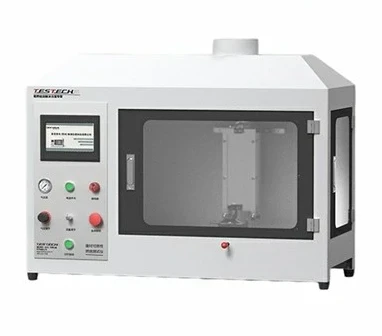
Combustibility testing equipment for building materials is specialized apparatus designed to determine whether building materials are flammable under specific conditions and to evaluate the combustion performance of such materials. The data generated from these tests are primarily used for fire safety inspections and laboratory accreditations (such as CMA or CNAS).
When looking to purchase suitable, professional-grade combustibility testing equipment for building materials, one should conduct a comprehensive evaluation based on factors such as product specifications, type, quality, safety, the manufacturer's capabilities, and after-sales support. This ensures the acquisition of equipment that meets the required standards.
I.Product Specifications: Alignment with Standard Parameters and Testing Requirements
First, verify whether the equipment's technical specifications fully meet the requirements of the relevant national standards. Any deviation in parameters will directly invalidate the test data, rendering it unsuitable for use in test reports.
1. Alignment with Standards: In China, the primary standard is GB 8624 (Classification for burning behavior of building materials), supported by specific standards such as GB/T 8626 (flammability), GB/T 20284 (Single Burning Item, or SBI), GB/T 5464 (non-combustibility), and GB/T 14402 (calorific value). The equipment should also align with international standards (EN, ISO, ASTM), specifically regarding chamber dimensions, burner specifications, gas flow rates, thermocouple precision, and exhaust system parameters.
2. Measurement Accuracy: Carefully evaluate the accuracy, response time, and repeatability of components such as temperature sensors, optical smoke measurement systems, mass flow controllers, and pressure acquisition modules. Professional-grade equipment should support real-time curve acquisition and the storage of raw data, ensuring compliance with laboratory requirements for data traceability.
3. Dimensions and Site Requirements: While small-scale flammability testers have a compact footprint, systems like the SBI (Single Burning Item) apparatus feature large chambers, requiring dedicated testing space, load-bearing structural support, and an independent exhaust system. It is essential to confirm the equipment's external dimensions, power requirements, gas connection specifications, and cooling water needs in advance to ensure the laboratory infrastructure is compatible upon the equipment's arrival.
4. Software Functional Specifications: A control system based on a PLC and an industrial PC is preferred. The software includes built-in standard algorithms to automatically calculate combustion parameters and generate test reports. It also supports the saving of test video recordings and the retrieval of historical data, ensuring compliance with the review and verification requirements of third-party testing institutions.
II.Equipment Type: Select based on the test parameters and sample classification.
1. Combustibility Tester for Building Materials (GB/T 8626): Used for the classification of Class D and E materials. Typically applied to samples such as boards, insulation panels, and decorative materials. This equipment features a compact design and is commonly used in corporate quality control laboratories.
2. Single Burning Item (SBI) Test Apparatus (GB/T 20284): Used for the classification of Class B and C building materials. It measures key indicators such as heat release rate, smoke production rate, and smoke transmittance. As a primary instrument for fire safety type testing, it features a complex structure and includes an integrated smoke collection and analysis system.
3. Non-combustibility Test Apparatus for Building Materials (GB/T 5464): Used for testing Class A1/A2 non-combustible materials by measuring temperature rise, mass loss, and flaming combustion under high-temperature conditions.
4.Auxiliary Equipment: Includes the Limiting Oxygen Index (LOI) tester, smoke density tester, and combustion calorific value apparatus, used for supplementary testing of oxygen index, smoke production characteristics, and total calorific value.
Selection logic: Choose a flammability tester for basic incoming quality inspection or simple ignition testing; select an SBI (Single Burning Item) apparatus for formal fire classification (Class B/C); and use a non-combustibility test apparatus to determine whether a material is non-combustible.

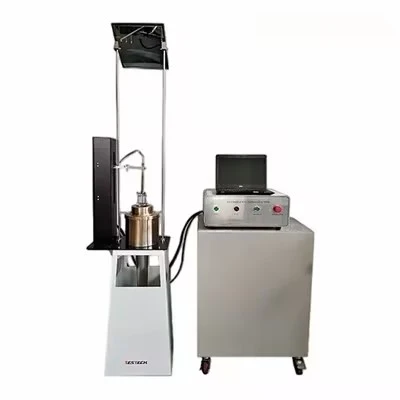
III.Selection Logic: Integrating Samples, Intended Use, and Laboratory Positioning
Type of Test Sample: Consider materials such as panels, insulation, coatings, fabrics, composites, or flooring. Given the variations in sample size and geometry, ensure that the specimen holders and sample carts are compatible. For flooring materials, specialized radiant heat source combustion test equipment is required. (Consult with the manufacturer regarding specific testing requirements.)
Laboratory Positioning: For internal corporate quality control laboratories, a standard, foundational version may suffice. For third-party testing laboratories (CMA/CNAS accredited), a high-precision version is mandatory, accompanied by comprehensive calibration certificates and method validation documentation.
Budget and Expansion Planning: Plan for the entire scope of intended test parameters at the outset to avoid redundant procurement. For multi-parameter testing, adopt a modular approach-ensuring space is reserved for the future integration of additional modules, such as those for smoke density or calorific value testing.
IV. Material Quality: The chamber and core components determine the long-term stability of the equipment.
Combustion testing involves prolonged exposure to high temperatures and corrosive flue gases; therefore, the materials used directly impact both the equipment's service life and the reproducibility of the data.
Combustion Chamber: A chamber made of high-temperature-resistant SUS304 stainless steel is preferred. It offers excellent resistance to high-temperature oxidation and flue gas corrosion, ensuring structural integrity over long-term use. In contrast, chambers made of coated carbon steel are prone to rust when exposed to high-temperature flue gases over extended periods; this can compromise test repeatability and is therefore unsuitable for continuous testing in third-party laboratories.
Core Component Materials: The burner, gas piping, and sampling lines are constructed from high-temperature-resistant, corrosion-resistant stainless steel. High-precision sheathed thermocouples are used for temperature measurement. Precision components-such as weighing modules and flue gas sensors-are sourced from reputable brands to ensure data stability.
Manufacturing Quality: Welds are smooth and free of burrs, and the interior of the chamber is designed for easy removal of combustion residue. High-temperature-resistant, aging-resistant seals are employed to prevent the leakage of flue gases.
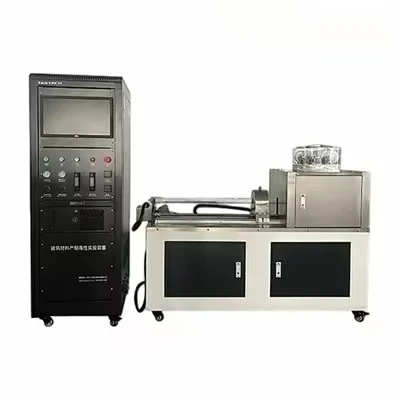
V. Safety: Safety Interlocks for Combustion Testing Are a Non-Negotiable Requirement
Combustion testing involves the use of propane gas, open flames, high temperatures, and toxic combustion fumes; therefore, robust safety features are essential.
Gas Safety Interlocks: Systems include gas leak detection and alarms, automatic gas shut-off in the event of flameout, and emergency stop buttons to prevent the accumulation of gas and the associated risk of explosion. Remote electronic ignition is employed to eliminate the need for manual, close-proximity ignition.
High-Temperature Protection: The unit features a dual-layer insulated chamber, with an outer shell designed to prevent burns. Observation windows are constructed from explosion-proof, high-temperature-resistant glass to contain any debris or fragments.
Fume Handling System: The equipment is equipped with a high-capacity exhaust system to vent toxic combustion fumes outdoors. Advanced models include integrated filtration and purification units to protect the health of operators.
Overload and Over-Temperature Protection: The system includes over-temperature alarms and overload protection, with automatic shutdown triggered during abnormal operating conditions to prevent damage to the furnace from overheating.
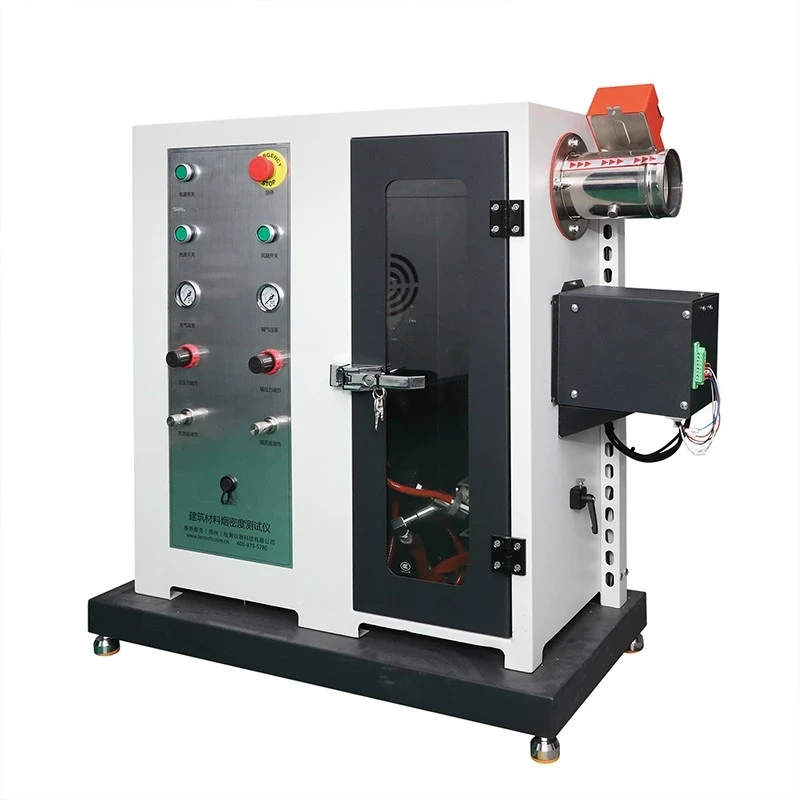
VI. Manufacturer Capabilities and After-Sales Support
Combustion testers are precision measuring instruments; therefore, after-sales service, metrological calibration, and technical training are of critical importance.
Manufacturer R&D and Qualifications: Prioritize direct manufacturers over intermediaries. Verify the manufacturer's track record regarding equipment validation against standards, their experience in supporting CMA/CNAS-accredited laboratories, and their ability to provide standard test specimens, reference gases, and guidance on metrological compliance.
Metrological Calibration Services: Equipment requires annual calibration. Ensure the manufacturer can provide calibration assistance, sensor recalibration services, and the necessary technical documentation to facilitate successful laboratory accreditation audits.
Delivery, Installation, and Training: The manufacturer should provide on-site installation and commissioning, operator training, interpretation of testing standards, and guidance on testing methodologies.
After-Sales Response and Spare Parts: Clarify the warranty period and the expected response time for troubleshooting. Ensure the long-term availability of critical components-such as thermocouples, sensors, mass flow controllers, and burners-to prevent future maintenance issues caused by the discontinuation of parts.
5. Ongoing Technical Support: The manufacturer should offer software updates and technical consultation in the event of updates to national standards or changes in testing methodologies. They should also provide technical support for equipment acceptance testing and method validation.
Summary
When selecting an appropriate flammability tester for construction materials, it is essential to evaluate the product from multiple perspectives. Price alone should not be the sole criterion for selection; equipment that fails to meet technical specifications or lacks necessary safety features can lead to invalid test data and even pose safety risks within the laboratory.
TESTech (Suzhou) Instrument Technologies specializes in the integrated R&D, manufacturing, and technical services of testing equipment for flame retardancy and fire resistance. Our core technical team consists of seasoned engineers with extensive experience in the fire-testing industry. We equip our systems with top-tier international sensors and critical components, ensuring that all test data is precise and reliable.
Through long-standing industry-academia-research collaborations with domestic universities and scientific laboratories, we have built a deep technical foundation in fire science and material combustion safety, while mastering the fire-testing standard systems of various countries. Our products and professional technical services have been successfully delivered to clients across the globe-including those in the United States, the United Kingdom, Australia, Belgium, Norway, India, and Indonesia-serving academic institutions, research organizations, and independent third-party testing laboratories.
Beyond designing and manufacturing high-end fire-testing equipment, we actively engage in collaborative projects with overseas enterprises and international laboratories to advance in-depth research on flame-retardant, fire-resistant materials and fire-protection systems. We are committed to providing world-class fire-testing equipment and comprehensive technical support, empowering our global clients to maintain a competitive edge in the field of material fire safety.


