

When it comes to fire safety testing of materials, various combustion testers play crucial roles. As a supplier of Rail Transit Material Combustion Testers, I have in - depth knowledge of the differences between our product and other combustion testers in the market. In this blog, I will explore these distinctions in detail.
1. Testing Purpose and Application Scope
The Rail Transit Material Combustion Tester is specifically designed for materials used in rail transit systems, such as subway cars, high - speed trains, and tramways. Rail transit environments have unique fire safety requirements. For example, in a confined subway carriage, a fire can quickly spread due to limited space and ventilation, and the materials need to exhibit high flame retardancy and low toxicity emissions. This tester is used to evaluate a wide range of materials including interior decoration materials, seat fabrics, insulation materials, etc., to ensure that they meet the strict safety standards for rail travel.
In contrast, other combustion testers are tailored for different application areas. The 45° Flammability Tester is often used to assess the flammability of general textile materials. It measures how quickly a fabric burns when placed at a 45 - degree angle. Although fabrics in rail transit may also be tested with this device at some basic levels, the Rail Transit Material Combustion Tester provides a more comprehensive evaluation considering the complex fire scenarios in rail vehicles.
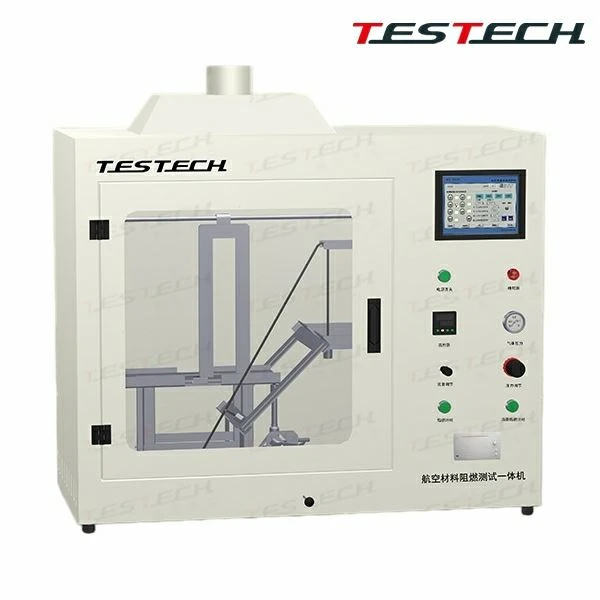
The Aviation Vertical Flammability Tester is dedicated to aviation - related materials. Aircraft materials need to meet extremely high - level fire safety requirements because of the high - altitude and high - speed flight environment. The testing conditions and standards for aviation materials are different from those in rail transit. For instance, aviation materials are required to have better heat resistance and lower smoke generation to maintain visibility during a fire in the cabin.
2. Testing Standards
Rail transit systems around the world follow specific standards for material fire safety. In Europe, standards like EN 45545 are widely adopted. These standards define different levels of fire safety requirements based on the type of rail vehicle (e.g., high - speed train, subway) and the location where the material is used (e.g., interior wall, floor). The Rail Transit Material Combustion Tester is calibrated and designed to meet these specific standards. It can measure parameters such as flame spread rate, heat release rate, and smoke density in accordance with the requirements of EN 45545.
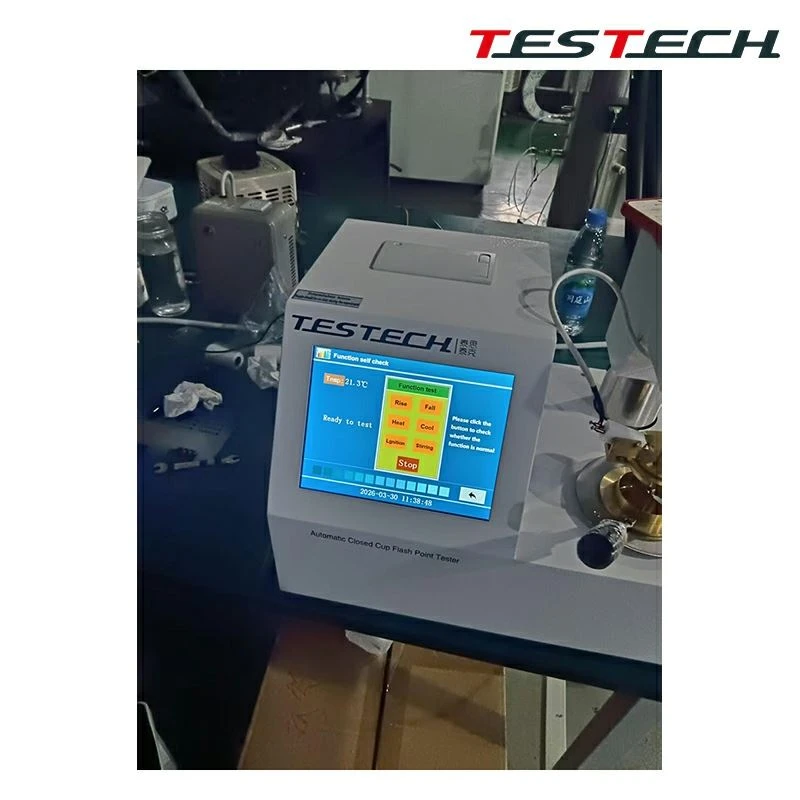
Other combustion testers follow different sets of standards. The TAG Closed Cup Auto Flash Point Analyzer is used to determine the flash point of flammable liquids. It adheres to standards such as ASTM D56 or ISO 2719, which are focused on measuring the lowest temperature at which a liquid gives off enough vapor to form an ignitable mixture with air. These standards are not directly relevant to the fire safety assessment of solid materials used in rail transit.
3. Testing Parameters and Methods
The Rail Transit Material Combustion Tester measures multiple key parameters simultaneously. It can accurately measure the heat release rate, which indicates how fast a material releases heat during combustion. A high heat release rate can lead to a rapid increase in temperature in a confined space, endangering passengers. Additionally, it measures smoke density, as excessive smoke can reduce visibility and cause asphyxiation. Toxic gas emissions are also a crucial parameter, especially in rail transit where a large number of passengers are present. The tester can detect the release of harmful gases such as carbon monoxide, hydrogen cyanide, etc.
The testing methods of the Rail Transit Material Combustion Tester often involve simulating real - world fire scenarios in rail vehicles. For example, it may use a cone calorimeter to simulate a small - scale fire in a controlled environment. The sample is exposed to a specific heat flux, and the responses of the material are recorded over a certain period.
In comparison, other combustion testers may focus on single or a few parameters. The Gasmet FTIR System for Toxicity Test in Fire Testing Application is mainly used to analyze the toxic gases released during combustion. While it is an important part of overall fire safety testing, it does not provide a complete picture of a material's flammability and heat - generating properties like the Rail Transit Material Combustion Tester.
The Aircraft Material Heat Release Rate Tester is centered around measuring the heat release rate of aircraft materials. Although heat release rate is also an important parameter in rail transit material testing, the testing conditions and requirements for aircraft materials are different. Aircraft materials are often tested under more extreme heat fluxes to simulate the high - energy fire scenarios that could occur in an aircraft.
4. Equipment Design and Structure
The design of the Rail Transit Material Combustion Tester is optimized for the specific needs of rail transit material testing. It usually has a relatively large test chamber to accommodate samples of different sizes, which is necessary as rail transit materials can come in various dimensions. The chamber is also designed to simulate the ventilation conditions in a rail vehicle. For example, some models have adjustable air inlet and outlet systems to mimic the real - world airflow patterns in a subway carriage.
The control system of the Rail Transit Material Combustion Tester is highly precise to ensure accurate measurement of multiple parameters. It is equipped with advanced sensors and data acquisition systems to record and analyze the test results in real - time.
In contrast, other combustion testers have different design features. The 45° Flammability Tester is relatively simple in structure. It mainly consists of a sample holder at a 45 - degree angle and an ignition source. Its simplicity is suitable for the basic flammability testing of textiles. The Aviation Vertical Flammability Tester is designed for vertical testing of aviation materials, and its structure is optimized to maintain a stable vertical position of the sample during the test and ensure accurate measurement of the vertical flame spread.
5. Cost and Maintenance
The cost of a Rail Transit Material Combustion Tester is generally relatively high compared to some basic combustion testers. This is because of its complex design, multi - parameter measurement capabilities, and compliance with strict rail transit standards. The high - end sensors and advanced control systems also contribute to the higher cost.
Maintenance of the Rail Transit Material Combustion Tester requires more professional knowledge and skills. The sensors need to be calibrated regularly to ensure accurate measurement. The test chamber also requires regular cleaning to prevent the accumulation of residues from previous tests, which could affect the test results.
In comparison, the 45° Flammability Tester is relatively inexpensive and easier to maintain. It has fewer components and simpler operation procedures, which means lower maintenance requirements and costs.
Contact for Procurement
If you are involved in the rail transit industry and are looking for a reliable Rail Transit Material Combustion Tester, we are here to assist you. Our products are designed with the latest technology and meet the strictest international standards. We can provide you with detailed product information, technical support, and personalized solutions according to your specific needs. Contact us to start a procurement discussion today.
References
- European standard EN 45545 for fire protection on railway vehicles.
- ASTM D56 standard for determining the flash point of flammable liquids using a closed - cup tester.
- ISO 2719 standard for flash - point determination of liquids by the closed - cup equilibrium method.