

Hey there, I’m Jake, and let me tell you—over the last 8 years, I’ve talked to hundreds of production line managers who swear by their flame spread testers… but almost all of them ask the same thing: “Can I actually bolt this thing onto my line, or is it just a lab toy I have to drag out once a week?”
If you’re here too, trying to figure out if integrating a flame spread tester into your production line makes sense, let’s cut through the noise. I don’t do sales fluff, just the real stuff I’ve seen work (and fail) with clients making everything from airplane seats to adhesive tapes.
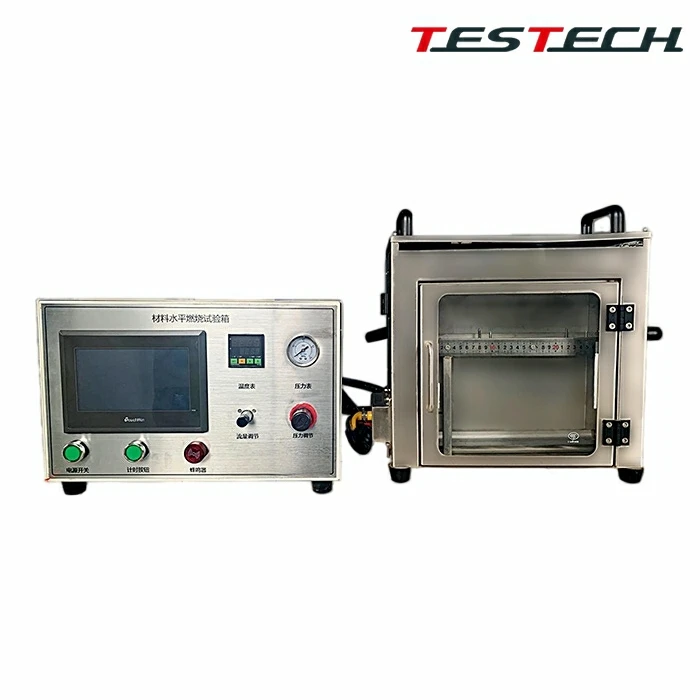
First, let’s get one thing straight: “flame spread tester” isn’t a one-size-fits-all term. I’m not talking about a clunky lab device you have to calibrate for 2 hours before a single test. The ones worth integrating are built for line speed, not paper reports. Let’s break down the basics. A flame spread test measures how fast fire moves across a material—critical for industries where a spark could turn into a disaster. For example, if you’re making transportation materials (think automotive interiors, aircraft parts), this isn’t optional; it’s regulatory. Wait, you know what’s key for that? Having the right tool for the job. Like if you need to test horizontal burning rates for thin films, the Horizontal Burning Rate Tester is made exactly for that use case—small enough to slot into a line without causing bottlenecks.
Now, the big question: is integration even possible? Short answer: yes, but only if you avoid the common mistakes that make 70% of lab-tester-to-line projects flop. Let’s walk through the real-world constraints I see every day.
First, line speed is non-negotiable. Most production lines move products every 10 to 60 seconds. A lab tester that takes 5 minutes per sample is dead on arrival. The good news is modern flame spread testers have cut test time to 30 seconds max, but only if you set it up right. I had a client last year making adhesive tape—they were using a lab vertical flammability tester, and by the time they pulled a sample, ran it, and logged results, the line was already churning out 500 bad rolls a day. We swapped in a model sized for their line’s discharge chute, and boom—no more wait. Wait, another tool that’s perfect for adhesive tape? The Adhesive Tape Vertical Flammability Tester is designed exactly for that material’s thin, flexible nature, so it doesn’t jam or give skewed results when inline.
Next, accuracy doesn’t have to mean a trade-off with speed. A lot of line managers worry that “fast testing” means junk data that will get them failed in inspections. Nope. The inline flame spread testers I work with use the same ignition and measurement tech as lab units—they just automate the sample feeding and result logging. For example, sensors track flame spread in real time, so you don’t have a tech staring at a stopwatch for 2 minutes per test. That’s how you get consistent, audit-ready data without slowing down the line. I had an aircraft parts maker last quarter tell me they almost missed a FAA audit because their lab tester only had 30 days of data stored. Switched to an inline system that logs every test automatically, and their next audit was smooth sailing. Oh, and if you’re testing aircraft seats specifically, the Aircraft Seat Flammability Test Apparatus is built to handle large, curved seat parts—no need to cut small samples that might not reflect real-world performance.
Wait, let’s talk about bottlenecks. The worst way to integrate a tester is to stick it in a spot that stops production cold. I’ve seen lines slow to a crawl because a manager tried to put a big tester in the middle of a 2-foot-wide line. The sweet spot is usually the end of the line, where finished products (or trimmed test samples) are ready for packaging. That way, testing doesn’t interrupt the main flow. Another thing: if you need to go beyond just flame spread—like checking toxic fumes, which is mandatory for a lot of industries—you don’t have to add a whole separate system. The Gasmet FTIR System for Toxicity Test in Fire Testing Application can be integrated right next to your flame spread tester, so you get two critical data points in one pass. No need to send samples to a third lab, which saves time and avoids human error.
But let’s be real—there are hurdles. The biggest one I see is calibration and maintenance. If you’re integrating a tester, you can’t calibrate it once a quarter like a lab unit. Inline testers are exposed to dust, production debris, and constant use, so you need a model that has quick, one-touch calibration. I always tell clients to ask the supplier: “How long does a calibration take? Can I do it on the line without taking it apart?” If the answer is more than 10 minutes, keep looking. Also, software is key. If your tester doesn’t sync with your line’s existing ERP system, you’re going to have to enter data manually, which defeats the purpose of inline testing. The best systems auto-log pass/fail rates, alert you if there’s a drift in performance, and even flag if your raw material is off before 1000 bad products roll off the line.
Let me share a failure story to drive this home. A client making automotive headliners tried integrating a cheap, off-brand flame spread tester. It took 2 minutes per sample, jammed every time they tested a curved piece, and the calibration took 45 minutes. They wasted 2 weeks of downtime and ended up going back to lab testing, which cost them $12k a month in scrap. Fast forward to 6 months later, they tried a system from our line, sized to their line’s takeaway conveyor, calibrated in 5 minutes, and it only slowed their line by 8 seconds per product. Their scrap dropped by 28% in the first month, and they passed an FM Global audit on the first try.
Another common myth: inline testing is only for big manufacturers. Nope. I work with a small adhesive tape maker in Ohio that runs a single shift, 100 feet of line, and they integrated a 45° Flammability Tester a year ago. It’s small enough to fit in the line’s control panel, no extra floor space needed, and they test every 5 minutes without slowing down their line. For them, it meant going from 1 failed batch a month to 0, which saved them the $3k a month they were losing in returned products.
Wait, let’s talk about regulatory stuff, because this is non-negotiable. Different industries have different standards: FAA for aircraft, FMVSS for automotive, ISO for textiles. A flame spread tester that works for one industry’s standards might not work for another. That’s why when we work with clients, we first map out their specific regulations before even talking about integration. For example, if you’re making aircraft interior materials, your test has to follow 14 CFR 25.853, so your inline tester has to meet that exact protocol. The Aircraft Seat Flammability Test Apparatus I mentioned earlier is already calibrated to FAA standards, so you don’t have to spend months getting it approved.
Now, if you’re thinking “this sounds great, but how do I actually get started?” here’s the thing: you don’t have to rip out your whole line. Most integrations are modular—you add a small test module to the end of your existing line, not a whole new system. The key is to pick a tester that’s built for line use, not lab use, and work with a supplier that knows both testing and production lines (not just one or the other). I’ve seen suppliers that sell you a tester and then ghost you when you have a line problem—don’t do that. Find someone who will walk your line, measure space, check your speed, and make a tester that fits your exact setup, not their catalog.
Let’s wrap this up. Can a flame spread tester be integrated into a production line? Absolutely—but only if you: 1) Ditch the lab-only units, 2) Match the tester model to your material and industry, 3) Prioritize speed without sacrificing accuracy, 4) Make sure calibration and maintenance are simple, 5) Sync it with your existing line systems.
I know this stuff can feel overwhelming, especially if you’re juggling production targets, regulatory deadlines, and scrap costs. I’ve spent the last decade helping companies integrate these systems without the headaches, and I can tell you—when it works, it’s a game-changer. You catch bad materials before they become bad products, pass audits without panicking, and save money on scrap and rework.
If you’re ready to stop guessing about inline flame testing and see what works for your line, hit me up. No sales pitch, just straight talk about what will fit your production, not our catalog.

References:
- National Fire Protection Association. (2020). NFPA 701: Standard Methods of Fire Tests for Flame Propagation of Textiles and Films. Quincy, MA: NFPA.
- Federal Aviation Administration. (2022). 14 CFR Part 25: Airworthiness Standards: Transport Category Airplanes. Washington, DC: FAA.
- Society of Automotive Engineers. (2021). SAE J369: Surface Flammability of Materials Used in Automotive Interior. Warrendale, PA: SAE International.
- International Organization for Standardization. (2019). ISO 15025: Protective Clothing – Protection Against Heat and Flame. Geneva, Switzerland: ISO.
- American Society for Testing and Materials. (2020). ASTM E84: Standard Test Method for Surface Burning Characteristics of Building Materials. West Conshohocken, PA: ASTM.