

If you’ve ever sat in a traffic jam on a hot day, wondering what exactly is coming out of your car’s tailpipe, you’re not alone. For automotive engineers, regulators, and even the folks at test labs, figuring out that exhaust mix is a big deal—because it’s not just about making cars run smoothly, it’s about meeting emissions rules, and even building better, more efficient engines. That’s where a gas analysis system for automotive exhaust comes in. I’ve been working with gas analysis tech for over a decade, first as an engineer testing parts, now as part of a team that supplies these systems, so I’ve seen firsthand how they go from a fancy tool on a lab shelf to something that makes real cars better. Let’s break it down, no jargon overload.
First off, let’s get one thing straight: automotive exhaust isn’t just “fumes.” It’s a mix of gases—carbon monoxide (CO), carbon dioxide (CO2), nitrogen oxides (NOx), hydrocarbons (HC), and even small bits of particulate matter (PM) these days. The system’s job is to measure each of these accurately, consistently, and in real time, because engine combustion changes every split second. If your system’s off, you end up with cars that either pollute too much or don’t run right, or even fail regulatory tests.
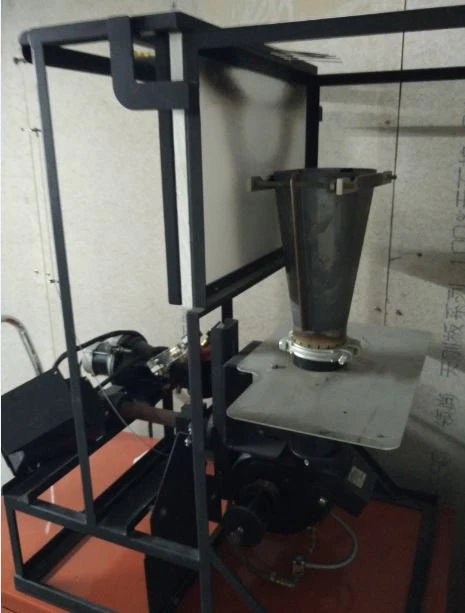
So how does it actually work? Let’s walk through the process like we’re standing next to a test bench. Step one is sampling the exhaust. You can’t just stick a probe into the tailpipe and call it a day—exhaust is hot, wet, and has a bunch of stuff that can mess up your measurements if you don’t handle it right. Most of our systems use a heated sample line (usually around 190°C, way hotter than boiling water) to carry the exhaust from the tailpipe to the analyzer. Why heat it? Because if the exhaust cools even a little, water vapor condenses, and HC or NOx can stick to the inside of the line, throwing numbers off. Some systems even have a filter right at the probe to catch big particulate matter before it gets into the sensitive parts of the analyzer—you don’t want tiny soot particles gunking up a sensor that’s measuring parts per million of NOx.
Once the sample gets through the line, it’s ready for analysis. This is where the magic (the science kind, not the lab tricks) happens, and different gases use different methods because they all act differently. The most common method we use for CO and CO2 is non-dispersive infrared (NDIR) spectroscopy. Here’s how that works: every gas molecule absorbs infrared light at a specific wavelength. So if you shine infrared light through the gas sample, less light comes out if there’s more CO, for example. The analyzer measures that drop, plugs it into a formula, and gives you a concentration. It’s super accurate for those two gases, which makes sense because CO is a toxic byproduct of incomplete combustion, and CO2 is the main greenhouse gas from cars.
Then there’s NOx, which is a tricky one because it’s a mix of nitric oxide (NO) and nitrogen dioxide (NO2). We use a chemiluminescence detector (CLD) for that. CLD works by reacting NO with ozone, which creates a faint glow (chemiluminescence, get it?) that’s proportional to how much NO is present. The cool part is that you can tweak it to measure total NOx, or separate out NO2 if you need to—some cars have selective catalytic reduction (SCR) systems that target NO2 specifically, so that separation is key. For HC, we use a flame ionization detector (FID). Think of it as burning the gas sample in a small hydrogen flame—every hydrocarbon molecule gets burned, and the flame produces charged particles that we count, which tells us how much HC is there. That’s important because unburned HC is a big part of smog.
These days, a lot of systems also add in a particulate matter (PM) analyzer, which measures tiny solid particles that the other methods miss. Back in the day, you’d use a filter to collect PM, weigh it, and that was it—slow, only gives you a number once you’re done testing. Newer systems use laser light scattering to count individual PM particles in real time, so you can see how PM changes as the engine revs up or slows down. That’s a game-changer for engineering teams that need to fix PM issues fast.
Now, why does this matter so much for automotive? Let’s talk regulations first. The EPA in the US, Euro 6d in the EU, and even stricter rules coming out of China—all require manufacturers to test every new car’s exhaust to make sure it doesn’t exceed limits. A bad gas analysis system here means a car fails a test, which delays production and costs millions. I’ve seen a client’s prototype car get sent back three times because their old system couldn’t measure low-level NOx accurately enough, and they almost missed a regulatory deadline. That’s why we design our systems to be calibrated regularly, with built-in checks to make sure readings are on point—no more manual calibration that takes hours and leaves room for human error.
It’s not just regulations, though. Engine designers use these systems to make cars better. If a new hybrid engine is releasing more CO than expected during startup, the team can adjust the fuel injection timing right away instead of waiting for a lab test a week later. I worked with a small EV startup last year (yeah, even EVs have exhaust from their backup heaters) that used our system to tweak their heater’s combustion to cut CO by 15% without losing heat output. That’s the kind of real impact these systems have, beyond just checking boxes for rules.
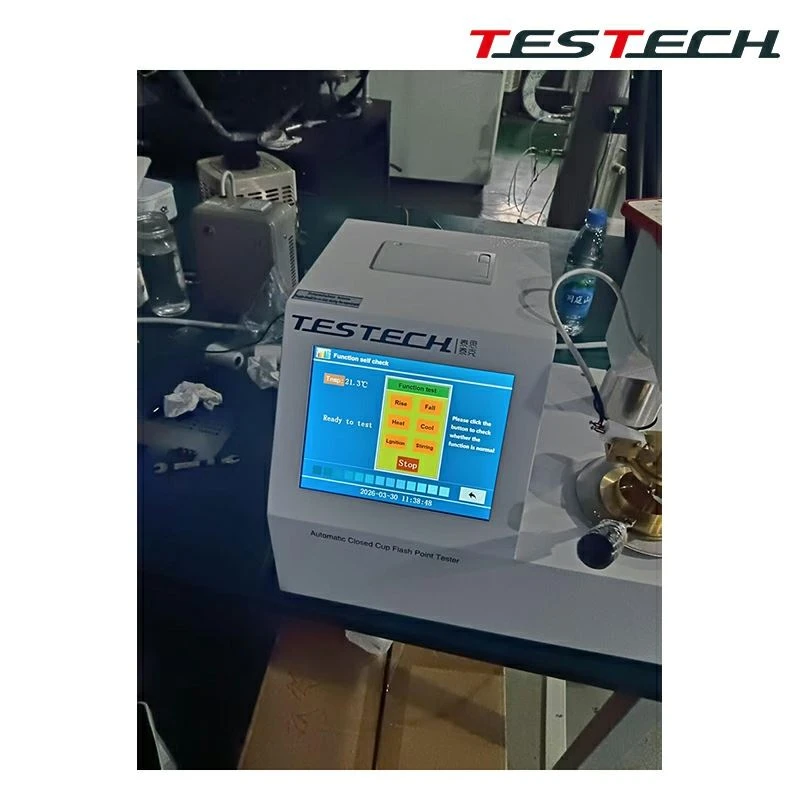
Wait, but gas analysis systems don’t work in a vacuum, right? To get the full picture, engineers often pair them with other testing tools that measure flammability and material performance—since exhaust systems run at super high temps, the materials they’re made of need to be safe. That’s why we supply complementary tools too, like the TAG Closed Cup Auto Flash Point Analyzer for testing fuel and lubricant flammability, the Automotive Wire Harness Flammability Tester to make sure wiring under the hood doesn’t catch fire if there’s a leak, and even the Pensky-Martens Closed Cup Flash Point Tester for standard flash point measurements that regulators trust. For teams working on components that go in extreme conditions, we also have tools like the Aircraft Fire Penetration Tester and Adhesive Tape Vertical Flammability Tester, but those are more for heavy-duty parts like exhaust manifolds and gaskets—stuff that needs to hold up under pressure.
Over the years, we’ve tweaked our gas analysis systems to be more user-friendly too. Older systems were big, desktop units that needed their own lab space, but now we have portable ones that fit in a van and can test cars on the road or at a race track. That’s perfect for small garages or testing teams that can’t haul a whole lab to a remote location. We also integrate with cloud software now, so all the test data gets saved automatically, no more scribbling notes on paper that get lost. Engineers can pull up test results on their phone during a meeting, which speeds up decision-making a ton.
But let’s be real, it’s not all perfect. There are still challenges. Humidity in the exhaust sample can mess with NDIR readings, so we add a dryer that removes water vapor without taking out the gases we care about. High temperatures can also stress the sensors, so we use materials that can handle those 1,000°C exhaust lines without breaking down. The biggest one these days is measuring low-emission engines, like the ones with particulate filters or hydrogen fuel cells—those have way less CO and NOx, so the system needs to be sensitive enough to pick up tiny amounts, like parts per billion. We’ve upgraded our CLD and FID sensors in the last two years to hit that, which has been a big win for fuel cell clients.
If you’re an engineer, test lab manager, or someone at a car manufacturer dealing with emissions, you know that reliable gas analysis isn’t something you can cut corners on. A bad reading doesn’t just lead to failed tests—it leads to cars that are less efficient, more polluting, or even unsafe. Our team has been working with automotive clients for years, fine-tuning these systems to meet their specific needs, whether they’re testing a new gas engine, hybrid, or fuel cell. If you’re looking to upgrade your current system, or just want to chat about how gas analysis can help your projects, don’t hesitate to reach out to our team for more info. Let’s build better, cleaner cars together—starting with getting those exhaust numbers right.
References
- Automotive Exhaust Emissions: Measurement Methods and Regulations. U.S. Environmental Protection Agency, 2022.
- Gas Analysis for Automotive Applications. Society of Automotive Engineers (SAE) International, 2021.
- Flammability Testing for Automotive Components. National Fire Protection Association (NFPA), 2020.
- Non-Dispersive Infrared Spectroscopy for Gas Concentration Monitoring. Analytical Chemistry, 2019, vol. 91, no. 12, pp. 7523-7538.