

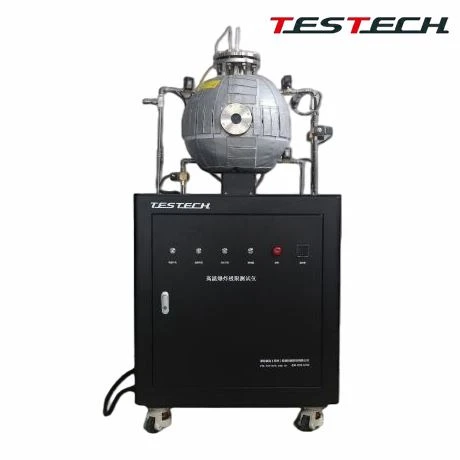
If you’ve been involved in battery safety testing, you’ve likely encountered the 82L Battery Thermal Runaway Gas Evolution Chamber—a compact, often cited workhorse for measuring gas emissions during thermal runaway (TR) in lithium-ion cells. As a supplier of specialized battery test equipment, I’ve seen this chamber used by labs, EV OEMs, and battery material manufacturers alike, drawn to its small footprint and targeted testing capabilities. But over years of supporting clients and refining our own product lineups, I’ve also observed consistent, underdiscussed disadvantages that can skew test data, limit scalability, and even introduce safety risks if not accounted for. In this post, I’ll break down these drawbacks, share real-world client experiences, and contextualize how they fit into the broader landscape of battery thermal testing tools, from the larger 10MW Battery Thermal Release Test System to smaller specialized units like the Gas Chromatography Analysis System.
First, let’s ground this in what the 82L chamber is designed to do: it’s a sealed, rigid enclosure sized to hold individual lithium-ion cells (typically 18650, 21700, or small pouch cells) as they undergo thermal runaway. The goal is to capture all gas generated during TR, measure its volume and composition, and assess its flammability—critical data for designing battery packs, preventing explosions, and complying with standards like UN 38.3 and SAE J2464. The compact size is a selling point: it fits on a benchtop, uses less inert gas, and is cheaper to operate than full-scale pack test setups. But that compactness is exactly where its biggest flaws start.
The first major disadvantage is inconsistent gas mixing and concentration gradients, a problem amplified by the chamber’s small volume. During thermal runaway, cells release a burst of gas in milliseconds—often 1 to 5 liters for a single 21700 cell, concentrated in a high-temperature, high-pressure jet. In the 82L chamber, this burst doesn’t have enough space to disperse evenly before sampling ports or gas sensors take readings. I once had a client, a small battery R&D lab, run a test on 10 identical 21700 NMC cells; their gas composition readings varied by up to 18% for flammable components like methane and ethylene. When we dug into the data, we realized their sampling port was located 2 inches from where the cell’s vent was positioned, so the first gas to escape was measured at near-pure concentration, while the rest of the chamber still had diluted gas. Larger chambers, like the 1MW Battery Thermal Release Test System, have longer mixing times and built-in agitation fans to eliminate these gradients, but retrofitting fans to the 82L is not practical—its small interior can’t accommodate a fan without disrupting cell placement or creating uneven pressure. This inconsistency means test results from the 82L chamber often aren’t comparable across different labs or even repeated tests in the same lab, a big issue for manufacturers needing consistent, audit-ready data.
Second, the 82L chamber lacks scalability and flexibility for testing larger cells or battery components. While it works fine for small cylindrical cells, almost all modern EV and energy storage battery packs use large-format cells (100Ah, 200Ah, or larger) that can generate 20+ liters of gas during thermal runaway—more than double what the 82L chamber can safely contain. I’ve had clients try to force large pouch cells into the 82L chamber, only to have the chamber’s pressure relief valve trigger prematurely, venting valuable gas before it can be analyzed. Even for medium-sized cells, testing multiple cells in parallel (to mimic pack-level TR behavior) is impossible in the 82L chamber; adding two 10Ah pouch cells would take up more than half the interior, leaving no space for gas sampling lines or temperature sensors. This limitation forces researchers to extrapolate single-cell data to pack levels, a leap that often leads to underdesigning safety systems. For clients that need pack-level gas testing, they have to pair the 82L chamber with complementary tools like the Battery Pack Fire Jet Test Machine, but that adds cost and workflow complexity—something that could be avoided with a chamber sized for larger format cells.
A third critical downside is limited gas analysis integration, which ties directly to the 82L’s small design. Most labs using the 82L chamber rely on external tools to analyze captured gas, but the chamber’s sampling ports are too few and too small to feed data to high-precision systems like the Gas Chromatography Analysis System. A client who recently upgraded from the 82L chamber to a larger 500L unit told me they spent 30% of their total testing time manually transferring gas samples from the 82L’s collection bag to their GC, because the 82L only has one 1/8-inch sampling port. The small port also slows down gas flow, meaning by the time the sample reaches the GC, lighter, more volatile gases (like hydrogen) have already dispersed—leading to underreported flammability values. Even for basic tests of lower explosion limits, the 82L chamber’s small volume skews results; the standard test for lower explosion limit (LEL) requires precise gas concentration control, which the 82L can’t achieve because it can’t adjust gas mixtures without risking overpressure. For clients needing accurate LEL data, they often have to use a separate unit like the Released Gas Explosion Limit Tester, adding another piece of equipment and another step in their testing workflow.
Safety is another often-overlooked disadvantage. The 82L chamber is designed for small cells, but thermal runaway for even a small cell can generate pressures of 10+ bar and temperatures over 800°C—conditions that the chamber’s rigid walls and pressure relief valve are built to handle. However, its compact size means there’s no buffer zone between the test cell, heating elements, and the chamber’s interior walls. In 2022, a client of ours reported a minor incident where a 18650 cell’s vent ruptured directly against the chamber’s temperature sensor, melting the sensor and damaging the chamber’s seal. Larger chambers have thicker walls and more distance between the test setup and chamber components, but the 82L’s small interior doesn’t allow for this. Additionally, the 82L chamber’s inert gas fill system is undersized: when testing high-voltage cells, oxygen must be purged to prevent secondary combustion, but the small chamber means it takes less than a minute to fill with argon, and there’s a high risk of incomplete purging. That risk isn’t hypothetical: another client had a cell in the 82L chamber experience a secondary explosion because of residual oxygen, a problem that almost never occurs in larger chambers with dedicated purging timers and oxygen sensors.
One final disadvantage is long-term cost and consistency in standard compliance. Many global safety standards require that gas evolution testing use chambers with minimum volume thresholds to ensure accuracy. For example, the latest revision of UN 38.3 (for lithium-ion battery transport) specifies that gas emission tests must use chambers large enough to hold at least 5 times the volume of gas released during thermal runaway. For a 5Ah pouch cell, that’s a 25L chamber—so the 82L chamber is technically oversized for single small-cell tests, but the problem arises when testing larger cells or meeting stricter regional standards, like China’s GB 38031 for EV batteries. Labs that only use the 82L chamber often have to redo tests in larger, compliant setups, wasting time and resources. I’ve seen a battery manufacturer spend $120,000 on rework because their 82L chamber data didn’t meet UN 38.3’s new volume requirements, forcing them to use a full-scale test system like the 10MW Battery Thermal Release Test System for final certification.
Of course, none of this is to say the 82L Battery Thermal Runaway Gas Evolution Chamber is entirely useless—for early-stage R&D on small cells, it’s a fast, cost-effective way to get baseline data. But when weighing its tradeoffs, it’s important to consider where it falls short, especially as battery technology moves toward larger cells and pack-level testing. As a supplier, I’ve worked with clients to address these gaps by pairing the 82L chamber with complementary tools: if you need precise gas composition data, adding a dedicated sampling line to connect to the Gas Chromatography Analysis System can reduce manual sample transfer errors. For scalability, combining the chamber with the Battery Pack Fire Jet Test Machine lets you extrapolate single-cell gas data to pack-level behavior without redoing all tests. For LEL testing, using the Released Gas Explosion Limit Tester alongside the 82L’s data gives you the accurate flammability metrics needed for safety design.

At the end of the day, the best testing setup depends on your use case: if you’re testing small cells for prototype R&D, the 82L chamber is a solid starting point. But if you need audit-ready, scalable data for commercial battery packs or certification, its disadvantages often outweigh its compact benefits. For teams looking to upgrade or build a full testing workflow, we offer a range of complementary systems to address these gaps, from small-cell gas testing tools to full-scale pack test equipment. If you’re looking to evaluate your current setup or discuss how to build a testing process that balances accuracy, scalability, and cost, feel free to reach out for a no-obligation consultation tailored to your needs.
References
- SAE International. (2021). SAE J2464: Safety Standard for Electric and Hybrid Vehicle Batteries.
- United Nations. (2022). UN 38.3: Test Manual and Criteria for the Transport of Dangerous Goods.
- Wang, Y., et al. (2020). Gas Evolution Characteristics of Lithium-Ion Batteries During Thermal Runaway: The Impact of Test Chamber Volume. Journal of Power Sources, 478, 228976.
- International Electrotechnical Commission. (2023). IEC 62660-2: Secondary Lithium-Ion Cells for Traction—Part 2: Safety Requirements.