

In the aviation industry, ensuring the safety of aircraft materials is of utmost importance. One critical aspect of this safety assessment is the measurement of the heat release rate (HRR) of aircraft materials. As a leading supplier of Aircraft Material Heat Release Rate Testers, I am excited to share with you the principles behind these essential testing devices.
Understanding the Heat Release Rate
The heat release rate is a fundamental parameter that quantifies the amount of heat energy released by a material during combustion. In the context of aircraft materials, a high HRR can lead to rapid fire spread, increased toxicity, and reduced evacuation time, posing significant risks to passengers and crew. Therefore, accurately measuring the HRR of aircraft materials is crucial for ensuring compliance with safety regulations and developing fire-resistant materials.
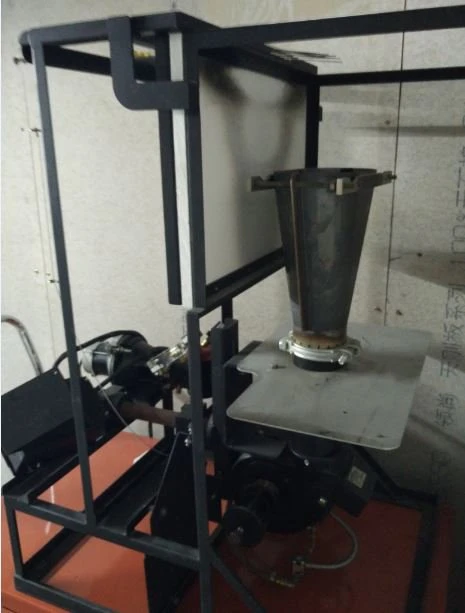
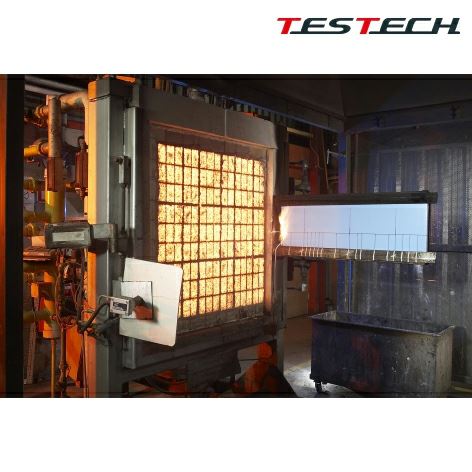
The Principle of an Aircraft Material Heat Release Rate Tester
An Aircraft Material Heat Release Rate Tester operates based on the principle of oxygen consumption calorimetry. This method is widely recognized as the most accurate and reliable way to measure the HRR of materials. The basic idea behind oxygen consumption calorimetry is that the heat released during combustion is directly proportional to the amount of oxygen consumed.
1. Sample Preparation
Before testing, a representative sample of the aircraft material is carefully prepared. The sample is typically cut into a specific size and shape, depending on the testing standard and the type of material. It is then placed in a test chamber, which is designed to simulate the conditions of a real fire.
2. Ignition and Combustion
Once the sample is placed in the test chamber, it is ignited using a controlled ignition source. The combustion process is carefully monitored, and the heat release rate is measured continuously throughout the test.
3. Oxygen Consumption Measurement
During combustion, the tester measures the amount of oxygen consumed by the sample. This is done by analyzing the composition of the exhaust gases using a gas analysis system Gas Analysis System. The gas analysis system measures the concentrations of oxygen, carbon dioxide, and other combustion products in the exhaust gases.
4. Heat Release Rate Calculation
Based on the measured oxygen consumption, the heat release rate of the sample can be calculated using the following equation:
[HRR = \Delta H_{c} \times \dot{m}{O{2}}]
where (HRR) is the heat release rate (in kW), (\Delta H_{c}) is the heat of combustion per unit mass of oxygen consumed (in kJ/kg), and (\dot{m}{O{2}}) is the mass flow rate of oxygen consumed (in kg/s).
The heat of combustion per unit mass of oxygen consumed is a constant value that depends on the type of fuel being burned. For most organic materials, the value of (\Delta H_{c}) is approximately 13.1 kJ/kg.
5. Data Analysis and Reporting
The measured heat release rate data is analyzed using specialized software, which provides detailed information about the combustion behavior of the sample. The software can generate graphs and reports that show the HRR as a function of time, as well as other important parameters such as the peak HRR, the total heat release, and the time to peak HRR.
Importance of Aircraft Material Heat Release Rate Testing
Aircraft material heat release rate testing plays a crucial role in ensuring the safety of aircraft and their passengers. By accurately measuring the HRR of aircraft materials, manufacturers can identify potential fire hazards and develop materials that are more fire-resistant. This helps to reduce the risk of fire in aircraft and improve the overall safety of air travel.
In addition to safety, heat release rate testing is also important for regulatory compliance. Many aviation regulatory agencies, such as the Federal Aviation Administration (FAA) in the United States and the European Union Aviation Safety Agency (EASA), have established strict regulations regarding the fire performance of aircraft materials. These regulations require aircraft manufacturers to test their materials using approved methods and to meet specific HRR requirements.
Other Related Testing Equipment
In addition to the Aircraft Material Heat Release Rate Tester, there are several other types of testing equipment that are used to evaluate the fire performance of aircraft materials. These include:
- Thermal Radiation Flame Propagation Tester: This tester measures the ability of a material to resist the spread of flame under the influence of thermal radiation.
- Pensky - Martens Closed Cup Flash Point Tester: This tester determines the flash point of a liquid material, which is the lowest temperature at which the material can produce a flammable vapor.
- Aircraft Fire Penetration Tester: This tester evaluates the ability of a material to resist the penetration of fire and heat.
- Flame Spread Tester: This tester measures the rate at which a flame spreads across the surface of a material.
Conclusion
As an Aircraft Material Heat Release Rate Tester supplier, I understand the importance of accurate and reliable testing equipment in ensuring the safety of aircraft materials. The principle of oxygen consumption calorimetry provides a robust and accurate method for measuring the heat release rate of aircraft materials, which is essential for regulatory compliance and the development of fire-resistant materials.
If you are in the aviation industry and are looking for high-quality testing equipment to evaluate the fire performance of your aircraft materials, I encourage you to contact us. Our team of experts can provide you with detailed information about our products and help you choose the right testing equipment for your needs. Let's work together to ensure the safety of air travel.
References
- ASTM E1354 - Standard Test Method for Heat and Visible Smoke Release Rates for Materials and Products Using an Oxygen Consumption Calorimeter
- ISO 5660 - Reaction to fire tests - Heat release, smoke production and mass loss rate - Part 1: Heat release rate (cone calorimeter method)