

Can a wire cable flammability tester be used in high - temperature environments?
As a leading supplier of wire cable flammability testers, I often receive inquiries about the applicability of our products in various environments, especially high - temperature ones. The question of whether a wire cable flammability tester can be used in high - temperature environments is a critical one for industries that operate under such conditions, like aerospace, automotive, and some industrial manufacturing sectors.
Understanding the Basics of Wire Cable Flammability Testers
Before delving into the high - temperature aspect, it's essential to understand what a wire cable flammability tester does. These testers are designed to evaluate the fire - related properties of wire and cable materials, such as their ignition resistance, flame spread rate, and the amount of heat and smoke they generate when exposed to fire. They play a crucial role in ensuring the safety and compliance of wire and cable products with relevant industry standards.
There are different types of wire cable flammability testers, each tailored to specific testing requirements. For instance, the Bunched Cable Vertical Flame Spread Tester assesses how a vertical bunched cable will behave when a flame is applied, measuring the vertical spread of the fire up or down the cable bunch. Another significant tester is the Power Cable Busway Combustion Test Furnace, which subjects power cables and busways to controlled combustion conditions to evaluate their fire - resistance capabilities.
The Impact of High - Temperature Environments on Wire Cable Flammability Testers
High - temperature environments can have several detrimental effects on wire cable flammability testers. One of the primary concerns is the thermal stability of the tester's components. Most testers are made up of various electronic and mechanical parts, many of which are designed to operate within a specific temperature range. When exposed to high temperatures:
1. Electronic Components
Electronic sensors and control circuits in the tester are highly sensitive to temperature. Excessive heat can cause them to malfunction or even permanently damage them. For example, resistors can change their resistance values with temperature variations, which might lead to inaccurate readings. Microcontrollers and other integrated circuits can experience thermal stress, resulting in data loss or incorrect operation. This ultimately affects the precision and reliability of the test results.
2. Mechanical Components
Mechanical parts, such as moving stages, gears, and drive systems, can also be negatively affected. High temperatures can cause metal parts to expand, leading to misalignment and increased friction. This can reduce the lifespan of the components and may also impact the accuracy of the testing process, especially when precise positioning or movement is required.
3. Material Degradation
The structural materials used in the tester's construction can degrade over time under high - temperature conditions. Plastics can become brittle, lose their mechanical properties, and even warp. This can compromise the integrity of the tester's housing and internal structures, potentially allowing heat, dust, or other contaminants to enter and further damage the internal components.
Adapting Wire Cable Flammability Testers for High - Temperature Use
Despite the challenges, it is possible to adapt wire cable flammability testers for high - temperature environments with appropriate design and engineering measures.
1. Heat - Resistant Materials
Using heat - resistant materials in the construction of the tester can significantly enhance its ability to withstand high temperatures. For example, replacing standard plastics with high - temperature polymers or using heat - treated metals can improve the thermal stability of the components. This reduces the risk of material degradation and ensures the long - term reliability of the tester.
2. Cooling Systems
Incorporating effective cooling systems is another crucial strategy. Active cooling methods, such as fans, heat sinks, or even liquid - cooling systems, can be used to dissipate the excess heat generated in high - temperature environments. These cooling mechanisms help maintain the internal temperature of the tester within a safe operating range, protecting the electronic and mechanical components from thermal damage.
3. Thermal Insulation
Applying thermal insulation materials to the tester's housing and critical components can also help. Insulation reduces the transfer of external heat into the tester, minimizing the impact of high - temperature environments on its internal parts. This can be particularly useful in situations where the tester needs to be placed close to heat sources.
Case Studies and Industry Applications
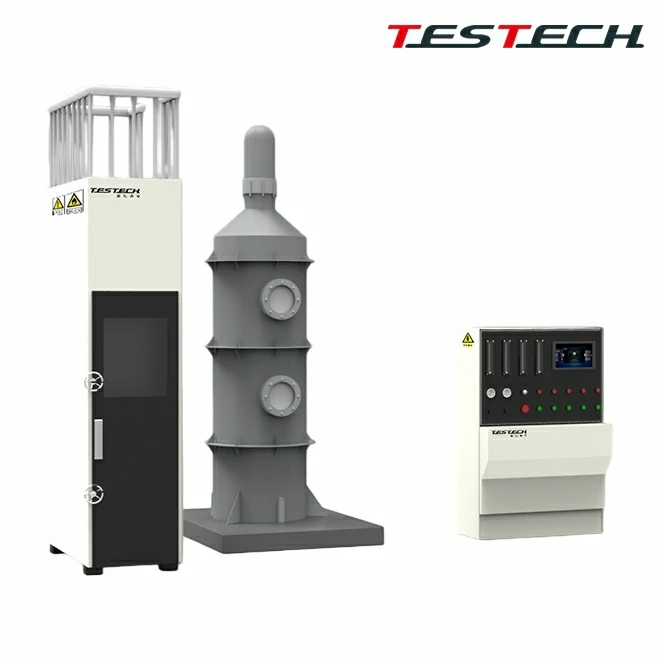
In the aerospace industry, wire and cable systems are often exposed to high - temperature conditions during flight, especially in areas near engines or high - power electronics. Fire Resistance Assemblies Tester adapted for high - temperature use are essential for ensuring the fire safety of these cables. They help determine whether the cables can maintain their integrity and functionality under extreme heat and fire conditions.
In the automotive industry, with the increasing adoption of electric vehicles, the battery management systems and high - voltage cables are subject to high temperatures during operation. A Vertical Shaft and Duct Fire Test Apparatus that can operate in high - temperature environments is crucial for evaluating the fire safety of these cables, helping manufacturers meet safety standards and prevent potential fire hazards.

Other Considerations in High - Temperature Testing
Apart from the technical adaptations of the tester, there are other considerations in high - temperature testing. One of them is the sample preparation. The wire and cable samples need to be properly conditioned to ensure that they are representative of real - world conditions in high - temperature environments. This may involve pre - heating the samples to a specific temperature before testing to simulate the stress they will experience during actual use.
Another aspect is the calibration of the tester. High - temperature environments can affect the calibration of the tester over time. Regular calibration using appropriate reference standards is necessary to ensure that the test results are accurate and reliable.
Conclusion and Call to Action
In conclusion, while wire cable flammability testers face challenges in high - temperature environments, with appropriate design adaptations and careful consideration of testing procedures, they can be effectively used in such conditions. At our company, we have extensive experience in developing and customizing wire cable flammability testers to meet the specific needs of high - temperature applications.
We offer a wide range of products, including the Carbon Black Content Tester, which can be tailored to operate in high - temperature scenarios. If you are in need of a reliable wire cable flammability tester for high - temperature environments, we invite you to contact us for a comprehensive discussion of your requirements. Our team of experts is ready to provide you with the best solutions and support to ensure the success of your wire and cable testing projects.
References
- ASTM International. "Standard Test Methods for Fire Tests of Electrical and Optical - Fiber Cables".
- ISO 13943:2017. "Fire safety - Vocabulary".
- Wang, Y. et al. "Thermal Management of Electronic Devices in High - Temperature Environments". Journal of Electronic Packaging, Vol. 140, 2018.