

If you’ve ever worked in the building materials, furniture, or packaging industry, you know how critical flammability testing is. It’s not just a regulatory hoop—it’s a matter of safety, protecting lives and property from fire hazards. As a supplier of Single Burning Item (SBI) testing equipment, I get a lot of questions from teams trying to figure out which tester is right for their needs. The conversation usually goes something like this: “What makes SBI different from other similar tools? Should I invest in this, or go for something else?” If that’s a question you’ve been asking, let’s break it down without the jargon, and pull back the curtain on how SBI stacks up against other common flammability testers we see in the field.
First, let’s start with what a Single Burning Item tester actually does, because that’s the foundation of any comparison. The SBI test is designed to evaluate the fire behavior of complete, full-scale items—not just small samples. You place the entire product (think: a sofa, a wall panel, a ceiling tile, or a section of floor) in a test chamber, apply a controlled small ignition source to a specific corner, and then measure how the fire spreads, how much smoke it produces, and how much heat it releases over a 20-minute period. The results give a comprehensive picture of how the item will perform in a real-world fire scenario, not just a lab-sized sample. That full-scale focus is the biggest thing that sets SBI apart, even if it’s easy to overlook when you’re looking at other testers.
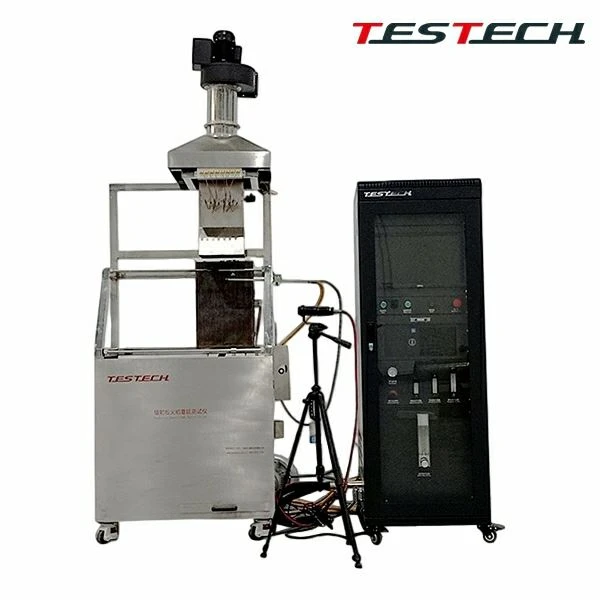
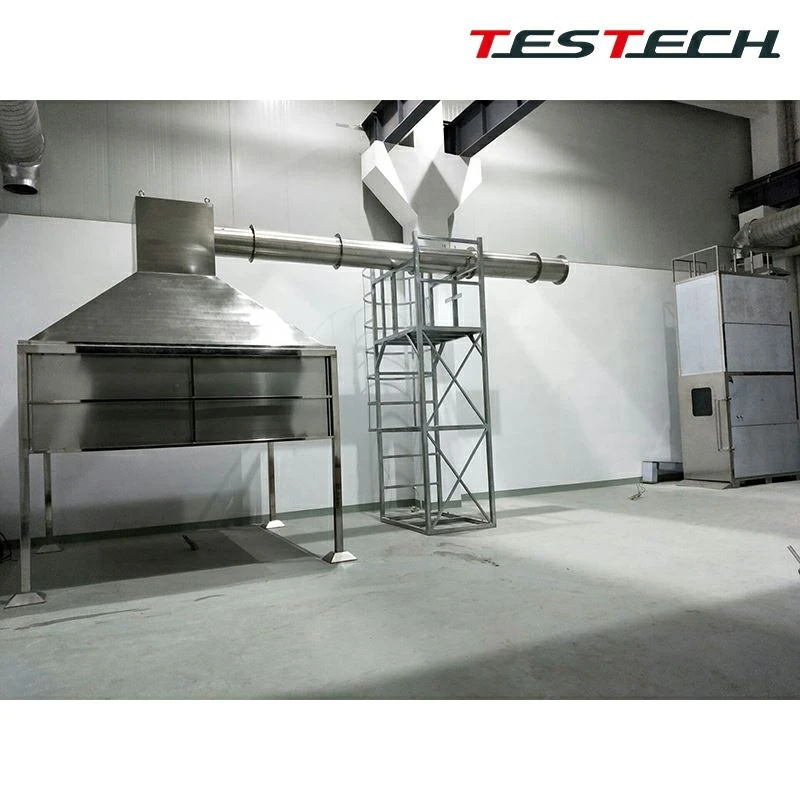
Let’s start with one of the most common alternatives people ask about: flame-retardant paper and cardboard flammability testers. If you test packaging materials, small paper goods, or thin cardstock, these units might seem like a quick, cheap option. They work by taking a small strip of material, clamping it vertically, and exposing it to a small flame for a set amount of time. You then measure how far the flame travels up the strip, or how long it takes to burn through. On paper, this sounds similar to a flammability test—but here’s the catch: it only works for tiny, thin, homogeneous materials. A sofa isn’t a thin strip of paper. A wall panel is a layered mix of wood, glue, and paint. A mattress has fabric, foam, and springs. The flame-retardant paper tester can’t replicate the way a full item’s layers interact, or how flames move over a three-dimensional object rather than a flat strip. I’ve had a customer come to me last year who’d been using a paper tester for their packaging, then realized their new line of custom foam inserts were failing building codes, because the small sample test didn’t account for the foam’s ability to hold heat and spread fire when assembled into a full box. That’s not a failure of the paper tester—it’s a mismatch of what it’s designed to do. If your product is larger than a thin, flat, homogeneous small sample, the flame-retardant paper tester isn’t going to give you the data you need. For those who work with full-scale items, SBI is the more accurate choice.
Next up, Non-Combustibility Test Apparatus. This is a tester for materials that need to meet strict non-combustibility standards, like metal, concrete, or gypsum board used in high-rise buildings. The non-combustibility test works by heating a small sample to 750 degrees Celsius for 30 minutes, and checking if it ignites, emits flammable gases, or has a temperature rise of more than 50 degrees above the heat source. It’s a critical test for materials that are supposed to resist fire entirely—but it’s only for materials that don’t burn at all. The problem here is that almost every product that’s ever going to be used in a home or office isn’t fully non-combustible. Take a wooden floor: it will burn, it just needs to perform in a way that’s safe. A sofa is definitely combustible. A mattress is too. The SBI test is designed for combustible or partially combustible full items, so it’s useless if you’re testing metal beams. But if you’re testing something that can burn, the non-combustibility test is way too limited—it doesn’t measure fire spread, heat release, or smoke from a full item. I always tell customers: if your product is going to be classified as non-combustible, get the non-combustibility tester linked here. But if you need to know how a full couch or wall will perform when it catches fire, SBI is the right tool.
Another tester that comes up often is Materials Smoke Production Toxicity Test Device. Smoke is one of the biggest fire killers—most fire deaths aren’t from burns, they’re from inhaling toxic fumes. The smoke toxicity test measures how much smoke a material produces, and how toxic that smoke is, from a small sample burned in a controlled chamber. Like the paper tester, it’s focused on small samples. The SBI test also measures smoke, but it measures it from the full item, not a tiny sample. Here’s where that matters: a small sample of foam might produce a certain amount of smoke, but when that foam is part of a full mattress or couch, the way it’s surrounded by fabric, springs, and other layers changes how the smoke is released and how it moves. The full-scale environment of an SBI test gives you data that’s way more relevant to real life. For example, we worked with a team that was testing a new eco-friendly foam for car seats. Their small-sample smoke test showed low toxicity, but when they ran an SBI test on the full seat, they found that the foam under the fabric burned in a way that released more toxic hydrogen cyanide than the small sample test caught. That’s the kind of data that only a full-scale test like SBI can deliver. If you care about how much smoke and toxic fumes your full product will produce, SBI combines that measurement with other critical data, unlike the smoke toxicity tester which only focuses on that one metric for small samples.
Then there’s the Radiant Panel Flame Spread Tester. This tester is used to measure how flames spread across a surface, like a wall or ceiling panel, when exposed to radiant heat. You mount a small sample of the material on a panel, heat it with a radiant burner, and measure how far the flame travels over 15 minutes. It’s a go-to for interior finish materials in buildings, and it’s been around for decades. So how does it compare to SBI? The big difference is scale and complexity. The radiant panel works with flat, small samples of a single material, like a section of drywall or wallpaper. SBI works with full, three-dimensional items made of multiple materials. Let’s say you’re testing a modular office partition: it has a wooden frame, fabric face, foam core, and metal fasteners. The radiant panel test would only test a sample of one part, like the fabric face, not how the whole partition behaves when fire starts at the bottom corner. The SBI test replicates that real-world interaction. Also, the radiant panel only measures flame spread along the surface, while SBI measures flame spread, heat release, smoke production, and even the rate of burning of the whole item. For example, a customer in the hospitality industry was testing wall partitions for a new hotel. Their radiant panel test said the fabric face was flame-resistant, but when they ran an SBI test on the full partition, they learned that the foam core inside ignited at a lower temperature than the fabric, leading to faster fire growth. That’s not a flaw in the radiant panel—it’s just a different use case. If you’re testing flat surface materials, radiant panel is a good fit, but if you’re testing full items like furniture, partitions, or whole products, SBI is more comprehensive.
Finally, Flammability Of Mattress Sets Test Apparatus. This is a tester specifically designed for mattresses, which makes sense because mattresses are a top cause of home fires. It works by placing a standard ignition source (like a smoldering cigarette or small flame) on the surface of a mattress, and measuring how the fire develops over time. It’s tailored exactly to mattresses, so if your only product is mattresses, this might seem like a more targeted choice. But let’s get real: if your business makes more than just mattresses—like sofas, chairs, or bedroom furniture—this tester is too narrow. The SBI test is flexible enough to test any full-scale item: mattresses, sofas, wall panels, floor coverings, even entire pieces of playground equipment. Another key point: the mattress-only tester often uses a standardized ignition source that’s specific to mattresses, while SBI uses ignition sources that can be adjusted for different products. For example, if you’re testing a chair, you can adjust the SBI’s ignition source to match the kind of fire that would start from a small electrical short, not just a cigarette. And while the mattress tester gives good data for beds, it doesn’t give you the full range of fire performance data that SBI does—like heat release rate, which is critical for understanding how fast a fire will grow and how easy it is to put out. We’ve had customers who bought the mattress-specific tester, then realized they wanted to add sofa testing to their line, and ended up needing to get an SBI as well. It’s better to start with a versatile tool that can grow with your product line, rather than a niche one that only works for one item.
Now, let’s talk about what SBI brings to the table that makes it stand out even beyond these comparisons. First, it’s standardized by global regulators—ISO 11925 is the standard that governs SBI testing, and it’s accepted in most countries for building material and furniture safety certifications. That means the results you get from an SBI test will be recognized for compliance, which is a big deal for getting products to market. Second, it’s full-scale, which we’ve touched on, but it’s worth repeating: small sample tests can miss critical interactions between different parts of a product. A laptop with a plastic case and lithium-ion battery, a set of shelves with wood and metal brackets, a child’s play tent with fabric and plastic poles—all of these will behave differently when assembled than their individual parts, and SBI captures that. Third, it measures multiple performance metrics in one test, instead of running multiple small tests. You get flame spread, heat release rate, total smoke production, and carbon monoxide concentration all from the same 20-minute test, which saves time and money on lab testing.
That said, SBI isn’t for everyone. If you’re testing tiny, simple materials like single-ply paper, thin cardboard, or small metal parts, a flame-retardant paper tester or non-combustibility tester will be cheaper and more efficient. If your entire product line is mattresses, the specialized mattress tester is a good option for that specific use case. If you’re testing flat interior surfaces like wall panels, the radiant panel is a strong, well-established tool. The key is matching the tester to what you actually need to test, not just picking the most popular one.
For example, let’s take a mid-sized furniture manufacturer I worked with a couple of years ago. They were making sofas, dining chairs, and bedroom dressers. At first, they were using a mix of small sample testers: a flame-retardant tester for the fabric, a foam flammability tester for the cushions, and a smoke test for the wood. But they kept failing building code inspections for commercial spaces, because those small tests didn’t reflect how the full furniture pieces performed when assembled. They invested in an SBI tester, and within six months, they’d adjusted their design to use a fire-resistant foam under the fabric, which cut their fire risk by 40% and helped them pass all their certifications. The ROI was obvious, because they stopped having to rework products and lost fewer customers due to compliance issues.
Another example: a packaging company that makes custom inserts for electronics. They were using the flame-retardant paper tester to test their cardboard inserts, but when a client required them to test the full package (cardboard plus foam inserts) for shipping safety, they realized the paper tester couldn’t account for the foam’s flammability when combined with cardboard. An SBI test let them test the full assembled package, and they were able to adjust the foam they used to meet the client’s requirements without overspending on expensive materials.
At the end of the day, the “best” tester depends on your product line, your regulatory needs, and how much detail you need about fire performance. But if you’re working with full-scale, multi-material items that need to meet global safety standards, SBI is far more comprehensive than the smaller, niche testers. It’s not a one-size-fits-all solution, but for most manufacturers building products that people will live and work around, it’s the tool that gives you the most accurate, actionable data to keep people safe and get your products to market.
If you’re tired of getting incomplete data from small sample tests, or you’re struggling to pass flammability certifications for your full products, it’s worth talking through your needs with a specialist who can help you pick the right tool for your business. Whether you’re just launching a new line or looking to upgrade your testing process, getting the right equipment is an investment in safety, compliance, and peace of mind. We’re here to help you navigate the options, and find the solution that fits your specific products and goals. Contact us to discuss your flammability testing needs and find the right equipment for your operations.
References
- ISO 11925:2019, Reaction-to-fire tests – Ignitability of building products subjected to direct impingement of flame – Single-flame source test
- NFPA 701: Standard Methods of Fire Tests for Flame Propagation of Textiles and Films
- ASTM E119: Standard Test Methods for Fire Tests of Building Construction and Materials
- EN 13823: Reaction to fire tests for building products – Building products excluding floorings exposed to the thermal attack by a single burning item