

Hey there! As a supplier of Melt Mass - Flow Rate Testers, I often get asked about the measurement range of these nifty devices. So, let's dive right in and explore what a typical Melt Mass - Flow Rate Tester can handle.
First off, let's quickly understand what a Melt Mass - Flow Rate Tester is all about. It's a crucial piece of equipment in the plastics industry. It helps us figure out the flow properties of thermoplastic materials. By measuring how much plastic flows through a die under specific conditions of temperature and pressure, we can gauge its melt flow behavior. This info is super important for manufacturers as it affects how the plastic will perform during the manufacturing process and in the final product.
So, what's the measurement range of a typical Melt Mass - Flow Rate Tester? Well, it can vary quite a bit depending on the model and the intended use. Generally speaking, most commercial Melt Mass - Flow Rate Testers have a measurement range starting from around 0.1 g/10 min to about 1000 g/10 min.
On the lower end of the scale, a measurement of 0.1 g/10 min indicates a material that has a very high viscosity. These are often high - performance plastics that are tough and have excellent mechanical properties. For example, polymers used in aerospace or automotive applications where strength and durability are key. These materials flow very slowly under the test conditions because their molecular chains are long and entangled, making it difficult for them to move past each other.
As we move up the range, materials with a higher melt mass - flow rate are more fluid. A measurement of 1000 g/10 min represents a plastic that flows very easily. These are typically used in applications where complex shapes need to be molded quickly, like in the production of disposable plastic cutlery or plastic packaging. The high flow rate allows the plastic to fill the mold cavities rapidly, ensuring a smooth and even finish.
Now, there are a few factors that can influence the measurement range of a Melt Mass - Flow Rate Tester. One of the most significant is the temperature. Most testers can be set to a range of temperatures, usually from around 130°C to 400°C. Different plastics have different melting points, and the temperature at which the test is conducted needs to be carefully selected. If the temperature is too low, the plastic won't melt properly, and the flow rate will be inaccurate. On the other hand, if the temperature is too high, the plastic may degrade, again leading to incorrect results.
Another factor is the load applied. The tester has a set of weights that can be added to create different levels of pressure on the molten plastic. The load can typically range from 0.325 kg to 21.6 kg. A higher load will force the plastic to flow more quickly, increasing the measured melt mass - flow rate. So, depending on the type of plastic being tested, the appropriate load needs to be chosen to get an accurate reading within the tester's measurement range.
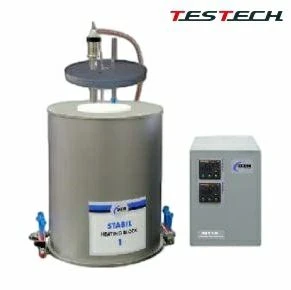
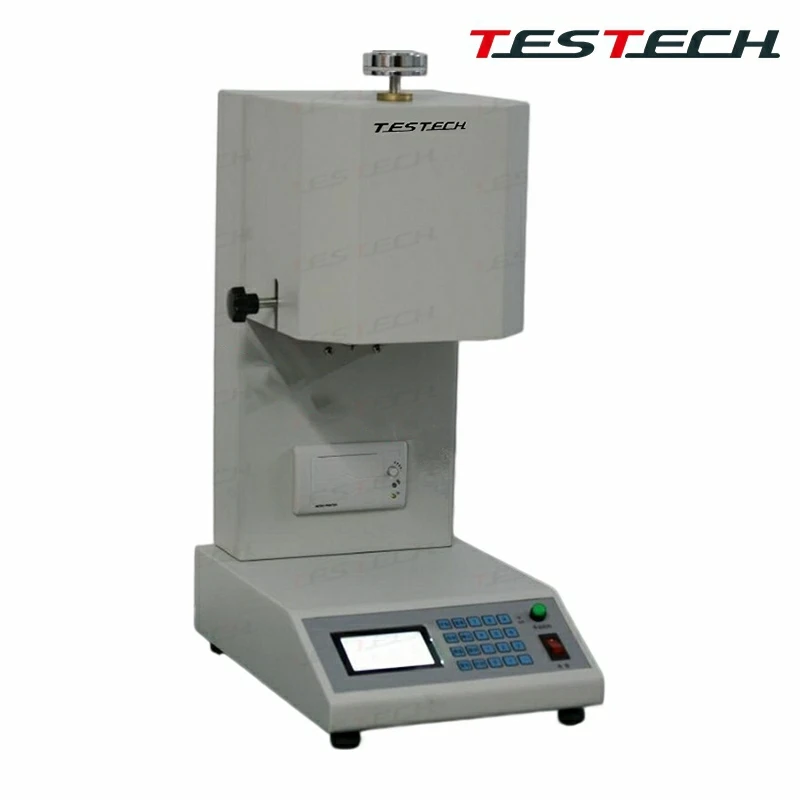
It's also worth noting that some advanced Melt Mass - Flow Rate Testers can have an even broader measurement range. These are designed for specialized applications or for testing a wide variety of plastics. They may be able to measure flow rates as low as 0.01 g/10 min or as high as 2000 g/10 min. However, these are less common and are usually found in research laboratories or large - scale manufacturing facilities with specific testing requirements.
If you're in the market for a Melt Mass - Flow Rate Tester, it's important to consider your specific needs. Think about the types of plastics you'll be testing, the range of melting points they have, and the typical flow rates you expect. This will help you choose a tester with the right measurement range for your applications.
At our company, we offer a range of Melt Mass - Flow Rate Testers that cover a broad spectrum of measurement ranges. Whether you're dealing with high - viscosity engineering plastics or low - viscosity commodity plastics, we've got you covered.
But we're not just about Melt Mass - Flow Rate Testers. We also have other great testing equipment in our inventory. For example, our Rubber Hose Non - flammability Tester is perfect for ensuring the safety of rubber hoses used in various industries. It can accurately determine whether a rubber hose meets the required non - flammability standards.
Our High - voltage Tracking Indices Tester is another essential tool for the electrical industry. It helps in evaluating the resistance of insulating materials to tracking and erosion under high - voltage stress.
If you're into evaluating the comparative tracking index of materials, our Comparative Tracking Index Tester is the way to go. It provides reliable and accurate results, helping you make informed decisions about the materials you use.
And for needle flame testing, our Needle Flame Test Apparatus is top - notch. It's designed to simulate the effects of a small flame on materials, ensuring their safety in real - world applications.
If you're interested in any of our products or have questions about the measurement range of our Melt Mass - Flow Rate Testers, don't hesitate to reach out to us. We're here to help you find the right testing solutions for your needs. Whether you're a small - scale manufacturer or a large research institution, we've got the expertise and the products to support you.
In conclusion, understanding the measurement range of a Melt Mass - Flow Rate Tester is crucial for getting accurate and useful data about your plastic materials. By considering the factors that influence this range and choosing the right tester for your applications, you can ensure the quality and performance of your products. So, let's chat and see how we can help you take your testing to the next level.
References:
- Plastics Testing Handbook: A Practical Guide to Testing and Quality Assurance, Second Edition. Thorsten Menges, Manfred Mohr, Jürgen Pantke (Eds.).
- ASTM D1238 - Standard Test Method for Melt Flow Rates of Thermoplastics by Extrusion Plastometer.