

In the field of material testing, understanding the heat of combustion is crucial for evaluating the flammability and safety of materials. A heat of combustion tester for material is an essential tool in this process. One factor that can significantly affect the results of a heat of combustion test is the sample particle size. In this blog post, we will explore the influence of sample particle size on the heat of combustion test and how it relates to our role as a supplier of heat of combustion testers for materials.
The Basics of Heat of Combustion Testing
Before delving into the impact of sample particle size, let's briefly review what heat of combustion testing entails. The heat of combustion is the amount of heat released when a substance undergoes complete combustion. Measuring this property helps in assessing the energy content of a material, its potential fire hazard, and its suitability for various applications.
A heat of combustion tester for material Heat Of Combustion Tester for Building Material typically operates by burning a sample in a controlled environment and measuring the released heat. The accuracy of this measurement depends on several factors, including the sample's physical and chemical properties, the testing conditions, and the instrument's calibration.
Influence of Sample Particle Size on Heat of Combustion Testing
1. Surface Area and Reaction Rate
One of the primary ways sample particle size affects the heat of combustion test is through its impact on the surface area. Smaller particle sizes result in a larger total surface area for a given mass of the sample. When the surface area is increased, more of the sample is exposed to the oxygen in the combustion chamber. This enhanced exposure leads to a faster reaction rate because the oxygen can react with the sample more readily.
For example, consider a solid material. A large chunk of the material has a relatively small surface area compared to the same mass of the material broken down into fine particles. In the former case, the oxygen has to gradually penetrate the outer layers of the material to reach the inner parts, slowing down the combustion process. In contrast, with fine particles, the oxygen can quickly access the entire sample, accelerating the combustion and potentially increasing the measured heat of combustion.

2. Heat Transfer and Combustion Completeness
Sample particle size also influences heat transfer during the combustion process. Smaller particles can transfer heat more efficiently because they have a higher surface - to - volume ratio. This efficient heat transfer helps in achieving more complete combustion.
Incomplete combustion occurs when there is not enough heat or oxygen available to fully convert the sample into its combustion products (such as carbon dioxide and water). Larger particles may experience incomplete combustion because the heat generated at the surface may not be sufficient to penetrate to the core of the particle, leaving unburned material. As a result, the measured heat of combustion may be lower than the actual value.
On the other hand, smaller particles are more likely to burn completely, leading to a more accurate measurement of the heat of combustion. This is because the heat can spread quickly throughout the particle, ensuring that all parts of the sample are exposed to the high temperatures required for complete combustion.
3. Homogeneity and Sampling
The particle size can also affect the homogeneity of the sample. A sample with a consistent particle size is more likely to be homogeneous, meaning that its composition is uniform throughout. Homogeneity is crucial in heat of combustion testing because it ensures that the measured heat of combustion is representative of the entire material.
If the sample has a wide range of particle sizes, there may be variations in the local composition and density. For instance, larger particles may contain a different proportion of certain components compared to smaller particles. This can lead to inconsistent combustion behavior and inaccurate heat of combustion measurements. By controlling the particle size, we can improve the homogeneity of the sample and obtain more reliable test results.
Implications for Our Heat of Combustion Testers
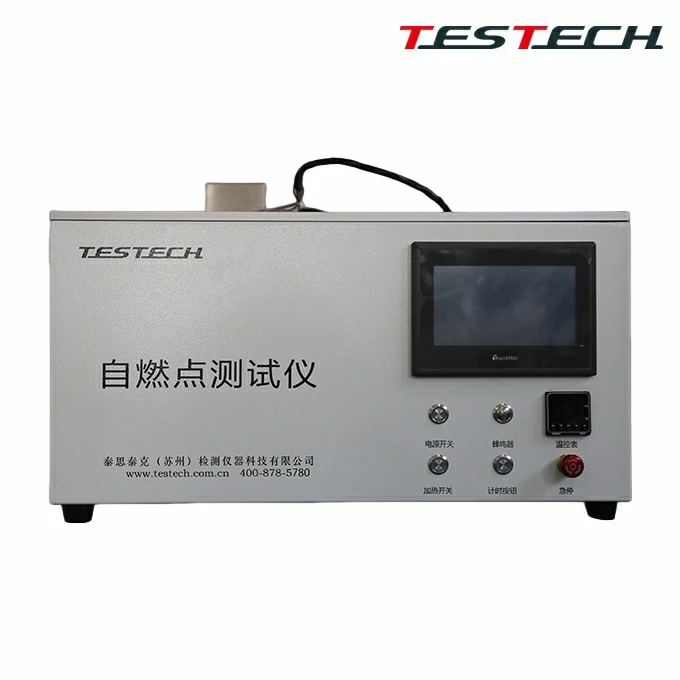
As a supplier of heat of combustion testers for materials, understanding the influence of sample particle size is essential for providing accurate testing solutions. Our Alcohol Burner Combustion Tester and Auto Ignition Point Tester are designed to work with samples of various particle sizes, but the optimal results are achieved when the sample preparation takes into account the factors discussed above.
We recommend that our customers carefully prepare their samples to ensure a consistent particle size. This can be done through methods such as grinding or sieving. By providing guidelines on sample preparation, we can help our customers obtain more accurate and reproducible heat of combustion test results.
In addition, our Flame Propagation Calorimeter and Flame - Retardant Wood Fire - Tube Method Flammability Tester also benefit from proper sample particle size control. These instruments rely on accurate heat measurements, and the influence of particle size on heat transfer and combustion completeness can have a significant impact on their performance.
Importance in Different Industries
The influence of sample particle size on heat of combustion testing is relevant in various industries. In the construction industry, understanding the heat of combustion of building materials is crucial for ensuring fire safety. For example, using a heat of combustion tester for building materials Heat Of Combustion Tester for Building Material to evaluate the fire - resistance of insulation materials can help architects and engineers make informed decisions. By controlling the particle size of the insulation material samples during testing, more accurate data can be obtained, leading to better - designed and safer buildings.
In the energy industry, the heat of combustion of fuels such as coal, oil, and biofuels is a critical parameter. Accurate measurement of the heat of combustion helps in determining the energy efficiency of these fuels. A consistent particle size of the fuel samples can improve the accuracy of the heat of combustion measurement, which in turn affects the efficiency calculations and cost - benefit analyses.
Contact for Purchasing and Consultation
If you are in need of high - quality heat of combustion testers for materials, we are here to provide you with the best solutions. Our team of experts can assist you in choosing the right instrument for your specific testing requirements and offer guidance on sample preparation, including the control of sample particle size.
We understand that every customer's needs are unique, and we are committed to providing personalized service. Whether you are in the construction, energy, or any other industry that requires accurate heat of combustion testing, we can help. Contact us to start a discussion about your testing needs and how our products can meet them.
References
- ASTM D240 - 22, Standard Test Method for Heat of Combustion of Liquid Hydrocarbon Fuels by Bomb Calorimeter.
- ISO 1716:2018, Reaction to fire tests — Building products — Determination of the heat of combustion.
- Smith, J. R., & Johnson, A. B. (2019). The impact of particle size on combustion properties of solid fuels. Combustion Science and Technology, 191(5), 789 - 802.