

If you’re in the market for a wire and cable smoke density tester, you’ve probably noticed that not all units are created equal. As a supplier who’s worked with dozens of electrical manufacturers, construction firms, and certification labs over the past decade, I’ve seen first-hand how choosing the wrong tester can lead to costly delays, failed compliance audits, and even safety risks down the line. Smoke density testing isn’t just about measuring how much fumes a cable releases when burned—it’s about matching the tester’s capabilities to your specific industry standards, cable types, and testing goals. In this post, I’ll break down the core comparison methods you need to use when evaluating different models, so you can make a decision that fits your needs without overspending on features you’ll never use.
First, let’s start with the basics: what exactly is a wire and cable smoke density tester? At its core, these devices measure the optical density of smoke emitted by burning or smoldering cable samples, because higher smoke density is directly linked to reduced visibility during a fire—something that can trap people in buildings, block emergency exits, and make fire suppression efforts far less effective. But not all tests are the same. Some models focus on small, individual cable samples, while others are designed for bundled cables that mimic real-world installations, like the Bunched Cable Vertical Flame Spread Tester which is built specifically for larger groups of cables that run parallel in walls, conduits, or raceways. That’s why the first comparison method we’ll cover is sample size and configuration compatibility.
When evaluating models, the most critical question to ask is: does the tester work with the cable types you regularly test? For example, a tester that only accepts single cable samples is great for lab research on new cable compounds, but it won’t give you accurate data for commercial buildings where cables are bundled together. The Single Cable Propagation Tester fills that niche perfectly for engineers developing new cable coatings, but if you’re testing cables for a high-rise construction project, you’ll need a unit that can handle 4, 8, or even 12 bundled cables at a time. I’ve had customers come to me after buying a small single-cable tester because it was cheaper, only to find out their local building code requires bundled cable smoke testing—and they had to buy a second unit six months later. Don’t make that mistake. If your work includes industrial or commercial installations, prioritize testers with adjustable sample holders that can accommodate both single and bundled cables, with clear, standardized mounting systems that align with IEC or ASTM standards.
Next up is smoke measurement technology and accuracy. This is where the science gets specific, and where many budget models cut corners. Smoke density testers use either laser or incandescent light sources to measure how much smoke blocks a light beam passing through the test chamber. Laser-based models are generally more precise, because they emit a narrow, consistent wavelength of light that’s less affected by dust or minor chamber imperfections. Incandescent models are cheaper, but they can drift over time as the bulb ages, leading to inconsistent readings that might cause you to reject a good batch of cables or accept a bad one. The key here is to compare the tester’s calibration standards: does it come pre-calibrated with a certified smoke density standard, and is it easy to re-calibrate on-site? Also, look for models that output results in both optical density (Ds) values—this is the standard metric used by most global codes—and particulate concentration, which is useful for further fire safety analysis. A bonus feature to compare is real-time data logging: some models only give you a final Ds value, while others track smoke levels every 10 or 30 seconds, which helps you see how smoke release changes over time (for example, when a cable’s plastic coating melts vs. when the insulation burns fully).
Another important comparison factor is complementary testing capabilities, because smoke density rarely exists in isolation. When a cable burns, it also releases toxic gases, halogens, and heat—all of which contribute to fire risk. Many modern testers integrate or work alongside other testing tools to give you a full picture of a cable’s fire performance. For example, if you need to test for halogen content, a smoke density tester that pairs with the Halogen PH Conductivity Tester can measure not just smoke, but also the acidity and conductivity of the combustion gases—critical for meeting standards like IEEE 383 or IEC 60754. For large projects involving multiple cables, heat release is also a key metric, and some testers can connect to the Heat Release System Of Bunched Cables to track how much heat the burning cables generate, which affects fire spread and structural damage. If your work is in a specialized industry like marine or naval engineering, you’ll also want to compare models that work with the Naval Engineering Standard 713 Toxic Chamber, which measures the toxicity of smoke specifically for naval applications where crew safety is a top priority. The takeaway here is that a tester that only does smoke density is limiting; compare how well it integrates with other fire safety tools based on your industry’s unique requirements.
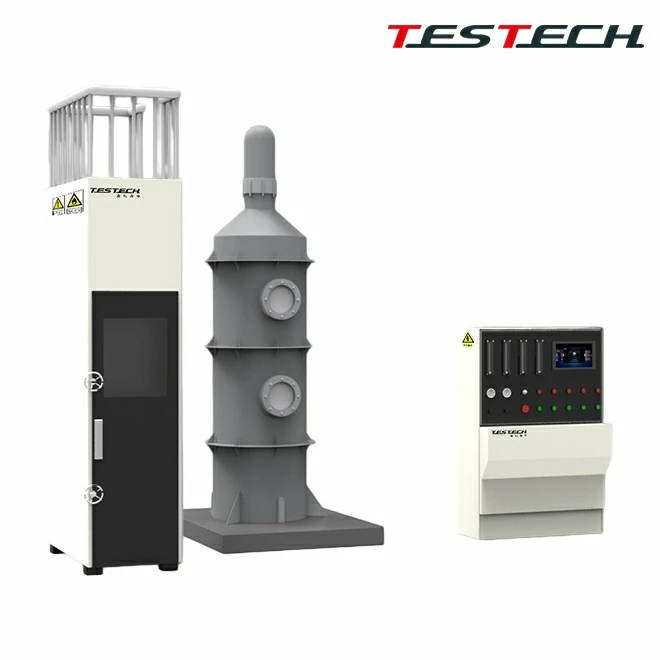
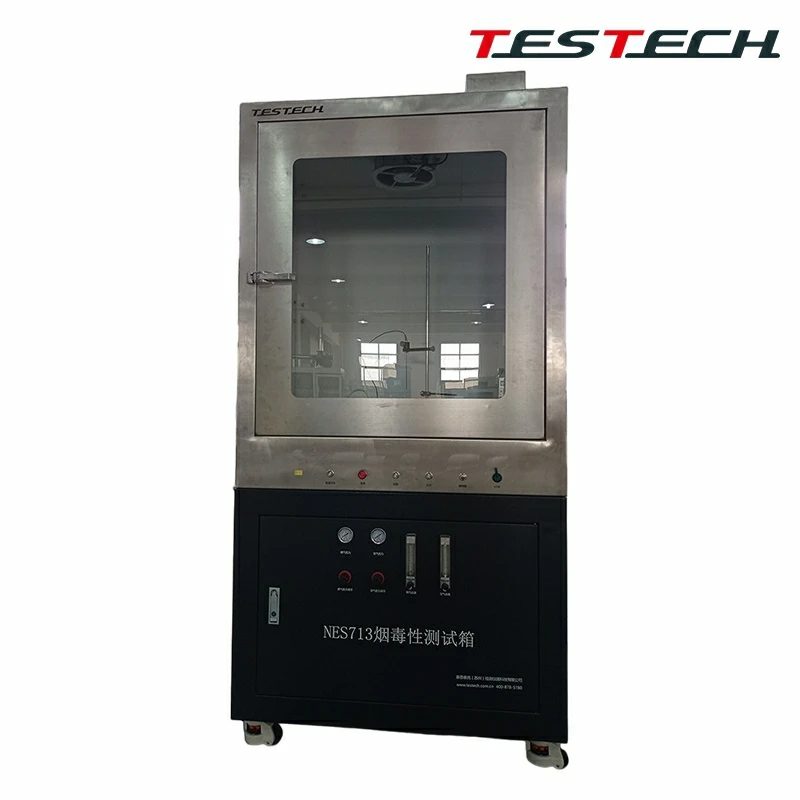
Then there’s ease of use and long-term reliability, which are easy to overlook when you’re focused on technical specs. Let’s be real: lab techs and quality control managers are busy people, and a tester that takes 20 minutes to set up a single test is going to slow down your workflow. When comparing models, look at how easy it is to load samples, clean the chamber after a test (smoke residue can build up and skew results if not removed properly), and input test parameters. Some budget models require you to manually enter test conditions every time, while higher-end units have pre-loaded standard protocols for IEC, ASTM, or naval standards, so you just select the code and start the test. Also, check the tester’s maintenance requirements: does it need special filters or bulbs that are hard to source, or can you replace common parts like light sources and chambers in-house? Over the past few years, I’ve seen customers struggle with foreign-made testers that require custom replacement parts that take weeks to ship—leading to backlogs in their testing schedule. As a supplier, I prioritize models with local support and readily available parts, because downtime in testing is costly.
Regulatory compliance is, without a doubt, the most important comparison method for most buyers. No matter how good a tester’s specs are, if it doesn’t meet the exact standards required by your industry or region, it’s useless. Let’s break down the most common standards and what to look for:
- For North America: Most construction projects require compliance with NFPA 70 (NEC) or ASTM E662, which covers smoke density for single and bundled cables. Make sure the tester is listed by a recognized certification body (like UL or CSA) for these standards.
- For Europe and Asia: IEC 60332 and IEC 61034 are the go-to standards for cable fire and smoke performance, and your tester should be calibrated to match these protocols exactly.
- For military and naval applications: As mentioned earlier, NAVSEA OP 5 or the Naval Engineering Standard 713 require specific testing for smoke toxicity and density, so your tester must have been validated for these tests.
- For industrial or nuclear facilities: IEEE 383 and IEEE 1202 have stricter smoke and fire requirements, so look for testers that can handle longer test durations and higher sample counts.
I can’t tell you how many times a customer has come to me with a tester that “meets IEC standards” only to find out it was calibrated for a draft of the standard that was updated 10 years ago. Always ask for a copy of the tester’s calibration certificate and its alignment with the latest version of the standards you need.
Another underrated comparison point is scalability. If you’re a small lab that only tests a few cables a month, a compact, benchtop model will fit your needs perfectly and won’t take up valuable space. But if you’re a large manufacturing plant or a third-party testing lab that needs to run 20+ tests a week, you’ll want a tester with higher throughput—maybe one that has dual chambers so you can run two tests at the same time, or automatic sample loading to reduce manual work. Some models also have software that integrates with your lab’s LIMS (Laboratory Information Management System), which lets you automatically log and store test results for audit trails. That’s a huge time-saver for regulated industries that need to keep detailed records for compliance audits.
Now, let’s talk about common pitfalls I see buyers make when comparing testers. First, chasing the lowest price without checking the specs. A $10,000 tester might seem like a steal compared to a $20,000 model, but if the cheaper one can only test single cables and your work requires bundled testing, you’ll end up spending twice as much in the long run on additional testing or a new unit. Second, ignoring after-sales support. A tester is a long-term investment, and you’ll need help with calibration, repairs, and software updates. Ask the supplier what kind of support is included—do they offer on-site calibration, remote troubleshooting, or training for your staff? At my company, we provide free on-site training for every tester we sell, plus annual calibration packages at a discounted rate, because we know that even the best tester is only as good as the person using it. Third, not testing the actual cable samples you work with. Many suppliers will let you run a pilot test with your own cables to see how the tester performs. I always recommend taking advantage of that—don’t just rely on the manufacturer’s test data; run your own samples to make sure the readings are consistent with your past results.
If you’ve made it this far, you probably have a good idea of what to look for when comparing wire and cable smoke density tester models. The key takeaway is that there’s no one “best” tester—only the best one for your specific needs. Start by listing your non-negotiables: what standards do you need to meet, what cable types will you test, and what’s your throughput? Then, evaluate models against those criteria, not just price. Consider the complementary tools you might need, like the ones linked above for flame spread, halogen testing, or naval toxicity, because integrating these can simplify your testing process and give you more comprehensive data.
If you’re ready to start evaluating models or have questions about which tester is right for your application, I’m here to help. As a supplier with years of experience in this space, I’ve worked with clients across industries and can walk you through the features, calibration, and support options that will fit your budget and requirements. Don’t hesitate to reach out for a no-obligation consultation to discuss your testing needs.
References
ASTM E662-21, Standard Test Method for Specific Optical Density of Smoke Generated by Solid Materials
IEC 61034-2:2005, Measurement of Smoke Density from Cables Burning Under Defined Conditions - Part 2: Single Cable Test
NFPA 70®: National Electrical Code® 2023 Edition
NAVSEA OP 5, Naval Ships' Technical Manual, Chapter 550: Fire Protection, Detection, and Suppression
IEEE 383-2015, Standard for Type Test of Class 1E Electric Cables, Field Splices, and Connections for Nuclear Power Generating Stations