

If you’ve ever worked with gas analysis systems, you know that their accuracy lives or dies by one critical, often overlooked component: calibration gas. As a supplier of gas analysis systems, I’ve seen too many projects derailed by teams cutting corners here—using generic gases, misaligning concentrations, or skipping validation steps entirely. In this post, I’ll break down exactly what calibration gas is, why it’s non-negotiable for reliable gas analysis, the types you’ll need depending on your use case, and how to get this right (hint: it’s not just grabbing any can of compressed gas).
First, let’s ground this in the core purpose of gas analysis systems. Whether you’re testing emissions from industrial stacks, monitoring toxic gases in fire toxicity assessments, or validating the safety of automotive components, these systems convert raw sensor readings into data you can trust. A thermal conductivity detector (TCD) for carbon dioxide, a non-dispersive infrared (NDIR) sensor for carbon monoxide, or a Fourier-transform infrared (FTIR) system for multi-gas mixtures—all of these rely on a reference point to calibrate their readings. That reference is calibration gas, a precision blend of target gases (and often balanced with an inert gas like nitrogen or clean air) with a known, verified concentration.
Let’s make this concrete with an example from a common application we support: fire toxicity testing. When researchers test materials used in transportation—like automotive interior trim or aircraft insulation—they need to measure toxic gases (CO, CO2, HCN, NOx, etc.) emitted during controlled combustion, often to meet regulatory standards. The Gasmet FTIR System for Toxicity Test in Fire Testing Application is a go-to for this work, and even the most advanced FTIR will give skewed results if not calibrated with the right blend of gases. I once worked with a team that tried to use a 100% CO cylinder for their calibration, instead of a certified blend of CO balanced in nitrogen at a 500 ppm concentration. Their readings for low-level CO emissions were off by 15%—enough to cause them to reject a material that met safety standards, or worse, pass a material that failed. That’s the real-world cost of skipping proper calibration gas.
So, what makes calibration gas different from the compressed air or simple gas cylinders you might have on hand for general lab use? The key is traceability and specificity. A “generic” compressed air might have 0.04% CO2, but for most industrial applications, you need a calibration gas with a concentration that’s tailored to your system’s measurement range. For example, a NDIR sensor that measures CO from 0 to 1000 ppm will need a mid-range check standard (say, 500 ppm CO) and a zero standard (pure, CO-free air) to confirm it’s reading correctly. If you use a standard with 5000 ppm CO for a system that’s only designed for 0-1000 ppm, you’ll overload the sensor and damage it over time—not to mention invalidating any calibration data.
Next, it’s important to match your calibration gas to your specific gas analysis system and application. Here are the most common types, and when you’ll need them:
-
Zero Calibration Gas: This is your baseline. It’s pure, free of the target gases you’re measuring, and used to “zero out” any background interference in your system. For most applications, zero gas is clean, dry synthetic air, but in cases where you’re measuring trace gases (like H2S in natural gas processing), you might use nitrogen as a zero standard to avoid any interference from air components.
-
Span Calibration Gas: This is the gas with a known concentration of your target gas (or mixture of gases) that spans the measurement range of your sensor. For multi-gas systems like the Gasmet FTIR I mentioned earlier, you’ll need a multi-component calibration gas blend that includes all the gases you plan to measure—CO, CO2, HCN, NOx, SO2, and so on—each at concentrations relevant to your test. The key here is that the blend must be certified by a traceable standards organization (like NIST in the U.S. or PTB in Germany) so you have proof of its accuracy.
-
Balance Gas: Often overlooked, the balance gas is the inert component of your calibration gas blend. It doesn’t interact with your sensor, but it’s crucial for maintaining the partial pressure of the target gas (a core principle in gas detection). If you’re calibrating for CO at 500 ppm, the balance gas is almost always nitrogen for high-purity applications, or clean air for open-path systems. Using the wrong balance gas can throw off your partial pressure calculations, leading to incorrect readings.
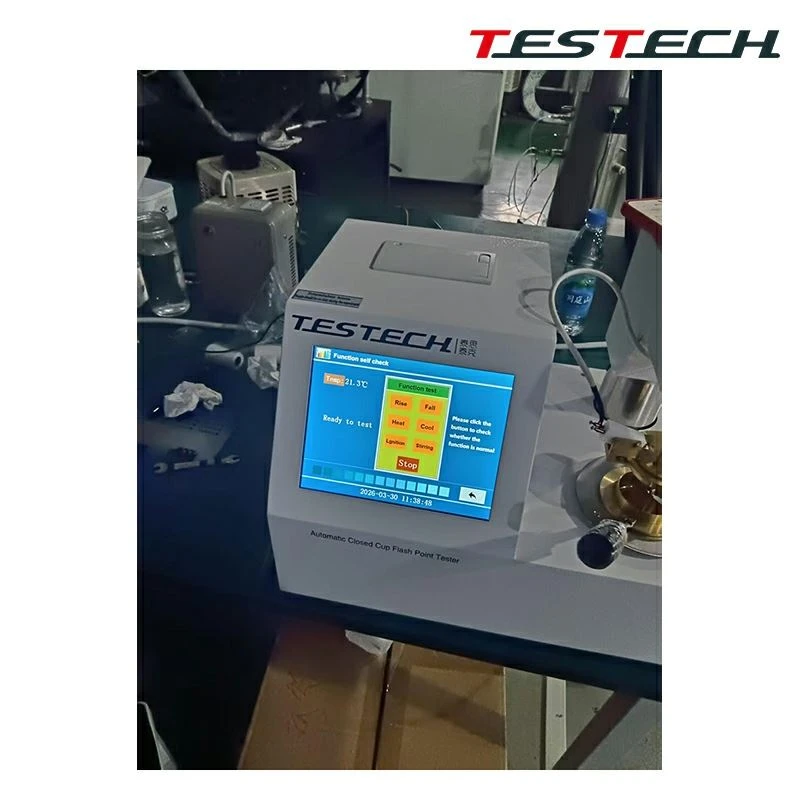
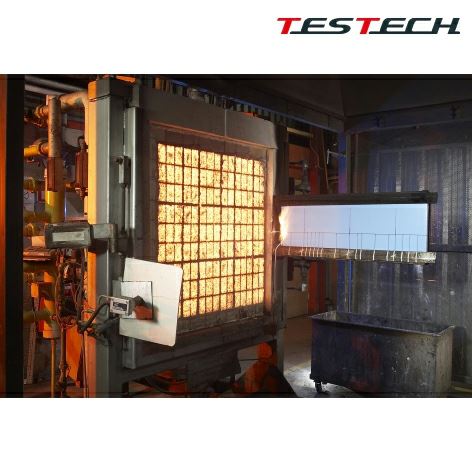
Let’s tie this back to some of the other testing equipment our clients use, because calibration gas works hand-in-hand with tools like flame spread testers or flash point analyzers. For example, if you’re testing flammability of automotive wiring harnesses with an Automotive Wire Harness Flammability Tester, you might need to monitor combustion gases during the test to characterize fire behavior. The flame spread tester itself measures how quickly a flame propagates across a material, but pairing it with a gas analysis system means you’re also measuring toxic gas emissions—so your gas system needs to be calibrated with a blend that matches the expected gas profile from that specific test. Similarly, when testing flammable liquids with a TAG Closed Cup Auto Flash Point Analyzer or a Pensky-Martens Closed Cup Flash Point Tester, you might need to measure volatile organic compounds (VOCs) emitted as the liquid is heated. Those VOCs can be detected with a PID sensor, which requires calibration gas with a known VOC concentration to ensure accurate flash point readings.
Now, let’s talk about common mistakes I see as a gas analysis system supplier, because even if you get the calibration gas type right, you can still mess up the calibration process. First, expiration dates. Calibration gas doesn’t last forever—over time, the gases in the blend can diffuse through the cylinder valve, or react with the inner surface of the cylinder, altering the concentration. Most calibration gas cylinders have a shelf life of 1-3 years, depending on the gas type and cylinder material. We always advise our clients to check the expiration date before every calibration, because using an expired gas is just as bad as using the wrong gas.
Second, storage conditions. Calibration gas cylinders should be stored in a cool, dry place, away from direct sunlight and extreme temperatures. High temperatures can speed up gas diffusion, while extreme cold can cause the cylinder pressure to drop, leading to inconsistent flow rates during calibration. We had a client last year who stored their calibration gas in a warehouse next to a furnace; the high heat caused the CO blend to degrade, and their weekly calibration checks showed readings drifting 10% after just a month. Once they moved the cylinder to a temperature-controlled lab, their readings stabilized.
Third, matching the calibration gas to your sample matrix. If you’re measuring gases in a wet sample stream (like combustion exhaust, which has high moisture content), you need to account for moisture in your calibration. Some calibration gases are “dry” and don’t match the moisture in your sample, which can cause water condensation in your gas analysis system’s sensor, leading to corrosion or incorrect readings. For these cases, we recommend using humidity-adjusted calibration gases, or adding a dryer to your calibration line to mimic sample conditions.
At the end of the day, calibration gas isn’t an afterthought—it’s the foundation of reliable gas analysis. Whether you’re working in fire safety, automotive testing, industrial emissions monitoring, or any field that relies on gas data, taking the time to source the right calibration gas, check its traceability, and follow proper calibration steps will save you time, money, and avoid costly errors. If you’re not sure what calibration gas you need for your specific gas analysis system, or you have questions about matching it to your testing equipment (like flame spread testers, flash point analyzers, or FTIR systems), our team is here to help. We work closely with clients to recommend the right calibration gas blends, and we partner with them to ensure their gas analysis systems are calibrated correctly for every test.
Don’t let bad calibration gas ruin your data. For reliable calibration solutions tailored to your gas analysis needs, reach out to us to discuss your project requirements. Our experts will walk you through every step, from selecting the right gas blend to guiding you through the calibration process, so you can trust the results of every test you run.
References
- ISO 6145-7: Gas analysis — Preparation of calibration gas mixtures — Part 7: Dynamic volumetric method
- ASTM E1821: Standard Practice for Gas Chromatography Analysis of Gases in Combustion Gases and Flue Gases
- Gasmet Technologies. (2022). FTIR Calibration Best Practices for Fire Toxicity Testing.
- National Institute of Standards and Technology (NIST). (2021). Traceable Calibration Gas Standards for Industrial and Laboratory Use.
- European Committee for Standardization (CEN). (2019). EN 50305: Railway applications — Environmental conditions for equipment — Part 5: Equipment for passenger compartments.