

In the realm of building materials safety testing, a Room Corner Tester plays a pivotal role. As a trusted supplier of these crucial testing instruments, we understand the significance of accurate readings in ensuring the safety and compliance of building materials. However, what if a Room Corner Tester gives inaccurate readings? This is a question that not only concerns us but also the entire industry that relies on these results for regulatory compliance, product development, and safety assurance.
Understanding the Room Corner Tester
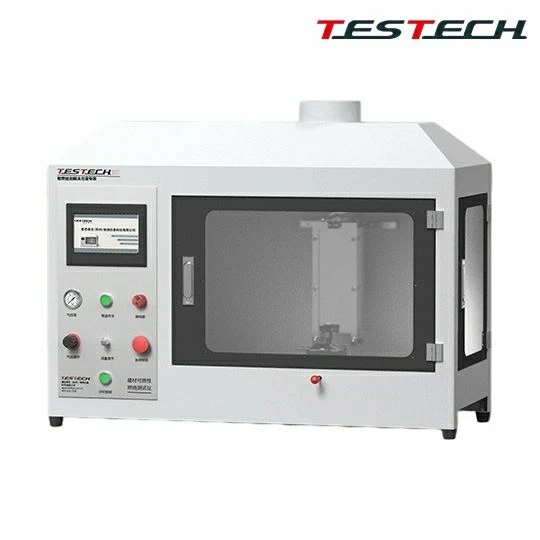
Before delving into the implications of inaccurate readings, let's first understand what a Room Corner Tester is and what it does. A Room Corner Tester is designed to simulate a real - scale fire scenario in a confined space, typically a corner of a room. It is used to evaluate the fire performance of various building materials, including wall and ceiling linings. By subjecting materials to a controlled fire source under specific conditions, the tester measures key parameters such as flame spread, heat release rate, and the production of smoke. These measurements are then used to classify the materials according to fire safety standards, which are essential for protecting lives and property.
Causes of Inaccurate Readings
There are several factors that can lead to inaccurate readings from a Room Corner Tester. One of the most common causes is improper calibration. Just like any other precision instrument, a Room Corner Tester needs to be regularly calibrated to ensure that it is measuring accurately. Over time, wear and tear can affect the performance of sensors and other components, leading to deviations from the correct values. If the calibration is not carried out at the recommended intervals or by a qualified technician, the readings will likely be inaccurate.
Another factor is environmental conditions. The Room Corner Tester operates within a specific range of temperature, humidity, and air pressure. Any significant deviation from these ideal conditions can affect the combustion process and, therefore, the test results. For example, high humidity can slow down the evaporation of moisture from the test specimen, which may alter the heat release rate and flame spread. Similarly, variations in air pressure can affect the air - fuel mixture in the test chamber, leading to inconsistent results.
Human error is also a significant contributor to inaccurate readings. Operators need to follow strict procedures when preparing the test specimens, setting up the tester, and conducting the test. Any mistakes, such as incorrect placement of the specimens, improper adjustment of the burner, or inaccurate recording of data, can result in false readings. Additionally, inexperience or lack of training among operators can increase the likelihood of errors.
Implications of Inaccurate Readings
The consequences of inaccurate readings from a Room Corner Tester can be far - reaching. From a regulatory perspective, inaccurate results can lead to misclassification of building materials. Materials that are deemed safe based on false readings may actually pose a significant fire hazard when used in real - world applications. This not only violates building codes and regulations but also puts occupants at risk.
In the product development phase, inaccurate readings can mislead manufacturers. They may invest time and resources in developing materials based on faulty test results, only to find out later that the materials do not meet the required safety standards. This can result in delays in product launches, increased costs, and damage to the company's reputation.
Furthermore, inaccurate readings can have legal implications. If a fire occurs and it is found that the building materials were tested using inaccurate results, the supplier, manufacturer, and testing laboratory may all be held liable for any damages or injuries caused.
Mitigating the Risk of Inaccurate Readings
As a supplier of Room Corner Testers, we are committed to helping our customers mitigate the risk of inaccurate readings. Firstly, we provide comprehensive training for operators of our testers. Our training programs cover all aspects of the instrument, from basic operation to advanced troubleshooting. By ensuring that operators are well - trained, we can significantly reduce the likelihood of human error.
Regular maintenance and calibration are also essential. We offer a maintenance service package that includes scheduled inspections, part replacements, and calibration checks. Our technicians are highly skilled and certified to carry out these tasks, ensuring that your Room Corner Tester is always in optimal working condition.
In addition, we recommend that our customers monitor and control the environmental conditions in the testing area. This can be achieved through the use of climate control systems, which can maintain a stable temperature, humidity, and air pressure. By providing a consistent testing environment, we can minimize the impact of environmental factors on the test results.
Alternatives and Complementary Testing Methods
While the Room Corner Tester is a powerful tool for evaluating the fire performance of building materials, it is not the only testing method available. There are several other instruments and techniques that can be used to complement the results obtained from a Room Corner Tester.
One such alternative is the Flooring Radiant Panel Tester. This tester is specifically designed to evaluate the fire performance of floor coverings. It measures the critical radiant flux, which is an important parameter for determining the fire spread potential of flooring materials.
Another option is the Building Material Flammability Apparatus. This apparatus can be used to test a wide range of building materials under different fire exposure conditions. It provides valuable information about the ignition time, flame spread, and heat release rate of the materials.
The Hard Foam Vertical Burning Test Instrument is suitable for testing the vertical burning behavior of hard foam materials. It helps to determine the flammability class of the foam, which is crucial for applications where fire safety is a concern.
The Cone Calorimeter is a widely used instrument for measuring the heat release rate of materials. It provides detailed information about the combustion process, including the rate of heat release, mass loss rate, and the production of smoke and toxic gases.
Finally, the Steel Structure Fire Retardant Coating Samples Test Furnace is designed to test the fire - resistant performance of steel structure fire retardant coatings. It can simulate the high - temperature conditions during a fire and evaluate the effectiveness of the coatings.

Conclusion
Inaccurate readings from a Room Corner Tester can have serious implications for the building materials industry. As a supplier, we are aware of the challenges and are dedicated to providing solutions to ensure the accuracy and reliability of our testing instruments. By offering comprehensive training, maintenance services, and recommendations for environmental control, we help our customers obtain accurate and trustworthy test results.
In addition, we recognize the importance of having a range of testing methods available. The complementary instruments we mentioned can provide additional data and insights, which can enhance the overall understanding of the fire performance of building materials.
If you are in the market for a Room Corner Tester or any of the complementary testing instruments, and you want to ensure the highest level of accuracy and performance, we invite you to contact us. Our team of experts is ready to assist you in choosing the right equipment for your needs and to provide you with the support you require.
References
- ASTM E84 - Standard Test Method for Surface Burning Characteristics of Building Materials.
- ISO 9705 - Full - scale room test for surface products.
- BS 476 - Fire tests on building materials and structures.