

In the realm of research and development (R & D), the role of advanced testing equipment cannot be overstated. A universal fire tester stands as a cornerstone in this field, offering a plethora of applications that are crucial for innovation, safety enhancement, and product improvement. As a leading supplier of universal fire testers, we have witnessed firsthand how these devices revolutionize the R & D processes across various industries.
Understanding the Universal Fire Tester
A universal fire tester is a sophisticated piece of equipment designed to simulate and measure different aspects of fire behavior. It can replicate various fire scenarios, including ignition, combustion, flame spread, and smoke production. This versatility allows researchers and developers to gain comprehensive insights into the fire - related properties of materials, products, and systems.
Applications in Material Science R & D
In material science, the universal fire tester plays a vital role in the development of new fire - resistant materials. By subjecting different material samples to controlled fire conditions, researchers can evaluate their ignition resistance, flame spread rate, and heat release rate. For instance, in the development of building insulation materials, the tester can help determine if a new insulation product meets the required fire safety standards. It can measure how quickly a material will catch fire when exposed to a spark or an open flame, and how fast the fire will spread across its surface.
The Limited Oxygen Index Tester is an important component of the universal fire tester in this context. It can measure the minimum concentration of oxygen in a mixture of oxygen and nitrogen that will support combustion of a material. This information is crucial for understanding a material's flammability and for developing fire - retardant additives. If a material has a high limited oxygen index, it means it requires a higher concentration of oxygen to burn, indicating better fire resistance.
Applications in Product Design and Development
For product designers, the universal fire tester is an invaluable tool. In the automotive industry, for example, it is used to test the fire safety of interior materials such as seats, carpets, and dashboard components. By using the tester, designers can ensure that these materials do not pose a significant fire hazard in case of an accident or a short - circuit. The tester can also be used to evaluate the fire performance of new automotive battery technologies, which is becoming increasingly important as electric vehicles become more prevalent.
In the electronics industry, the universal fire tester helps to assess the fire safety of electronic devices. It can test the flammability of printed circuit boards, plastic casings, and other components. This is essential for preventing electrical fires caused by overheating or short - circuits. The ability to accurately measure the heat release rate and smoke production of electronics components allows designers to make informed decisions about materials selection and product design to enhance fire safety.
Applications in Building and Construction R & D
In building and construction, the universal fire tester is used to test the fire resistance of building materials and structures. This includes testing the fire performance of walls, floors, ceilings, and fire doors. By conducting fire tests using the universal fire tester, engineers can evaluate how long a structure can withstand a fire before it fails. This information is used to design buildings that comply with fire safety codes and regulations.
The Elevated - temperature Oxygen Index Tester is particularly useful in building and construction R & D. It can measure the oxygen index of materials at elevated temperatures, which is more representative of real - world fire conditions. This helps in accurately predicting the fire behavior of building materials during a fire.
Applications in Fire Protection System R & D
Fire protection systems such as sprinklers, fire extinguishers, and smoke detectors are continuously being improved through R & D. The universal fire tester is used to test the effectiveness of these systems. For example, it can be used to evaluate the performance of sprinkler systems under different fire scenarios. By simulating fires of different intensities and sizes, researchers can determine the optimal placement, water pressure, and spray pattern of sprinklers.
The Smoke Density Chamber integrated in the universal fire tester is also crucial for fire protection system R & D. It can measure the amount of smoke produced by a fire, which is important for evaluating the performance of smoke detectors and ventilation systems. Accurate measurement of smoke density helps in designing more effective fire protection strategies to reduce the risk of smoke inhalation during a fire.
Applications in Environmental and Sustainability R & D
In addition to fire safety, the universal fire tester also has applications in environmental and sustainability R & D. When a material burns, it releases various pollutants and greenhouse gases. The Flue Gas Treatment Unit of the universal fire tester can be used to analyze the composition of the flue gas produced during a fire test. This information is important for understanding the environmental impact of burning different materials and for developing more sustainable fire - resistant materials.
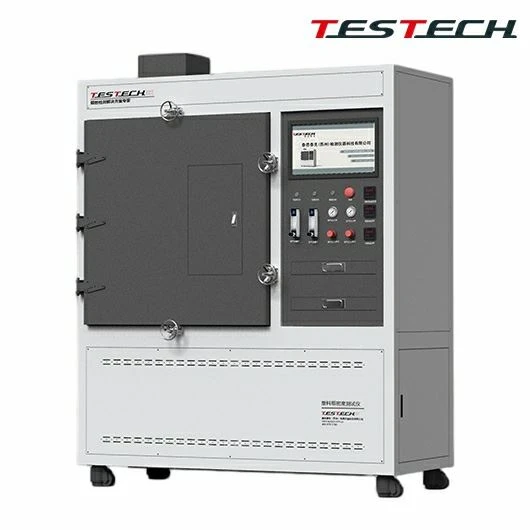

Researchers can use the data from the flue gas analysis to develop materials that produce fewer pollutants when burned. This is in line with the growing trend towards sustainable development and environmental protection in various industries.
Conclusion and Call to Action
The applications of a universal fire tester in R & D are extensive and far - reaching. It serves as a key enabler for innovation, safety improvement, and sustainable development across multiple industries. Whether you are a material scientist, a product designer, a building engineer, or a fire protection researcher, a universal fire tester can significantly enhance your R & D capabilities.
If you are interested in exploring the benefits of a universal fire tester for your R & D projects, we invite you to contact us for a detailed discussion. Our team of experts is ready to provide you with the necessary information and support to help you make the right choice for your specific needs. We look forward to partnering with you in your quest for excellence in R & D.
References
- ASTM International, "Standard Test Methods for Determining Oxygen Index of Plastics and Other Materials", ASTM D2863 - 17.
- ISO 5659 - 2:2017, "Plastics - Smoke generation - Part 2: Determination of optical density by a single - chamber test".
- NFPA 101: Life Safety Code, National Fire Protection Association.