

How does the High - voltage Tracking Indices Tester deal with electromagnetic interference?
In the field of electrical safety testing, the High-voltage Tracking Indices Tester plays a crucial role in evaluating the comparative tracking index (CTI) and the proven tracking index (PTI) of insulating materials. These indices are vital for determining the ability of materials to resist the formation of conductive tracks under the influence of contaminated surfaces and electrical stress. However, like many electrical testing instruments, the High-voltage Tracking Indices Tester is susceptible to electromagnetic interference (EMI), which can affect the accuracy and reliability of its test results. As a leading supplier of High-voltage Tracking Indices Tester, we understand the challenges posed by EMI and have developed effective strategies to deal with it.
Understanding Electromagnetic Interference
Electromagnetic interference refers to the disturbance that affects an electrical circuit due to either electromagnetic induction or electromagnetic radiation emitted from an external source. EMI can originate from a variety of sources, such as power lines, radio frequency devices, electric motors, and lightning strikes. In the context of a High-voltage Tracking Indices Tester, EMI can cause fluctuations in the test voltage, affect the accuracy of the current measurement, and even lead to false triggering of the tester's protection mechanisms.
The effects of EMI on the High-voltage Tracking Indices Tester can be particularly pronounced in industrial environments, where there are numerous electrical devices operating simultaneously. These devices can generate a complex electromagnetic environment, with a wide range of frequencies and amplitudes of interference signals. For example, the high-frequency noise generated by switching power supplies can interfere with the sensitive measurement circuits of the tester, while the magnetic fields produced by large electric motors can induce unwanted currents in the tester's wiring.
Shielding and Grounding
One of the most effective ways to deal with EMI is through shielding and grounding. Shielding involves enclosing the sensitive components of the High-voltage Tracking Indices Tester in a conductive enclosure, which can block the electromagnetic fields from reaching the internal circuits. The enclosure is typically made of metal, such as aluminum or steel, which has good electrical conductivity and can reflect or absorb the electromagnetic waves.
At our company, we use high-quality shielding materials and advanced manufacturing techniques to ensure the effectiveness of the shielding in our High-voltage Tracking Indices Testers. The shielding enclosure is carefully designed to cover all the critical components, including the high-voltage generators, measurement circuits, and control boards. In addition, we use special gaskets and seals to prevent the entry of electromagnetic waves through the small gaps in the enclosure.
Grounding is another important aspect of EMI protection. A proper grounding system provides a low-impedance path for the interference currents to flow safely to the ground, thus reducing the potential for interference to affect the tester's operation. We ensure that all the metallic parts of our High-voltage Tracking Indices Testers are properly grounded, and the grounding connections are made using high-quality conductors with low resistance. In addition, we use separate grounding electrodes for the high-voltage and low-voltage circuits to prevent the interference currents from coupling between the two circuits.
Filtering and Isolation
In addition to shielding and grounding, filtering and isolation techniques are also used to deal with EMI in the High-voltage Tracking Indices Tester. Filtering involves the use of passive or active components, such as capacitors, inductors, and resistors, to attenuate the unwanted frequencies of the interference signals. For example, low-pass filters can be used to block the high-frequency noise, while high-pass filters can be used to block the low-frequency interference.
We incorporate high-performance filters into the power supply circuits and the signal input/output circuits of our High-voltage Tracking Indices Testers. These filters are designed to provide a high level of attenuation for the interference signals within the frequency range that is likely to affect the tester's operation. In addition, we use filter networks with multiple stages to achieve a higher attenuation ratio and a wider frequency range of filtering.

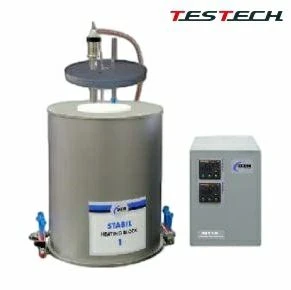
Isolation is another technique used to prevent the transfer of EMI between different parts of the tester. Isolation transformers, optocouplers, and other isolation devices are used to electrically separate the high-voltage circuits from the low-voltage circuits, as well as to isolate the measurement circuits from the external environment. This helps to reduce the coupling of interference currents and voltages between different parts of the tester, thus improving the overall immunity to EMI.
Software Compensation
In addition to the hardware-based solutions, software compensation techniques can also be used to deal with the effects of EMI on the High-voltage Tracking Indices Tester. Our High-voltage Tracking Indices Testers are equipped with advanced microcontrollers and digital signal processing (DSP) algorithms, which can perform real-time analysis of the test data and compensate for the effects of EMI.
For example, the software can detect the presence of interference signals in the test voltage and current measurements and apply appropriate correction factors to the measurement results. In addition, the software can use filtering algorithms to remove the noise from the measurement data and improve the signal-to-noise ratio. This helps to ensure the accuracy and reliability of the test results even in the presence of EMI.
Other Related Testing Equipment
In addition to the High-voltage Tracking Indices Tester, we also offer a range of other testing equipment for evaluating the flammability and electrical safety of electronic components. These include the Rubber Hose Non-flammability Tester, Glow Wire Test Apparatus, Needle Flame Test Apparatus, and Horizontal and Vertical Flame Test Apparatus.
These testing equipment are also designed to meet the highest standards of accuracy and reliability, and they are equipped with similar EMI protection measures to ensure their proper operation in a variety of electromagnetic environments.
Conclusion
Electromagnetic interference is a common challenge in the operation of High-voltage Tracking Indices Testers, but with the right strategies and technologies, it can be effectively managed. As a supplier of High-voltage Tracking Indices Testers, we are committed to providing our customers with high-quality products that are robust against EMI and can provide accurate and reliable test results.
If you are looking for a reliable High-voltage Tracking Indices Tester or any other electrical safety testing equipment, please feel free to contact us for more information. Our team of experts will be happy to assist you in finding the right solution for your specific needs.
References
[1] "Electromagnetic Compatibility Engineering," Henry W. Ott, Wiley-IEEE Press, 2009.
[2] "High Voltage Engineering: Fundamentals," E. Kuffel, W. S. Zaengl, J. Kuffel, Pergamon, 2000.
[3] "Electrical Insulation for Rotating Machines: Design, Evaluation, Aging, Testing, and Repair," G. C. Montanari, A. Cavallini, Elsevier, 2009.