

Yo, folks! I'm a supplier of the Aircraft Material Heat Release Rate Tester, and today I wanna chat about how the chemical composition of the test sample can mess with the results of this nifty machine.
First off, let's get into what heat release rate testing is all about. The heat release rate (HRR) is a crucial factor when it comes to evaluating the fire - safety of aircraft materials. It tells us just how fast a material releases heat when it catches fire. A high HRR means the fire can spread quickly and cause more damage, which is a big no - no in the aviation world.
Now, the chemical composition of the test sample plays a huge role in determining the HRR. Different chemicals have different combustion properties. For instance, materials high in carbon - based compounds like polymers are often more flammable because carbon compounds can easily undergo oxidation reactions during combustion. When these compounds burn, they release a significant amount of heat.
Take, for example, a sample that contains a large amount of polypropylene. Polypropylene is a thermoplastic polymer. It has a relatively high heat of combustion. When we test a polypropylene - rich sample in our Aircraft Material Heat Release Rate Tester, it's likely to have a high HRR. The long - chain carbon molecules in polypropylene break down during combustion, and the energy released from the carbon - oxygen bonds being formed is substantial.
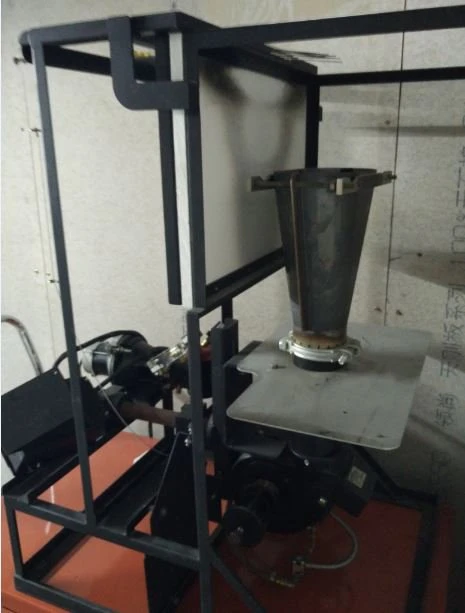
On the other hand, samples with a high content of inorganic materials like metals or ceramics usually have lower HRRs. Metals, for the most part, don't burn in the traditional sense. They might melt or oxidize at high temperatures, but they don't release as much heat during these processes as organic materials do. Ceramics are also pretty resistant to heat and fire. They have high melting points and don't undergo the kind of rapid oxidation reactions that lead to high heat release.
Halogen - containing compounds in the sample are another story. These can have both positive and negative effects on the HRR. Halogens like chlorine and bromine can act as flame retardants in some cases. They work by interfering with the combustion reactions. When a halogen - containing material burns, the halogen atoms can react with the free radicals in the flame, disrupting the chain reaction that sustains the fire. This can lower the HRR. However, burning halogen - containing materials can also release toxic gases, which is an entirely different problem.
Now, let's talk about how different elements in the chemical composition can change the way the sample behaves during the test. If a sample has a lot of volatile organic compounds (VOCs), it can start to vaporize and burn at relatively low temperatures. This early ignition can lead to a rapid increase in the HRR right at the start of the test. These VOCs can act as kindling, quickly spreading the fire and causing a spike in heat release.
Moisture content in the sample can also affect the results. If a sample has a high moisture content, the water needs to be evaporated before the material can start to burn properly. This evaporation process absorbs heat, which can initially lower the HRR. But once the water is gone, the dry material can burn more vigorously, potentially leading to a higher HRR later in the test.
Another aspect is the presence of additives in the sample. Some materials are treated with additives to improve their fire - resistance. For example, flame - retardant additives can be added to plastics. These additives work in different ways. Some might form a protective char layer on the surface of the material when it burns. This char layer acts as a barrier, reducing the amount of oxygen that can reach the burning material and slowing down the combustion process. As a result, the HRR is reduced.
So, as you can see, the chemical composition of the test sample can have a huge impact on the results of the Aircraft Material Heat Release Rate Tester. It's important for us, as suppliers, to understand these relationships so that we can provide accurate and reliable testing equipment.
Here are some related products that you might be interested in. Check out our Melting Materials Dripping Test Machine, which can help you assess how materials behave when they start to melt during a fire. We also have the Gasmet FTIR System for Toxicity Test in Fire Testing Application, which can detect the toxic gases released during combustion. The Adhesive Tape Vertical Flammability Tester is great for testing the flammability of adhesive tapes. If you're into more advanced testing for aircraft, our Aircraft Fire Penetration Tester can give you insights into how fire can penetrate through different aircraft materials. And for those interested in flash - point testing, we have the Pensky - Martens Closed Cup Flash Point Tester.
If you're in the market for reliable fire - safety testing equipment, especially our Aircraft Material Heat Release Rate Tester, don't hesitate to reach out. We're here to help you with all your testing needs and ensure you get accurate results. So, if you've got any questions or you're ready to make a purchase, just get in touch for a chat about procurement.
References:
- Babrauskas, V. (2009). Heat Release Rate: The Single Most Important Variable in Fire Hazard. Fire Technology, 35(3), 133 - 217.
- Drysdale, D. D. (2011). An Introduction to Fire Dynamics. John Wiley & Sons.