

Hey there! As a supplier of the Aircraft Material Heat Release Rate Tester, I often get asked about how accurate these machines really are. In this blog post, I'll break down what accuracy means in this context, the factors that can affect it, and why it's super crucial for the aviation industry.
Understanding Heat Release Rate Testing
Before we dive into accuracy, let's quickly go over what heat release rate testing is all about. The heat release rate (HRR) of an aircraft material is a measure of how much heat it gives off when it burns. This is a fundamental parameter in fire safety, as it helps us understand how a fire might spread in an aircraft cabin. The Aircraft Material Heat Release Rate Tester is designed to measure this rate under controlled laboratory conditions, simulating real - world fire scenarios as closely as possible.
How Do We Measure Accuracy?
When we talk about the accuracy of the Aircraft Material Heat Release Rate Tester, we're essentially looking at how closely the results it produces match the true heat release rate of the material being tested. There are several ways to assess this:
- Repeatability: This is about getting consistent results when the same material is tested multiple times. A high - quality tester should give very similar HRR values for repeated tests of the same sample. If the results vary widely from one test to the next, it's a sign that the tester might not be accurate.
- Comparison with Standards: There are international standards, like the FAA (Federal Aviation Administration) and EASA (European Union Aviation Safety Agency) regulations, that define acceptable heat release rates for aircraft materials. An accurate tester should produce results that align with these standards. If a tester consistently gives results that are too high or too low compared to the standard, it's clearly an issue.
- Calibration: Regular calibration is key to maintaining accuracy. A well - calibrated tester will have sensors and measurement devices that are properly adjusted to give correct readings. We use calibrated reference materials to check and adjust the tester's performance periodically.
Factors Affecting Accuracy
There are several factors that can influence the accuracy of an Aircraft Material Heat Release Rate Tester:

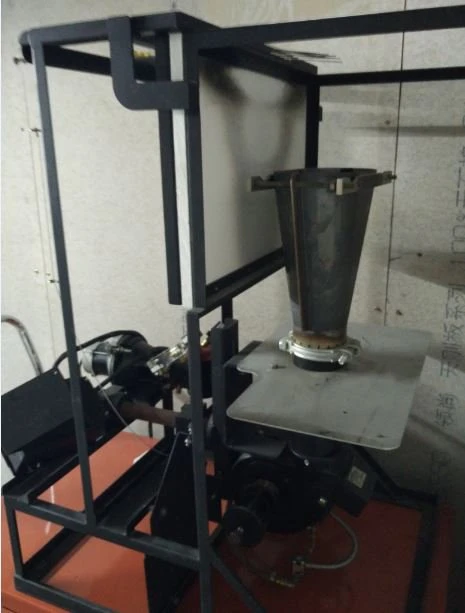
- Sample Preparation: How the sample is prepared plays a huge role. The size, shape, and density of the sample can all affect the heat release rate. If the sample is not prepared according to the standard procedures, the results will be inaccurate. For example, if the edges of the sample are rough or if there are air gaps in the sample, it can change the way the material burns and, therefore, the measured HRR.
- Environmental Conditions: The temperature, humidity, and air flow in the testing laboratory can also impact accuracy. If the ambient temperature is too high or too low, it can affect the combustion process. Similarly, if there is a strong air flow in the testing chamber, it can change the way the heat is dissipated and measured. That's why we usually conduct tests in a controlled environment to minimize these effects.
- Tester Maintenance: Just like any other piece of equipment, the Aircraft Material Heat Release Rate Tester needs regular maintenance. If the sensors are dirty or worn out, or if there are mechanical issues with the tester, it can lead to inaccurate readings. We recommend following a strict maintenance schedule and replacing parts as needed.
Our Commitment to Accuracy
As a supplier, we take accuracy very seriously. We use state - of - the - art technology in our testers to ensure high - precision measurements. Our testers are designed with advanced sensors that can detect even the slightest changes in heat release rate. We also have a team of experts who are constantly working on improving the accuracy of our products.
When a customer buys our Aircraft Material Heat Release Rate Tester, we provide comprehensive training on how to use it correctly and how to maintain it. We also offer calibration services to make sure the tester is always performing at its best.
Related Products
In addition to the Aircraft Material Heat Release Rate Tester, we also supply other important testing equipment for the transportation industry. Check out these products:
- Cleveland Open Cup Auto Flash Point Analyser: This analyser is used to determine the flash point of various materials, which is crucial for understanding their flammability.
- Aircraft Fire Penetration Tester: It helps in testing the fire penetration resistance of aircraft materials, an important aspect of aircraft fire safety.
- Adhesive Tape Vertical Flammability Tester: Useful for testing the vertical flammability of adhesive tapes used in transportation applications.
- Automotive Wire Harness Flammability Tester: Specifically designed to test the flammability of automotive wire harnesses.
- Reinforced Plastic Incandescent Rod Tester: Ideal for testing the incandescent rod ignition performance of reinforced plastics.
Why Accuracy Matters in Aviation
In the aviation industry, fire safety is of utmost importance. Accurate heat release rate testing is essential for ensuring that the materials used in aircraft construction meet the strict safety standards. If the tester is not accurate, it could lead to false reassurances about the fire - resistance properties of a material. This, in turn, could put passengers and crew at risk in case of an in - flight fire.
For aircraft manufacturers, using accurate testing equipment is also important for regulatory compliance. If their materials don't meet the required heat release rate standards, they could face delays in aircraft certification and significant financial losses.
Getting in Touch
If you're in the market for an Aircraft Material Heat Release Rate Tester or any of our other testing equipment, don't hesitate to get in touch. We're always happy to answer your questions, provide more information, and discuss your specific requirements. Whether you're an aircraft manufacturer, a regulatory body, or a research institution, we can help you find the right testing solution for your needs.
References
- Federal Aviation Administration (FAA). Aircraft Fire Safety Regulations.
- European Union Aviation Safety Agency (EASA). Material Flammability Standards for Aircraft.
- ASTM International. Standards for Heat Release Rate Testing.