

When I started as a non-combustibility test apparatus supplier, one question popped up so often in my early conversations with construction material manufacturers, fire safety consultants, and even small-scale product makers that I almost began to have a stock answer ready before the other person finished asking. The question is: Can your non-combustibility test apparatus test materials with different densities?
At first, I’ll admit, I thought it was a simple yes or no. But as I’ve worked with more teams, run through test trials with everything from ultra-lightweight foam insulation to dense, heavy metal composite panels, I’ve learned this question isn’t binary. It’s about how the test apparatus works, what definitions of “non-combustibility” we actually use, and how material density interacts with combustion reactions in ways that aren’t always obvious on paper. Today, I want to break this down the same way I explain it to a new client over a coffee or a quick virtual call—no overly technical jargon, just real-world experience from years of running and refining the equipment I supply.
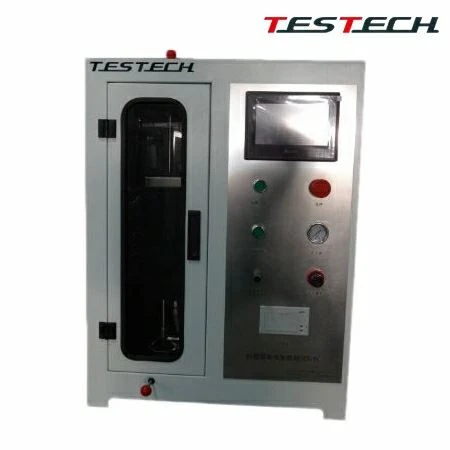
Let’s start with the basics, because if you don’t understand how a non-combustibility test apparatus operates, you can’t make sense of density’s role. The standard test that most regulators and safety bodies rely on (I’m talking about ISO 1182, the global go-to for non-combustibility) works by placing a small, controlled sample of material inside a furnace that’s heated to 750 degrees Celsius for 30 minutes. We measure three key things during that time: does the sample catch fire? Does it generate flame? And what’s the maximum temperature rise of the sample, compared to the furnace’s baseline? The material passes only if none of those three trigger conditions are met.
Now, density is the measure of mass per unit volume, right? So a lightweight material like rigid mineral wool insulation might have a density of 30 to 100 kg/m³, while a dense steel plate could be 7,850 kg/m³—roughly 260 times heavier for the same size. On the surface, you’d think density would have a huge impact on how a material behaves in that furnace. And it does, but not in the way many people assume.
A common misconception I hear all the time is that lighter materials burn more easily, so a non-combustibility apparatus would handle light, low-density samples differently than heavy, high-density ones. But here’s the thing: combustion needs two things to happen for a material to ignite and sustain a flame: fuel (the material itself) and heat (enough to break down the material’s chemical bonds). Non-combustibility standards, by definition, are designed to eliminate that. Let’s test this with a real example from a recent client: a manufacturer of external wall panels that use a mix of low-density aerogel (around 100 kg/m³) and high-density fiberglass mesh (over 1,500 kg/m³). We tested both materials on the same non-combustibility apparatus last quarter. The aerogel sample, even though it’s ultra-light, didn’t ignite. It got hot, but never released enough volatile gases to create a flame. The fiberglass mesh, dense and heavy, also passed—because it melted at the furnace’s temperature without burning. Density here didn’t make or break the result; the chemical composition of the material did.
But wait, that’s not the full story. There are scenarios where density does affect how you run the test, not whether it passes. Let’s take low-density materials first. Things like expanded polystyrene (EPS) might be too light, so when you place them in the test chamber, they could float if the furnace has any air flow. Air flow is a controlled part of the test apparatus—it’s calibrated to mimic real-world combustion conditions—but a lightweight sample might shift, or even get blown around, which would skew your temperature and flame measurements. That’s why, when a client brings us a low-density sample, we adjust the sample holder in the apparatus: we use a fine, stainless steel mesh to secure it, so it stays in place without adding extra weight that would change the material’s natural heating. I always tell clients that this isn’t a flaw in the apparatus—it’s a necessary adjustment to get accurate results, regardless of density.
High-density materials pose a different challenge. Because they’re heavy, they take longer to heat through. A dense concrete sample, for example, might be 500 mm thick and have a density of 2,400 kg/m³. When you put it in the furnace, the outer surface reaches 750 degrees Celsius quickly, but the core of the sample takes 10 or 15 minutes longer to heat up. If you don’t account for that, you might misread the temperature sensors, which are usually placed on the sample’s surface. So our non-combustibility test apparatus is built with multiple temperature probes—some on the surface, some embedded 10 mm and 20 mm into the sample—so you can track how heat moves through the material, even in dense, thick samples. That’s a feature we added after a client in the construction industry tested a heavy concrete slab and got an initial “failed” result because they only used a surface probe. When we checked the internal probes, we saw the core wasn’t hot enough to burn, so it was a calibration issue with sample preparation, not the apparatus itself.
But here’s where we start to touch on related testing that often gets mixed up with non-combustibility, and that’s where some clients get confused about which apparatus to use. For example, if you’re testing building components like door and shutter assemblies—something that needs to resist both combustion and smoke leakage—you might need more than just a non-combustibility test. That’s why our website has a dedicated page for Smoke Leakage Tests for Door and Shutter Assemblies. These tests work alongside non-combustibility testing, and while they don’t focus on density the same way, a door’s density (from its core material, whether it’s low-density wood or high-density metal) affects how smoke passes through gaps and seams. It’s a complementary test, not a replacement for non-combustibility apparatus.
Another area that often overlaps is testing “difficult-flammability” materials—things that might not be fully non-combustible but have very low flame spread. For those, our Difficult-flammability Of Building Materials Tester is designed to measure how a material behaves when it does burn, which is different from non-combustibility testing that’s focused on whether it burns at all. Density still plays a role here, but again, the apparatus is calibrated to handle different material weights without skewing results. For example, a low-density flame-retardant fabric and a high-density flame-retardant plastic both test on the same difficult-flammability tester, because the test’s parameters (like heat flux and burn time) are adjustable for different material types.
I want to be clear, though—there are limits. A non-combustibility test apparatus is built to meet strict global standards, and it can’t test any material, regardless of density, if the sample size is too small or too large. The standard sample size for ISO 1182 is 50 mm x 50 mm x (thickness up to 50 mm). So if someone brings in a material that’s only 1 mm thick (super low density, like flame-retardant paper) or 100 mm thick (super high density, like solid granite), you might need to adjust the sample preparation to cut it to the standard size. That’s where our Flame-Retardant Paper and Cardboard Flammability Tester comes in—though wait, that’s for paper and cardboard, which are often tested for flame spread, not non-combustibility. But the point is, the apparatus I supply for non-combustibility is versatile, not a one-size-fits-all box, and we work with clients to adjust sample prep for density extremes.
Let’s talk about a more specific example from a recent large-scale project. A insulation manufacturer approached me last year with a new product: low-density microfiber insulation (around 80 kg/m³) for residential attics, and they wanted to test it alongside a dense, high-density mineral wool (200 kg/m³) they already produced. They were worried the light microfiber wouldn’t register in the apparatus’s temperature sensors, or the dense wool would take too long to heat. We ran both samples side by side. The microfiber, even though it’s almost as light as air in its loose form, was compressed to the standard sample size (50 x 50 x 10 mm) and secured with the fine mesh holder. It didn’t ignite, its temperature rise was only 12 degrees Celsius (well below the 50-degree limit for passing non-combustibility), and it stayed in place the whole time. The dense mineral wool sample, cut to the same size, had a temperature rise of just 8 degrees, and the internal probes showed no hot spots. Both passed, and the manufacturer was able to use the same apparatus for both products—something that saved them time and money, because they didn’t need to buy separate equipment for low vs. high density.
That’s the biggest takeaway I want to share here: a well-designed non-combustibility test apparatus doesn’t care about material density. It cares about meeting the standardized conditions that define non-combustibility, and adjusting for the physical properties that come with different densities (like lightweight samples moving, heavy samples taking longer to heat) is part of the proper test procedure. I’ve seen clients get confused when they first test a low-density material because they don’t secure it, or a high-density material because they don’t use multiple probes, but those are test preparation issues, not flaws in the apparatus.
Of course, no single test covers every fire safety need. For materials that need to resist flame spread over a larger surface, like ceiling panels or exterior cladding, the Radiant Panel Flame Spread Tester is used. This test measures how far a flame spreads across a material under controlled radiant heat, and here, density does play a bigger role—lighter, more porous materials might have faster flame spread, while denser, less porous materials slow it down. But again, the apparatus is built to handle different density ranges, with adjustable heat levels to match the material type.
I’ve spent years answering this same question, and the most frustrating part is when a potential client thinks they need a different apparatus just because their material is light or heavy. That’s not true. What’s true is that you need to work with a supplier who understands how material properties interact with testing, not just who can sell you a machine. For example, if you’re working on thermal insulation for industrial pipes, you might need to test maximum use temperature, which is where our Thermal Insulation Materials Maximum Use Temperature Tester Plate &pipes is ideal. This test isn’t about non-combustibility, but it’s a complementary test for materials that need to perform at high temperatures, regardless of density.
At the end of the day, the question of whether a non-combustibility test apparatus can test materials with different densities boils down to two things: the apparatus’s design, and the test operator’s knowledge. My team and I build each apparatus to be flexible enough to handle density extremes, from ultra-light aerogels to heavy metal composites, with adjustable sample holders, multiple temperature probes, and calibrated air flow. What we don’t do is make operators cut corners on test preparation—because even the best apparatus will give bad results if you don’t secure a light sample or account for a dense material’s heating time.
If you’re a material manufacturer, fire safety consultant, or construction firm working on a project that requires non-combustibility testing, and you’re worried about testing materials with different densities, I’m here to help. Whether you need to run a test on a sample you’ve developed, adjust your test procedure for a new material type, or find the right apparatus that fits your needs, our team can walk you through every step. We’ve worked with hundreds of clients across industries, from small startups developing fire-safe packaging to large construction companies building commercial towers, and we know how to make testing accurate, no matter what your material’s density is.

References:
ISO 1182:2020, Reaction to fire tests for building products — Non-combustibility test
NFPA 285:2021, Standard test method for fire propagation exterior façade assemblies
European Committee for Standardization (CEN), EN 13823:2020, Reaction to fire tests for building products — Building products excluding floorings exposed to the thermal attack by a single burning item