

Hey there, folks! As a supplier of Cone Calorimeters, I often get asked about the heat flux range of these nifty devices. In this blog post, I'm gonna break it all down for you, and give you a good understanding of what's what when it comes to the heat flux range in a Cone Calorimeter.
What’s a Cone Calorimeter Anyway?
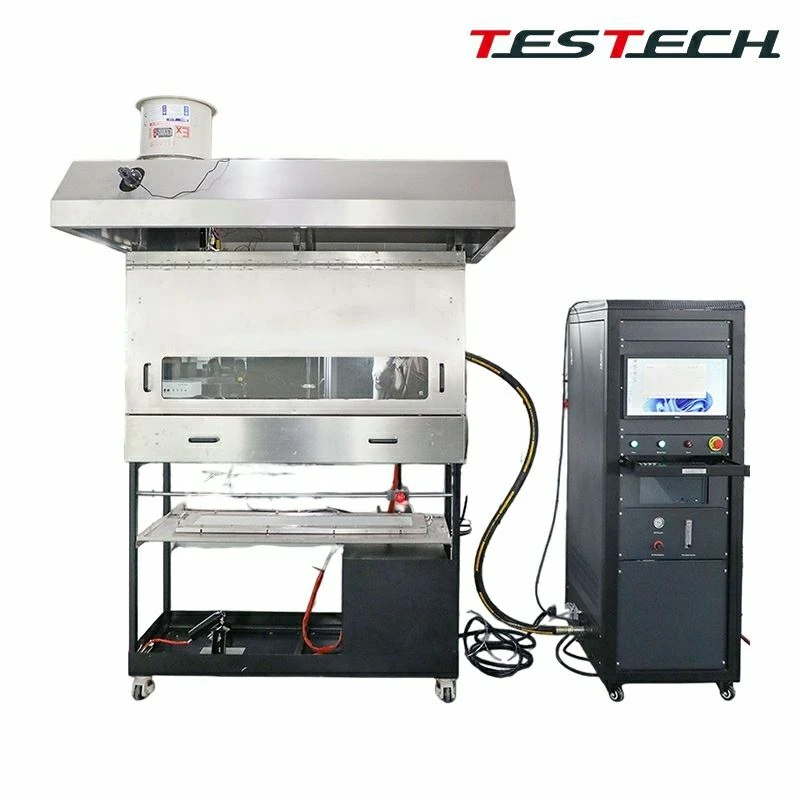
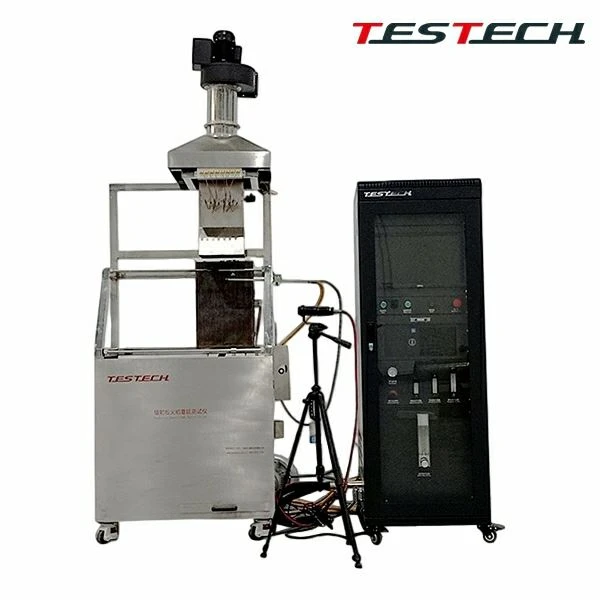
Before we dive into the heat flux range, let's quickly go over what a Cone Calorimeter is. It's a super important piece of equipment in the fire safety testing world. It measures a whole bunch of stuff about how materials react to fire, like how fast they burn, how much heat they give off, and how much smoke they produce. With all these measurements, we can figure out how safe different materials are for different uses.
The Heat Flux Range
Alright, now let's talk about heat flux. Heat flux is basically the rate of heat transfer per unit area. In a Cone Calorimeter, it's measured in kilowatts per square meter (kW/m²).
Most standard Cone Calorimeters have a heat flux range that can be adjusted. Usually, the range goes from around 10 kW/m² to 75 kW/m². But why do we need an adjustable range? Well, different materials need different amounts of heat to start burning and to show their true fire behavior.
For materials that are really hard to ignite or that don't burn easily, like some types of stone or high - grade metals, we might need to use a higher heat flux. This helps us to see what would happen if there was a really intense fire situation. On the other hand, for more flammable materials, like some plastics or fabrics, a lower heat flux can be enough to make them start burning and let us study their fire behavior.
If we use a heat flux that's too low, the material might not ignite at all, or it might burn in a way that doesn't represent a real - life fire scenario. And if we use a heat flux that's too high, we might end up with a situation where the material burns so fast that the results don't accurately reflect how it would behave under normal fire conditions.
Let me give you an example. Say you're testing a type of insulation material for buildings. You want to know how it will perform in a fire. You'd start with a relatively low heat flux, maybe around 20 kW/m². This simulates a small fire situation, like a smoldering cigarette or a small electrical spark. As you increase the heat flux, you can see how the insulation material responds. At a higher heat flux, say 50 kW/m², you can mimic a more intense fire, like a growing kitchen fire.
Why the Range Matters
The heat flux range of a Cone Calorimeter is crucial for accurate testing. Different industries and applications have different requirements for fire safety.
In the construction industry, for example, building materials need to meet certain fire safety standards. By using the right heat flux range in a Cone Calorimeter, we can test materials like Radiant Panel Flame Spread Tester, Thermal Insulation Materials Maximum Use Temperature Tester Plate &pipes, and Building Material Smoke Density Tester to make sure they'll perform well in a fire.
The automotive industry also relies on Cone Calorimeter testing. Interior materials need to be tested to ensure they don't pose a significant fire risk. The adjustable heat flux range allows us to simulate different fire scenarios, from a small electrical fire in the dashboard to a more widespread fire in the engine compartment.
In the aerospace sector, materials used in airplanes need to be extremely fire - safe. The heat flux range in a Cone Calorimeter can be adjusted to mimic the high - energy fires that could occur during a flight emergency.
Our Cone Calorimeters
We offer Cone Calorimeters that have a really flexible heat flux range. Our devices can be easily adjusted within the 10 - 75 kW/m² range, which is suitable for a wide variety of materials and testing requirements.
Not only that, but our Cone Calorimeters are also built with high - quality components. This means they are reliable and accurate, giving you consistent results every time you use them.
Other Related Testing Equipment
In addition to our Cone Calorimeters, we also supply other important fire safety testing equipment. For example, our Fire Resistance Horizontal Test Furnace is great for testing the fire resistance of building components. It can heat up to high temperatures and simulate long - term fire exposure.
We also have the Flooring Radiant Panel Tester, which is specifically designed to test the fire behavior of floor coverings. It uses a radiant heat source to determine how quickly a floor covering will spread fire.
Let's Chat!
If you're in the market for a Cone Calorimeter or any of our other fire safety testing equipment, I'd love to talk to you. Whether you're a researcher looking to conduct experiments on new materials, or a manufacturer wanting to test your products for fire safety compliance, we've got the right equipment for you.
Don't hesitate to reach out and start a conversation. We can discuss your specific needs, and I'll do my best to find the perfect solution for you.
References
- Babrauskas, V. (1982). "Heat release rate: The single most important variable in fire hazard." Fire Safety Journal, 4(3), 155 - 179.
- ISO 5660 - 1. (2015). Reaction to fire tests -- Heat release, smoke production and mass loss rate -- Part 1: Heat release rate (cone calorimeter method).
So, that's all for now, folks. If you have any questions, just leave a comment below, and I'll get back to you!