

If you’re an ion chromatography (IC) user, you know the drill: when you’re tracking trace levels of anions or cations in samples, low sensitivity can turn a routine test into a frustrating game of “where’s the peak?” I’ve been in the game as an IC supplier for years, talking to lab techs and R&D folks who deal with this exact headache every single day. Whether you’re testing water for trace contaminants, pharmaceuticals for counterions, or automotive materials (wait, yeah, we also work with the folks testing wiring or adhesives—more on that later), boosting your IC sensitivity doesn’t have to mean shelling out for a whole new instrument. Let’s break down the real, actionable fixes that actually move the needle—no overly complicated jargon, just stuff I’ve seen work in labs that come to us for help with their Ion Chromatography setups.
First off, let’s start with the basics that most people skip: your sample preparation. I can’t tell you how many times a tech hands over a sample that’s messy—dirty, has particulates, or is way too dilute— and wonders why their peaks are tiny or non-existent. If your sample’s not prepped right, even the fanciest IC won’t pick up the small stuff. Let’s keep this simple: filter your samples with a 0.22μm or 0.45μm syringe filter every time, even if it looks clean. Particulates clog columns and muck up detector readings, so removing them right at the source keeps your system happy and more sensitive. Also, avoid over-diluting samples unnecessarily. If you’re tracking something at ppb levels, diluting 1:100 might make it impossible to detect—use just enough diluent to get it into your IC’s linear range without going overboard.
Next, your column choice is huge. I see a lot of users sticking to whatever column came with their instrument, like it’s the only option. But if you’re dealing with trace analytes, a column with smaller particle size (sub-2μm) or a specialized stationary phase for trace-level work is a game-changer. Wait, and don’t sleep on column conditioning! A brand new column might have residual manufacturing contaminants that swamp your trace peaks, so conditioning it properly (rinsing with the eluent you’ll actually use for a few column volumes at a low flow rate) cleans that up. We’ve had customers go from barely seeing a 10ppb nitrate peak to it being a clear, sharp spike just by switching to a trace-grade anion column and conditioning it right.
Now, let’s talk about the eluent. This is another area where small tweaks make a big difference. Using an eluent that’s too concentrated increases background conductivity, which means your signal-to-noise ratio (SNR)—the key metric for sensitivity—gets worse. Most modern IC systems work best with lower-concentration eluents for trace analysis, so dialing that back can sharpen your peaks a ton. Also, make sure your eluent is high-purity, not the cheap stuff from the big box chemical supplier. Impurities in the eluent add background noise, making it harder to pick out your tiny analyte peaks. We even have some customers who use a high-purity water purification system just for their IC eluent to cut down on that noise.
Detector settings are another underrated spot to adjust. If your detector’s gain is set too low, you’re basically turning down the volume on your analyte signal. Cranking the gain a little (but not so much that you get detector saturation) can make those small peaks pop. Also, check the bandwidth setting—narrower bandwidths help reduce baseline noise, which directly boosts SNR. Don’t just leave these settings on the default that the instrument came with; play with them a bit, run a standard, and see what gives you the cleanest, sharpest peak for your target analyte.
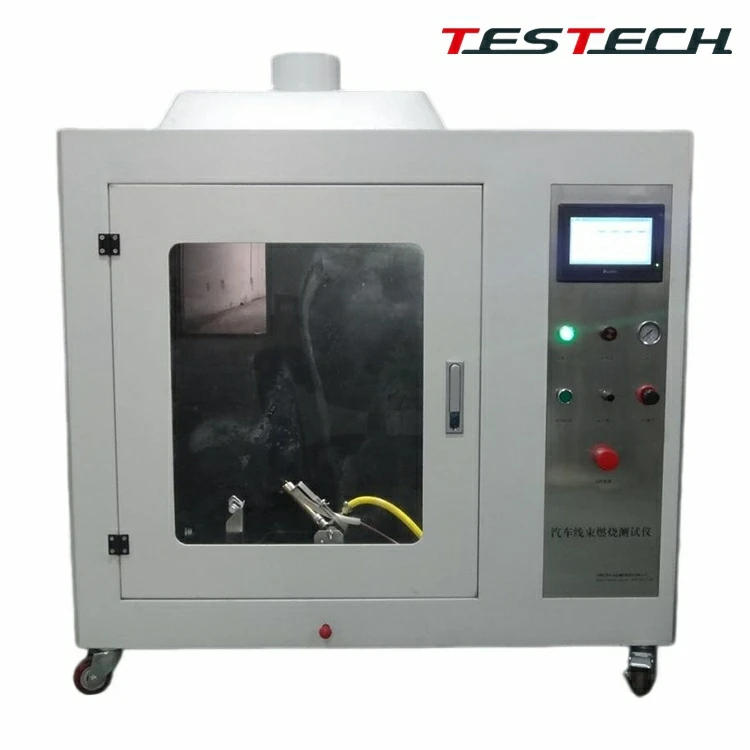
Wait, and let’s not forget about system maintenance. A leaky pump, a dirty conductivity cell, or clogged tubing is going to kill your sensitivity fast. I’ve seen labs put off routine maintenance for months, then wonder why their peaks are so small. Change your pump seals on schedule, flush the system regularly (especially if you haven’t used it in a few days), and clean the conductivity cell every 6 months or so. Even tiny leaks can let in air bubbles, which cause baseline spikes and mess up peak shape—both of which make sensitivity worse. For example, a customer testing automotive wire harnesses (they use Automotive Wire Harness Flammability Tester for compliance, but also run IC to test for halogens in the insulation) came to us saying their IC peaks were inconsistent. Turns out, their pump seal was leaking just enough to let small air bubbles in—fix that, and their sensitivity went up 30% overnight.
Now, let’s get into some more advanced tricks that work if you’ve already nailed the basics. One is using trace enrichment columns. These are small pre-columns that trap your analytes from large sample volumes, so you can load more sample without overloading the analytical column. For example, if you’re testing water for ppb-level perchlorate, loading a liter of sample through an enrichment column before eluting it into your analytical IC makes that tiny peak way bigger than if you just injected a small volume directly. It’s like putting a magnifying glass on your analyte before it even hits the main column.
Another advanced tip is optimizing your flow rate. Most users use the default flow rate that came with their column, but adjusting it can help. Lower flow rates mean more time the analytes spend interacting with the stationary phase, which leads to sharper peaks and better separation—both good for sensitivity. Just don’t go too low, because that will make run times way longer and might increase peak broadening from diffusion. Test 0.5 mL/min, 0.4 mL/min, even 0.3 mL/min (if your instrument can handle it) for your column and see what gives you the best SNR.
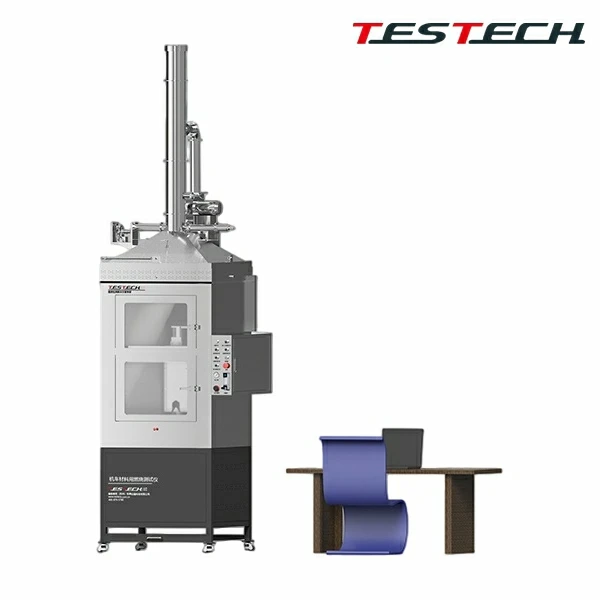
Hey, let’s circle back to a part of our business that ties into this—we work with a lot of industries that use both IC and materials testing, like the folks doing flammability tests. We’ve had a customer testing adhesive tapes (they use Adhesive Tape Vertical Flammability Tester for industry standards, and they also use IC to test for residual monomers in the tape adhesive) who was struggling to get good sensitivity on trace vinyl acetate. We suggested they switch to a smaller-particle column, adjust their eluent concentration, and use an enrichment step for large sample volumes. They went from barely detecting 50ppb to getting a clean peak at 10ppb, which is exactly what their R&D team needed to develop a new low-migration adhesive. It’s cool seeing how IC pairs with those material testing tools—same with Locomotive Material Combustion Tester users, who run IC to test for combustion byproducts in the materials they’re testing.
Wait, one more thing: baseline correction. A lot of people leave this on auto, but manually adjusting your baseline correction settings to match your eluent and running blank injections regularly helps you subtract that background noise. If you’re running a blank every 10 samples, you can make sure any signal you’re seeing is actually your analyte, not leftover stuff from previous runs or eluent impurities. That tiny step makes a big difference when you’re looking at peaks that are almost the same size as the baseline noise.
Now, let’s talk about what NOT to do. Don’t over-condition your column (wait, no, we said condition it, but over-conditioning can wear out the stationary phase faster). Don’t use expired chemicals for your eluent—they break down over time and add noise. And don’t ignore other parts of the system, like the injection valve. A dirty injection valve can give inconsistent injection volumes, which means your peak heights will vary run to run, making it hard to get reliable sensitivity.
At the end of the day, improving IC sensitivity is all about small, intentional tweaks to every step of the process—from sample prep all the way through data analysis. It’s not about buying a brand new $50k instrument (though if you’re due for an upgrade, we can help with that Ion Chromatography gear) it’s about optimizing what you already have.
If you’re struggling with your IC sensitivity, or if you need to pair it with material testing tools (like the melting materials we work with, see our Melting Materials Dripping Test Machine for flammability testing of thermoplastics, for example), hit us up for a chat. We can walk you through adjusting your sample prep, column choice, detector settings, whatever you need to get those trace peaks sharp and reliable. No sales pitch, just honest advice from folks who work with IC every day.
References
- Small, H. (2004). Ion Chromatography: Fundamentals and Applications. John Wiley & Sons.
- Weiss, J. (2011). Ion Chromatography, 5th Edition. Weinheim: Wiley-VCH.
- “Optimizing Ion Chromatography Sensitivity for Trace Analysis.” Application Note, Thermo Fisher Scientific, 2020.
- Jones, W. J. “Key Maintenance Practices for Reliable Ion Chromatography Performance.” Journal of Chromatography A, vol. 1218, no. 32, 2011, pp. 5321–5327.
- “Trace Enrichment Techniques for Ion Chromatography.” Analytical Chemistry, vol. 85, no. 12, 2013, pp. 5860–5867.