

If you’ve ever sat across from a mattress manufacturer’s safety compliance team, you know the question that stops everyone short: how do you prove a mattress will (or won’t) catch fire when something goes wrong with a heating pad, a dropped cigarette, or a stray candle? As a supplier of Flammability Of Mattress Sets Test Apparatus, I’ve spent the last 12 years helping brands across North America and Europe refine their fire safety protocols—and the single most common request I get isn’t “Can this test fire?” It’s “How is this different from every other test kit I’ve looked at?”
I’ve heard the dismissive take: “All flammability test tools are just metal boxes and a lighter, right?” For a few cheap, basic units, that’s true. But for mattress testing—one of the most regulated, high-stakes fire safety categories in the world—those oversimplified tools fall apart fast. Let’s break down how our Flammability Of Mattress Sets Test Apparatus stacks up against the other test apparatuses manufacturers often mix it up with, and why that difference matters when your product is going into someone’s home.
The Core Purpose: Mattress Testing Isn’t Like Testing Other Materials
First, let’s get one thing straight: mattress flammability testing has a specific, non-negotiable goal. Unlike testing small, lightweight materials like paper or cardboard, mattresses are large, layered, and full of porous, flammable materials (foam, fabric, batting, coil springs) that burn in slow, spreadable ways. A single mattress can weigh 50+ pounds and take 20+ minutes to fully ignite—so any test apparatus that only checks for quick, small-scale flame spread isn’t designed to replicate real-world mattress fires.
This is where brands go wrong when they settle for cheaper, unrelated tools. For example, some procurement teams will briefly glance at the Flame-Retardant Paper and Cardboard Flammability Tester or the Solar Cell Spread Of Flame Burning Brand Tester because they’re in the same “building materials fire testing” category. But paper and cardboard test kits measure tiny, thin samples (usually 8x10 inches, max) exposed to a small, controlled flame for 10 or 20 seconds. Mattresses? We’re testing full, standard-sized units (twin, full, queen, king) with a 1000W radiant heat source and a 100mm methane flame applied to the most common ignition point: the edge of the mattress, near the seam where fabric meets foam. A paper tester can’t accommodate a full mattress—let alone measure how layers underneath the fabric or padding catch fire over 30 minutes, not 10 seconds.
Key Differences in Design: Our Apparatus is Built for Mattresses, Not One-Size-Fits-All Kits
Let’s get into the details that make our Flammability Of Mattress Sets Test Apparatus different. Most competing test apparatuses for general flammability (like the Radiant Panel Flame Spread Tester, another common but misapplied tool) are designed for small, flat materials. They’re fixed to a countertop, have a small test chamber, and can’t handle the 75-inch length of a standard queen mattress. That means manufacturers using those tools have to cut their mattress samples down—something that skews results, because ignition in a full mattress relies on the way layers shift and air circulates between large, undivided sections.
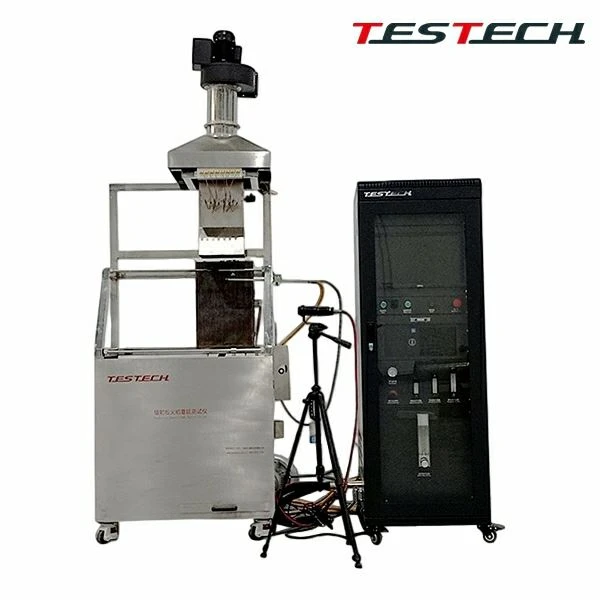
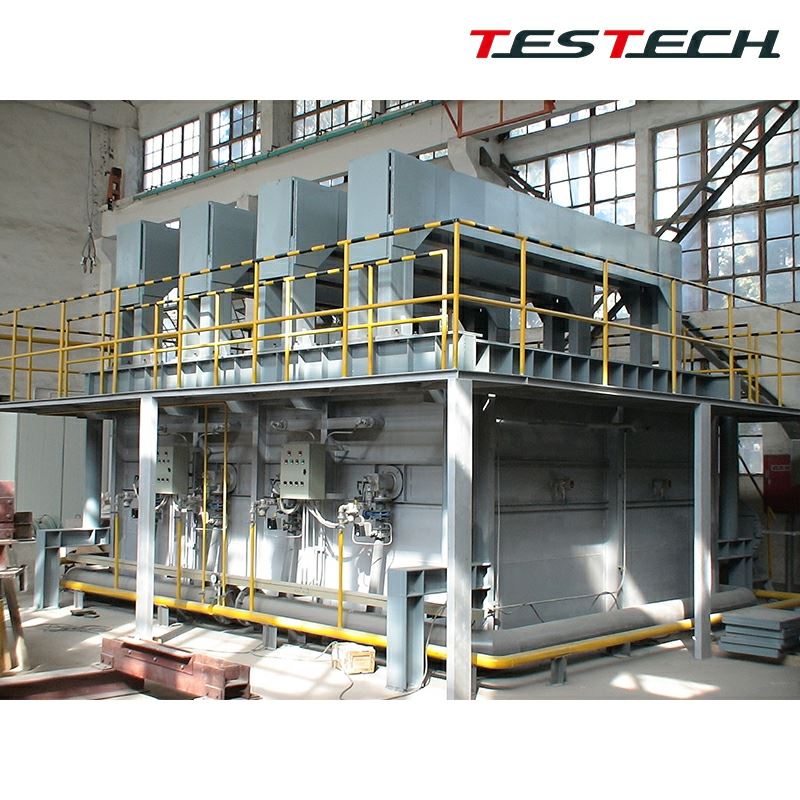
Our apparatus, by contrast, has a 10-foot-long, ventilated test chamber large enough to fit a full, unaltered mattress. The ventilation system is calibrated to replicate real indoor air flow (0.5 meters per second, per ASTM E1590, the standard that governs mattress flammability) rather than the stagnant air small material testers use. The ignition source is also tailored: instead of a small 50mm burner for paper or solar panels, we use a 100mm methane flame that simulates a smoldering cigarette or a small open flame (like a candle) that would actually ignite a mattress in a home.
Another huge difference is data accuracy. Many general flammability test apparatuses only measure “time to ignition”—a 1 or 2 digit number that tells you very little about how a mattress will burn. Our Flammability Of Mattress Sets Test Apparatus tracks four core metrics required by global safety standards (including California’s TB 603, which is the strictest in the U.S.): time to sustained ignition, maximum burn length, total heat release over 30 minutes, and any flaming drips that could spread fire to bedding or other furniture. Tools like the Fire Resistance Horizontal Test Furnace or Flame-Retardant Material Fire Propagation Tester only track heat release for very large structural materials (like wall panels or insulation), not the layered, lightweight components that make up a mattress. For example, a horizontal furnace is built to test 8-foot long wall samples—too long and too rigid to flex like a mattress, so it can’t replicate how foam compresses and allows fire to spread through layered padding.
Real-World Use: Why Brand Choice Impacts Compliance and Cost
I’ve seen too many manufacturers buy cheap, misapplied tools and fail compliance tests 3 or 4 times before they switch to a dedicated mattress apparatus. Last year, a small mattress brand in Texas reached out to me after failing a state inspection. They’d been using a general flame spread tester to save $2,000, and their test results were showing “acceptable” burn length—but when they used a dedicated mattress apparatus, the burn length was 18 inches over the legal limit. The problem? The small tester only tested a 12-inch section of foam, not the full 80-inch mattress edge where fire spread in real use. That mistake nearly cost them their entire line of crib mattresses before they switched.
Another common pain point with competing apparatuses: calibration and compliance documentation. Most general test tools don’t come with the exact documentation required for mattress safety testing, which means you’ll have to pay a third party to re-calibrate and verify your results every six months. Our Flammability Of Mattress Sets Test Apparatus is pre-calibrated to meet ASTM E1590, CAL TB 603, and EN 1021 (the European standard), so every test you run will be accepted by inspectors on the first try. That saves manufacturers an average of $1,200 a year in third-party testing fees—no small amount for a mid-sized brand running 50+ tests a month.
One more thing I’ll be honest about: dedicated mattress apparatus costs more upfront than a general flame tester. But when you factor in compliance risks, re-test fees, and inaccurate data leading to product recalls, it’s a no-brainer. A $5,000 difference in equipment cost pales in comparison to the $50,000+ cost of a product recall for non-compliant mattresses—and the hit to your brand’s reputation.
The Bottom Line for Your Mattress Safety Protocols
At the end of the day, the question isn’t “Is a flammability test apparatus just a metal box?” It’s “Is this apparatus designed specifically to test the unique way mattresses burn?” If you’re looking at tools that test paper, solar panels, or structural building materials, you’re using a tool that can’t replicate the conditions that matter for mattresses. Our Flammability Of Mattress Sets Test Apparatus is built for that exact purpose: to test full, standard-sized mattresses, track the metrics regulators actually care about, and deliver results that will pass inspections on the first try.
If you’re tired of misapplied test tools leading to compliance headaches, or you’re just ready to upgrade from a setup that gives you half the data you need, I’d love to chat. We work with brands of all sizes—from small boutique mattress makers to large national retailers—and can help you match a test apparatus to your specific product lines and regulatory needs. No generic, one-size-fits-all solutions here; just tools built for the specific work you’re doing.
References
ASTM International. (2020). Standard Test Method for Fire Testing of Mattresses (ASTM E1590). West Conshohocken, PA: ASTM International.
California Department of Consumer Affairs. (2022). Technical Bulletin 603: Flammability Performance of Mattresses and Mattress Pads. Sacramento, CA: State of California.
European Committee for Standardization. (2014). Furniture – Assessment of the ignitability of upholstered furniture – Part 1: Ignition source smouldering cigarette (EN 1021-1). Brussels, Belgium: CEN.
National Fire Protection Association. (2021). NFPA 267: Standard Methods of Fire Tests for Mattresses and Mattress Pads. Quincy, MA: NFPA.