

How accurate is a fabric flammability tester? That's a question I get asked a lot, being a supplier of fabric flammability testers. And it's not an easy one to answer, 'cause there are a bunch of factors that come into play.
First off, let's talk about what a fabric flammability tester actually does. These machines are designed to measure how easily a fabric catches fire, how fast the flame spreads across it, and how long it burns. This is super important, especially for industries like fashion, home furnishings, and protective gear. You don't want your clothes or curtains going up in flames at the slightest spark, right?
Now, the accuracy of these testers depends on a few things. One of the biggies is the calibration. Just like your car's speedometer needs to be calibrated to show the right speed, a fabric flammability tester has to be set up correctly to give accurate results. If the machine isn't calibrated properly, it might say a fabric is more or less flammable than it really is. That could be a huge problem, especially if it's used to test safety gear.
Another factor is the testing method. There are different ways to test fabric flammability, and each one has its own level of accuracy. For example, some tests use a small flame to ignite the fabric, while others use a bigger one. The way the flame is applied, the temperature, and the duration of the test can all affect the results.
Let's take a closer look at some of the testers we offer. The Clothing For Protection Contact Heat Transmission Tester is designed to measure how well a fabric protects against contact heat. It's a pretty accurate way to test fabrics that are used in things like firefighter suits or industrial workwear. The tester simulates the conditions of direct contact with a hot surface and measures how quickly the heat is transmitted through the fabric.
Then there's the Seam and Flame Impingement Cycle Tester. This one is used to test the flammability of seams in fabrics. Seams can be weak points, and if they catch fire easily, it can compromise the whole piece of clothing. This tester exposes the fabric to repeated cycles of flame impingement and measures how the seam holds up.
The Radiant Reflective Performance Tester is another great tool. It measures how well a fabric reflects radiant heat. This is important for fabrics that are used in outdoor gear or in environments where there's a lot of radiant heat, like near a furnace. The more reflective the fabric, the better it can protect the wearer from heat.
The Protective Clothing Flame Tester is specifically designed for testing protective clothing. It simulates a real - world fire situation and measures how the fabric behaves. This tester can give you a good idea of how well the clothing will protect the wearer in case of a fire.
And the Multifunctional Vertical Fabric Flammability Tester is a versatile machine. It can perform multiple tests on a fabric, including vertical flammability tests. This means you can get a comprehensive understanding of the fabric's flammability characteristics with just one machine.
But even with the best testers, there are still some limitations. For example, fabrics can vary a lot in terms of their composition, thickness, and finish. A natural fiber like cotton might behave differently from a synthetic fiber like polyester. And the way the fabric is treated, like if it's been dyed or coated, can also affect its flammability.
Also, the environment in which the test is conducted matters. Factors like humidity, temperature, and air circulation can all have an impact on the test results. So, if you're testing a fabric in a dry, hot room, the results might be different from testing it in a cool, humid environment.

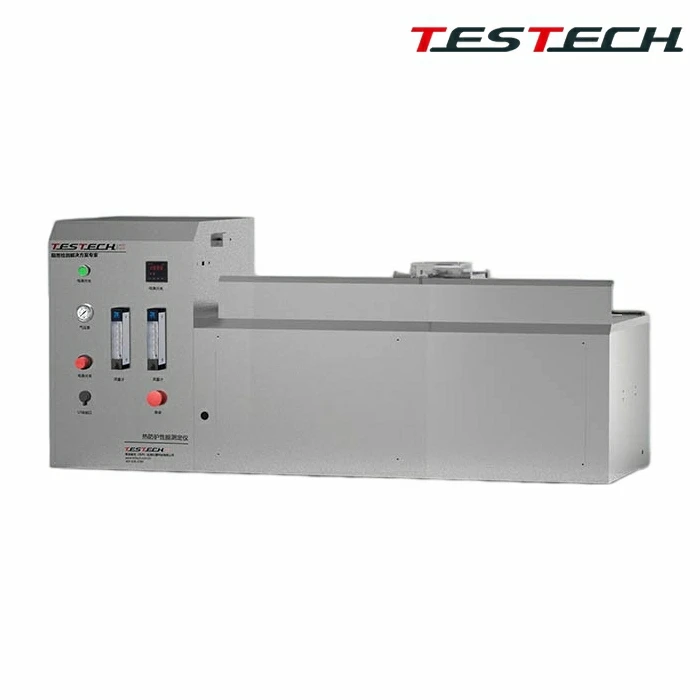
To minimize these variables and ensure accurate results, we provide a lot of support to our customers. We offer training on how to use the testers correctly, and we also provide calibration services. That way, you can be confident that the results you're getting are as accurate as possible.
So, how accurate is a fabric flammability tester? Well, it can be pretty accurate if it's calibrated right, the testing method is appropriate, and you take into account all the variables. But it's not a perfect science. There will always be some degree of uncertainty, especially when testing different types of fabrics in different environments.
If you're in the market for a fabric flammability tester, or if you have any questions about how our testers work or their accuracy, we'd love to hear from you. Contact us to start a conversation about your needs, and we can help you find the right tester for your application. Let's work together to make sure that your fabrics meet the highest safety standards.
References
- ASTM International. Standard Test Methods for Flammability of Textiles. ASTM D6413 - 11(2018).
- ISO 15025:2000. Protective clothing - Protection against heat and flame - Test method for limited flame spread.
- EN 532:1992. Protective clothing. Protection against heat and flame. Guide to the selection of limited flame - spread materials.