

When folks get into battery testing, especially for large-scale energy storage or EV packs, the last thing anyone wants is a surprise fire or thermal runaway. That’s why my team and I focus on building systems that don’t just run tests—they meet the exact standards that keep labs safe and results reliable. If you’re here asking about what a 10MW Battery Thermal Release Test System has to comply with, you’re probably someone who’s already deep in the thick of battery safety, not just googling random specs. Let’s break this down like we do with our clients, no stuffy jargon (well, a little, but only when it matters).
First, let’s start with the big ones: international safety standards that aren’t just recommendations. The Institute of Electrical and Electronics Engineers (IEEE) has a whole suite for battery systems, right? For 10MW setups—those are the heavy hitters, used for grid-scale storage or large commercial vehicles—we follow IEEE 1625, which specifically covers rechargeable battery systems for stationary energy storage. That standard lays out how to measure thermal runaway characteristics, heat release rates, and vented gas behavior, all of which are non-negotiable for a 10MW system. Also, IEEE 1547 comes into play because large battery systems tie into the grid, so our test systems have to align with grid interconnection safety protocols to avoid any ripple effects during testing.
Then there’s Underwriters Laboratories (UL), a name everyone in safety trusts. For large-format battery packs and systems, UL 9540A is the gold standard for testing thermal runaway propagation. Our 10MW test rigs are built to handle the scale here—smaller systems (like our 5MW Battery Thermal Release Test System) follow the same base rules, but 10MW needs extra muscle to simulate the kind of energy density you get with a 10-megawatt setup. UL 9540A requires measuring not just the heat release rate (HRR) during a test, but also how that heat transfers to adjacent modules, which is why we integrate real-time data logging that can track up to hundreds of temperature and pressure points at once.
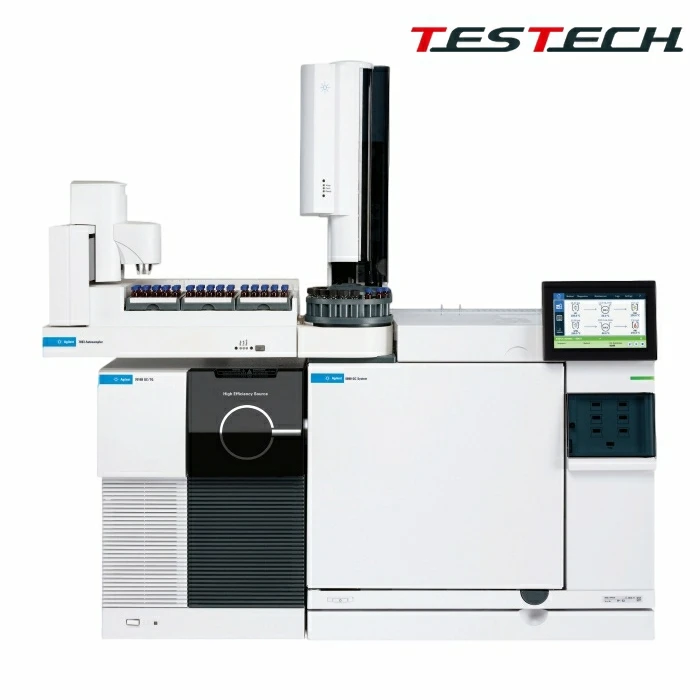
Wait, I should mention the gas stuff, too. When a battery goes into thermal runaway, it releases a mix of flammable gases—hydrogen, methane, sometimes carbon monoxide. If your test system doesn’t account for that, you’re not just getting bad data, you’re putting your lab at risk. That’s where the International Electrotechnical Commission (IEC) standards step in, specifically IEC 62619 for lithium-ion batteries used in industrial applications, and IEC 60079-13 for explosive atmospheres. Our systems are designed with explosion-proof enclosures for gas sampling, which is why we work closely with our Gas Chromatography Analysis System to break down exactly what’s coming out of the battery during a test. That way, we don’t just measure the volume of gas—we know its composition, which is key for things like designing ventilation systems for real-world installations.
Also, if you’re testing for EV or aerospace applications, there’s SAE International standards too. SAE J2464 covers battery abuse testing, including thermal runaway, and for large-format packs, SAE J2929 specifically addresses grid energy storage systems. What I love about these standards is that they’re not just checkboxes—they’re built from years of real-world incidents. For example, SAE J2929 requires that test systems can contain a thermal runaway event so it doesn’t damage the test chamber or spread to other batteries, which our 10MW rigs do with a reinforced steel test enclosure and active suppression that triggers within milliseconds of detecting a pressure spike.
Let’s talk about the nuts and bolts of our 10MW system specifically, since you’re asking about that. A lot of people assume a bigger test system is just a scaled-up version of a 1MW one, but that’s not true. The heat release rate for a 10MW battery is way higher, so our system has to comply with the standards for maximum heat containment and measurement accuracy. For example, ISO 5660 is the standard for measuring HRR using a cone calorimeter, but for 10MW systems, we use a modified version that can handle the larger sample sizes and higher heat loads without skewing results. Our team calibrated every part of the system to make sure it meets ISO 17025, which is the standard for testing and calibration laboratories—so any data you get from our system is accreditation-worthy, which is huge for compliance reports you have to submit to regulators.
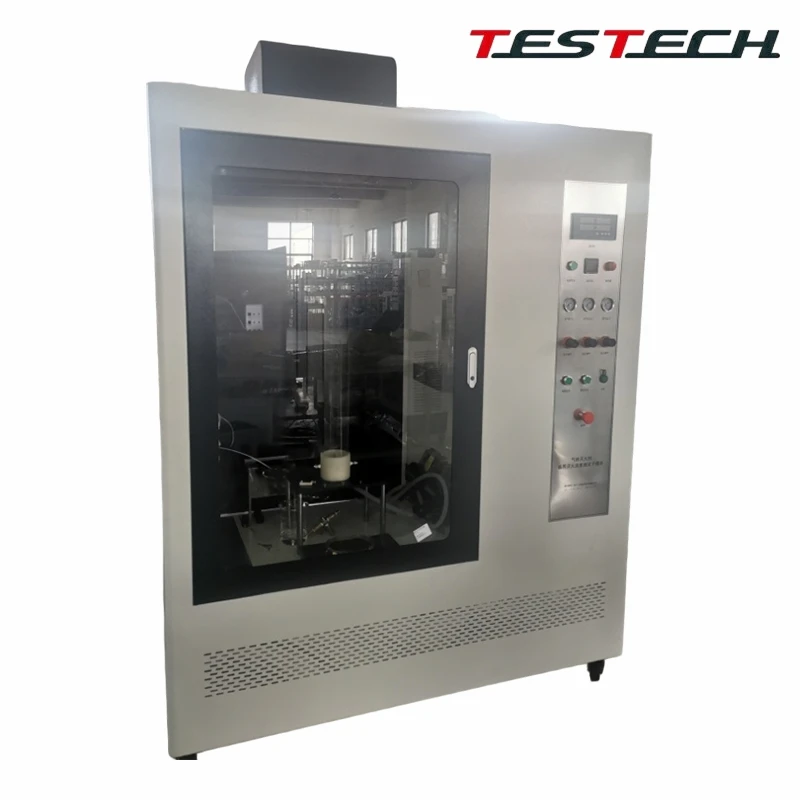
Another thing that comes up a lot is vent gas behavior. When a battery vents during thermal runaway, that gas can burn or ignite, and if your test system doesn’t measure that, you’re missing a critical safety metric. That’s where the Released Gas Burning Rate Tester integration comes in—we build that into our 10MW systems to measure how fast the vented gas burns, which is required by both UL 9540A and IEC 62619. For example, if a battery’s vented gas has a high burning rate, that tells you you need better ventilation in your actual battery installation, or fire suppression systems that can handle fast-burning gas jets.
Wait, should I mention why this matters for our clients? A lot of test system suppliers cut corners on compliance to save money, but for companies building grid-scale battery farms or large EV packs, non-compliance means delays in getting regulatory approval, or worse, safety incidents. I’ve had clients come to me after buying a cheaper system that couldn’t pass a third-party audit because it didn’t meet IEEE 1625, so we make sure every version of our 10MW system is audited regularly against all the latest standards. Even our smaller 5MW systems have to meet the same core standards, just scaled down for their power rating.
Also, let’s not forget about fire jet testing. When a battery goes into thermal runaway, it can shoot flames out of its vents—something that’s especially dangerous in large packs. That’s why we designed our Battery Pack Fire Jet Test Machine to work with our 10MW system, complying with UL 2580 (the standard for batteries for electric vehicles) and NFPA 855, which is the National Fire Protection Association’s standard for stationary energy storage systems. NFPA 855 specifically requires testing for fire jet behavior in large battery installations, so our 10MW rigs are built to simulate the exact pressure and temperature of those jets, so you can design your enclosure or fire suppression to stop them.
Let me make this relatable for someone who’s actually working with these systems. If you’re a lab manager at a battery manufacturer, or an engineer designing a grid storage project, you don’t just need a test system—you need one that your regulators will accept, that gives consistent data, and that keeps your team safe during tests. We don’t just sell the 10MW Battery Thermal Release Test System—we walk you through every standard, make sure your team knows how to operate it in compliance, and even help you interpret the data to meet your specific regulatory needs. For example, if you’re in Europe, we make sure the system meets all IEC standards; if you’re in the US, it’s calibrated to UL and NFPA rules.
One thing that trips a lot of people up is keeping up with updated standards. Safety standards for batteries change as new chemistries (like solid-state) come out, so our engineering team stays on top of every revision—last year, UL updated 9540A to include more testing for longer-duration thermal runaway events, and we modified our 10MW systems within six months to meet that. We don’t just build a system and walk away; we update it as standards evolve, because your safety isn’t a one-time checkbox.
Let’s wrap this up. At the end of the day, a 10MW Battery Thermal Release Test System isn’t just about handling power—it’s about complying with a network of international, industry, and safety standards that are built to prevent incidents, ensure reliable data, and keep labs and installations safe. We don’t cut corners on any of that. If you’re looking to get a system that checks all the boxes, or if you have questions about how our rig aligns with your specific compliance needs, feel free to reach out to our team to talk through your requirements. We’re here to make sure your testing is not just accurate, but fully compliant with every standard that matters.
References
- Institute of Electrical and Electronics Engineers (IEEE). (2020). IEEE 1625-2020: Standard for Rechargeable Batteries for Stationary Energy Storage Systems.
- Underwriters Laboratories (UL). (2019). UL 9540A: Standard Test Method for Evaluating Thermal Runaway Fire Propagation in Battery Energy Storage Systems.
- International Electrotechnical Commission (IEC). (2021). IEC 62619: Secondary Batteries and Battery Systems for Industrial Applications – Safety Requirements for Lithium-Ion Batteries.
- National Fire Protection Association (NFPA). (2022). NFPA 855: Standard for the Installation of Stationary Energy Storage Systems.
- Society of Automotive Engineers (SAE). (2021). SAE J2929: Standard for Electric Vehicle Battery System Safety.
- International Organization for Standardization (ISO). (2019). ISO 5660-1: Reaction-to-Fire Tests – Heat Release, Smoke Production and Mass Loss Rate – Part 1: Heat Release Rate (Cone Calorimeter Method).