

If you work in the wire and cable industry, you know that safety testing is non-negotiable. Every product rolling off the production line needs to meet strict fire and smoke standards to protect end users, comply with regulations, and avoid costly recalls. A question I hear from customers again and again is: Can a Wire and Cable Smoke Density Tester be connected to a computer for data recording? The short answer is yes—and doing so can transform how you approach testing, making processes more accurate, repeatable, and efficient. As a supplier of these testers, I’ve worked with hundreds of teams to set up computerized data integration, so I’ll break down why this matters, how it works, and what benefits it brings to your operations.
Let’s start with the basics: wire and cable smoke density testing measures how much smoke is produced when a cable burns, a critical safety metric because dense smoke is the leading cause of fire-related fatalities. Traditional smoke density testers use analog meters or paper charts to track light transmission through the smoke chamber, but these methods come with limitations. Paper charts fade over time, manual data entry is prone to human error, and there’s no easy way to compare test results across multiple runs. That’s where computer connectivity changes everything.
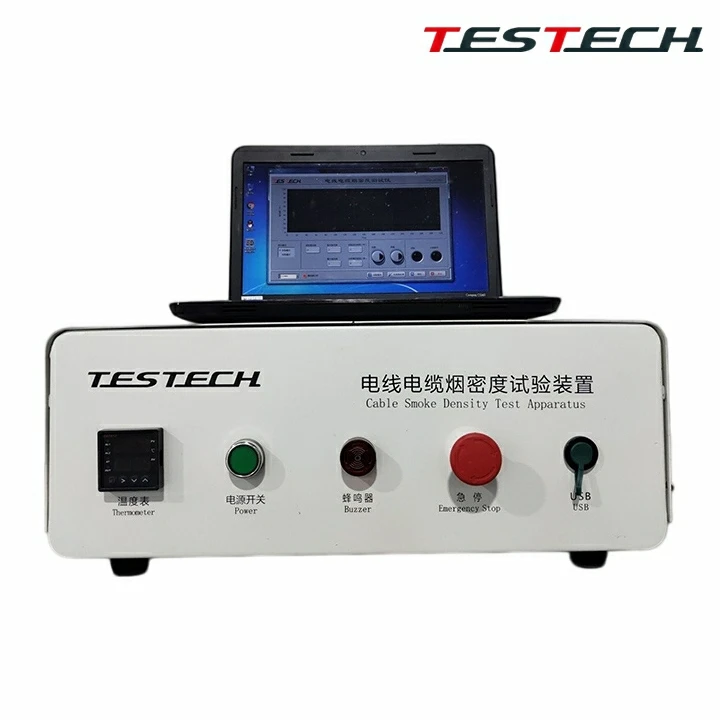
The core function of a smoke density tester is to measure light obscuration as a sample burns. The device has a light source, a smoke chamber where the cable specimen is mounted and ignited, and a light detector that reads how much light passes through the smoke. When you connect this setup to a computer, the detector’s readings are streamed directly to specialized software in real time. This eliminates the need to manually record numbers during tests, which is a huge win for test engineers who often have to monitor multiple variables at once. For example, if a test runs for 20 minutes, you don’t have to stay glued to the meter writing down values every 30 seconds— the software captures every data point automatically.
But it’s not just about saving time. Computerized data recording addresses a key pain point for regulatory compliance. Most industry standards, like ASTM E662 (the primary standard for smoke density testing of solid materials), require precise, traceable test data. When you use a manual tester, you have to transcribe data from paper or analog displays into reports, which introduces room for mistakes that can lead to failed audits or rejected products. With a connected system, data is stored digitally, timestamped, and can be exported directly into standard report formats. This makes audits smoother and gives you a reliable, immutable record of every test run.
I want to be clear: not all smoke density testers are built for computer connectivity. As a supplier, we design our models with this feature as a standard, not an afterthought. The process of connecting the tester to a computer is straightforward, but it requires integration that aligns with industry test protocols. It works by linking the tester’s output port (usually a USB or Ethernet connection) to a desktop or laptop running dedicated test software. This software is calibrated to match the requirements of standards like ASTM E662, ensuring that the data captured is accurate and valid for compliance purposes.
One common concern I hear is about data integrity. Will connecting the tester to a computer interfere with the test results? The short answer is no, when done correctly. The data transmission is designed to be non-invasive— the computer is just receiving the digital signal from the detector, not modifying the tester’s core functions. In fact, many users find that computerized recording reduces human error that might skew results. For example, if a test engineer misreads an analog meter or transposes a number when writing down results, that can create inaccurate data that leads to incorrect conclusions about a cable’s safety performance. Computerized systems eliminate that risk.
To put this into context, think about a typical workflow for a cable manufacturer. Let’s say you’re testing a new batch of fire-resistant cables for use in high-rise buildings. You run multiple replicate tests to ensure consistency, and each test generates a stream of data points showing smoke density over time. With a manual tester, you might spend hours after each run transcribing data, plotting graphs by hand, and compiling reports. With a connected system, the software does all of that in seconds. It generates a graph that plots light transmission (and thus smoke density) against time, flags any deviations from expected results, and organizes all test data in a searchable database. That means you can compare results across different cable batches, adjust your manufacturing process if you see trends, and prepare compliance reports quickly.
Computer connectivity also opens up advanced features that are impossible with manual testers. For example, some software allows you to set custom alerts: if smoke density exceeds a certain threshold during a test, the system can send a notification to your email or phone. This is useful for long test runs where you don’t need constant in-person monitoring. You can also store test data in the cloud if you want, which means you can access results from anywhere, share them with team members or auditors remotely, and back up data to avoid loss from computer failures. These features add a layer of flexibility that manual systems simply can’t match.
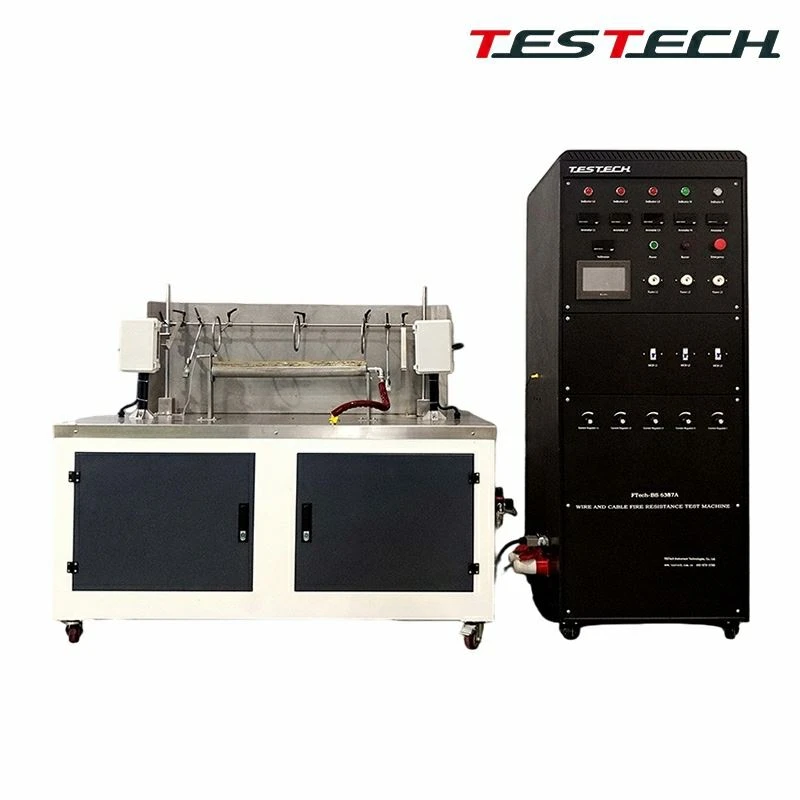
Now, let’s talk about how this fits into the broader ecosystem of wire and cable safety testing. A smoke density tester is just one piece of the puzzle. You might also use a Steiner Horizontal Tunnel Furnace Apparatus to test flame spread along cables, a Cable Fire Resistance Tester to evaluate how well cables maintain function under fire conditions, a Bunched Cable Vertical Flame Spread Tester for smaller scale vertical flame testing, and a Carbon Black Content Tester to ensure consistent material composition. All of these testers can benefit from computerized data recording, and integrating their data with your smoke density test results gives you a holistic view of your cable’s fire performance. For example, if a cable passes flame spread testing but has high smoke density, you can adjust its formulation to meet both requirements.
I’ve seen firsthand how this technology transforms small to mid-sized cable manufacturers, not just large corporations. A few months ago, I worked with a regional producer that was struggling with compliance audits because their manual test data had gaps and inconsistencies. Once they switched to a computer-connected smoke density tester, their audit time was cut in half, and they reduced the number of failed test runs due to data entry errors by 90%. The team also saved 10+ hours a week that they used to spend on manual data processing, reallocating that time to product development.
Of course, there are a few things to keep in mind if you’re considering connecting your smoke density tester to a computer. First, you need to make sure your tester is compatible with standard test software. Some off-brand testers have proprietary connectivity that doesn’t work with common programs, so it’s important to choose a model designed for compliance testing. Second, you’ll need to ensure your computer meets basic requirements— most software works with standard Windows or macOS laptops, so this isn’t a major barrier. Finally, calibration is still critical: even with computerized recording, you should calibrate your tester and software regularly to ensure accuracy, per ASTM standards.
Another point I want to emphasize is data security. When storing test data digitally, you want to make sure it’s protected, especially since compliance records are often required to be retained for years. Most reputable test software includes built-in security features like password protection, role-based access, and audit trails, so you can control who can view or modify test data. This is especially important for manufacturers that work with government or construction clients, who have strict data requirements.
At the end of the day, the question isn’t just whether you can connect a wire and cable smoke density tester to a computer—it’s whether you can afford not to. In an industry where safety, compliance, and efficiency are make-or-break, computerized data recording isn’t a luxury—it’s a necessity. It reduces errors, saves time, improves compliance, and gives you actionable insights into your cable’s performance. Whether you’re testing for domestic standards or international codes, integrating your smoke density tester with a computer streamlines every step of the testing process.
If you’re ready to upgrade your testing setup, or if you have more questions about computer connectivity for wire and cable testers, we’re here to help. Our team has years of experience supporting wire and cable manufacturers with their testing needs, from selecting the right equipment to setting up data recording systems that meet your specific requirements. We can walk you through how to connect a Wire and Cable Smoke Density Tester to a computer, integrate it with other testing devices, and ensure that your data is compliant and reliable. Don’t let manual testing hold your business back—contact us today to learn more.
References
- American Society for Testing and Materials. (2020). Standard Test Method for Specific Optical Density of Smoke Generated by Solid Materials (ASTM E662). ASTM International.
- Underwriters Laboratories. (2022). Standard for Safety for Low-Voltage Cables, Wires, and Busbars for Use in Power Distribution and Control Circuits (UL 1581). UL LLC.
- International Electrotechnical Commission. (2021). Test Methods for Electric Cables Under Fire Conditions – Part 1-1: General Test Methods – Vertical Flame Test for Single Insulated Wires or Cables (IEC 60332-1-1). IEC.
- NFPA. (2023). NFPA 70: National Electrical Code, Article 725: Power-Limited Fire Alarm Circuits. National Fire Protection Association.
- Wang, Y., & Li, M. (2022). "Advancements in Smoke Density Testing for Electric Cables: Accuracy and Efficiency Improvements." Journal of Fire Sciences, 40(3), 217-235.