

Rail transit safety is of paramount importance, and one crucial aspect is the flammability and heat release characteristics of materials used in trains and related infrastructure. The Rail Transit Material Combustion Tester plays a vital role in evaluating these properties, especially in measuring heat flux. As a leading supplier of Rail Transit Material Combustion Testers, we are well - versed in the science and technology behind these measurements.
1. Understanding Heat Flux in Rail Transit Materials
Heat flux is defined as the rate of heat transfer per unit area. In the context of rail transit materials, it is a critical parameter as it helps to determine how quickly a material can spread fire and release energy when ignited. High heat flux values indicate that a material can transfer a significant amount of heat in a short period, which can lead to rapid fire development and endanger passengers and infrastructure.
For example, in a train carriage, if the interior materials such as seats, wall panels, and flooring have high heat flux during combustion, the fire can spread quickly through the carriage, reducing the evacuation time and increasing the risk of casualties. Therefore, accurately measuring the heat flux of rail transit materials is essential for ensuring the safety of rail systems.
2. The Working Principle of Rail Transit Material Combustion Tester for Heat Flux Measurement
Our Rail Transit Material Combustion Tester adopts advanced thermal measurement techniques to accurately measure the heat flux emitted by materials during combustion.
2.1. Radiant Heat Source
The tester is equipped with a calibrated radiant heat source. This source emits a controlled amount of radiant heat onto the test material. The intensity of the radiant heat can be adjusted according to different test standards. For example, in some international standards, the radiant heat flux is set at a specific value, such as 50 kW/m², to simulate a real - world fire scenario.
The radiant heat source is usually a high - temperature electric heater or a gas - fired burner. The heat is emitted in the form of electromagnetic radiation, which is absorbed by the test material. As the material absorbs the radiant heat, its temperature rises, and eventually, it may ignite.
2.2. Heat Flux Sensor
A key component of the Rail Transit Material Combustion Tester is the heat flux sensor. This sensor is placed in close proximity to the test material to measure the heat flux emitted from the burning material. There are different types of heat flux sensors, such as the Gardon gauge and the Schmidt - Boelter gauge.
The Gardon gauge works based on the principle of the thermoelectric effect. It consists of a circular foil with a thermocouple junction at the center and the outer edge. When heat is incident on the foil, a temperature difference is created between the center and the edge, which generates an electric potential. This potential is proportional to the heat flux, and by measuring the electric potential, the heat flux can be calculated.
The Schmidt - Boelter gauge, on the other hand, uses a thin - film thermopile. When heat passes through the thermopile, a voltage is generated due to the Seebeck effect. The magnitude of the voltage is related to the heat flux, allowing for accurate measurement.
2.3. Data Acquisition and Analysis System
The heat flux sensor is connected to a data acquisition system. This system records the heat flux data over time, creating a heat flux - time curve. The curve provides valuable information about the heat release behavior of the test material.

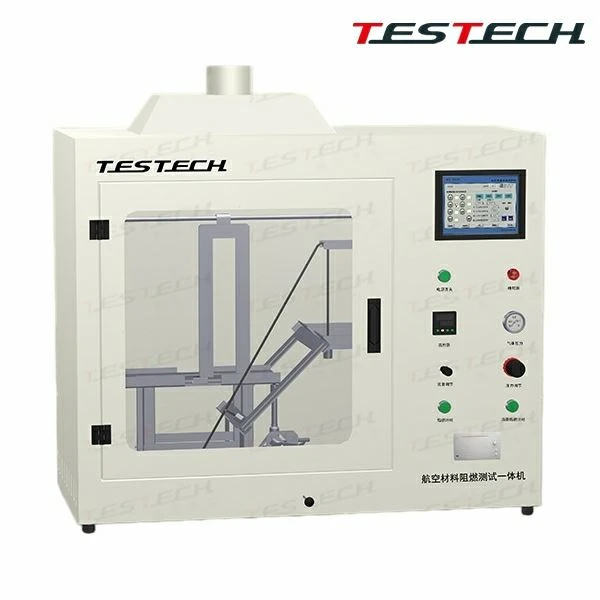
For instance, the peak heat flux value indicates the maximum heat release rate of the material during combustion. A high peak heat flux means that the material can release a large amount of heat in a short time, which is a sign of high flammability. The time - to - peak heat flux also gives an indication of how quickly the material reaches its maximum heat - releasing state.
The data acquisition system also allows for the calculation of other important parameters, such as the total heat released over a specific period. This information is crucial for evaluating the overall fire - hazard potential of the rail transit material.
3. Test Procedures Using the Rail Transit Material Combustion Tester for Heat Flux Measurement
3.1. Sample Preparation
First, a representative sample of the rail transit material is prepared. The sample size and shape are determined by the test standards. Usually, the sample is cut into a specific dimension, such as a square or rectangular shape, with a defined thickness.
The sample should be free from any contaminants or surface defects that could affect the test results. It is then carefully mounted in the test chamber of the Rail Transit Material Combustion Tester, ensuring proper alignment with the radiant heat source and the heat flux sensor.
3.2. Test Setup
Before starting the test, the radiant heat source is calibrated to ensure that it emits the required radiant heat flux. The heat flux sensor is also calibrated to ensure accurate measurement. The test chamber is then sealed to prevent the influence of external air currents on the combustion process.
The data acquisition system is initialized, and all the necessary parameters, such as the test duration, sampling frequency, are set according to the test requirements.
3.3. Test Execution
The radiant heat source is turned on, and the test material starts to absorb the radiant heat. Once the material reaches its ignition temperature, it ignites, and the heat flux sensor begins to record the heat flux emitted from the burning material.
During the test, the data acquisition system continuously records the heat flux data. The test is usually carried out for a specific period, such as 10 minutes or 20 minutes, depending on the test standard.
3.4. Data Analysis and Reporting
After the test is completed, the recorded heat flux data is analyzed. As mentioned earlier, parameters such as the peak heat flux, time - to - peak heat flux, and total heat release are calculated. These results are then compared with the relevant safety standards and regulations for rail transit materials.
A test report is generated, which includes the test results, a description of the test conditions, and any observations made during the test. This report is used by material manufacturers, rail operators, and regulatory authorities to evaluate the fire safety performance of the rail transit materials.
4. Significance of Heat Flux Measurement in Rail Transit Safety
The accurate measurement of heat flux using the Rail Transit Material Combustion Tester has several important implications for rail transit safety.
4.1. Material Selection
Manufacturers can use the heat flux test results to select the most fire - resistant materials for rail transit applications. By choosing materials with low heat flux values, it is possible to reduce the spread of fire in case of an accident, providing more time for passengers to evacuate.
4.2. Regulatory Compliance
Regulatory authorities around the world have established strict fire safety standards for rail transit materials. The heat flux measurement is an important part of these standards. By using our Rail Transit Material Combustion Tester, railway operators and material suppliers can ensure that their products comply with these regulations, avoiding potential legal issues and fines.
4.3. Fire Risk Assessment
Fire risk assessment is a crucial part of rail transit safety management. The heat flux data obtained from the tests can be used to develop fire models and predict the behavior of fires in different rail transit scenarios. This information helps in the design of fire - prevention and fire - fighting strategies, improving the overall safety of the rail system.
5. Related Testing Equipment
In addition to the Rail Transit Material Combustion Tester, we also offer a range of related testing equipment for the transportation industry.
- Aircraft Seat Flammability Test Apparatus: This apparatus is used to test the flammability of aircraft seats, ensuring that they meet the strict safety requirements of the aviation industry.
- Aircraft Material Heat Release Rate Tester: It is designed to measure the heat release rate of aircraft materials, which is an important parameter for evaluating their fire safety performance.
- Pensky - Martens Closed Cup Flash Point Tester: This tester is used to determine the flash point of flammable liquids, which is crucial for ensuring the safe storage and transportation of these substances.
- Aviation Vertical Flammability Tester: It is used to test the vertical flammability of aviation materials, helping to assess their fire - spreading characteristics.
- Ion Chromatography: This technique can be used to analyze the chemical composition of materials, which is useful for understanding their fire - related properties.
6. Conclusion and Call to Action
The Rail Transit Material Combustion Tester is an indispensable tool for ensuring the fire safety of rail transit materials. Through accurate measurement of heat flux, it provides valuable information for material selection, regulatory compliance, and fire risk assessment.
If you are involved in the rail transit industry, whether you are a material manufacturer, a rail operator, or a regulatory authority, our Rail Transit Material Combustion Tester and other related testing equipment can meet your needs. We are committed to providing high - quality testing solutions to help you improve the safety of your rail systems. If you are interested in our products or have any questions, please contact us for more information and to discuss your procurement needs.
References
- ISO 5660 - 1, Reaction - to - fire tests — Heat release, smoke production and mass loss rate — Part 1: Heat release rate (cone calorimeter method).
- ASTM E1354, Standard Test Method for Heat and Visible Smoke Release Rates for Materials and Products Using an Oxygen Consumption Calorimeter.
- EN 45545 - 2, Railway applications - Fire protection on railway vehicles - Part 2: Requirement for fire behavior of materials and components.