

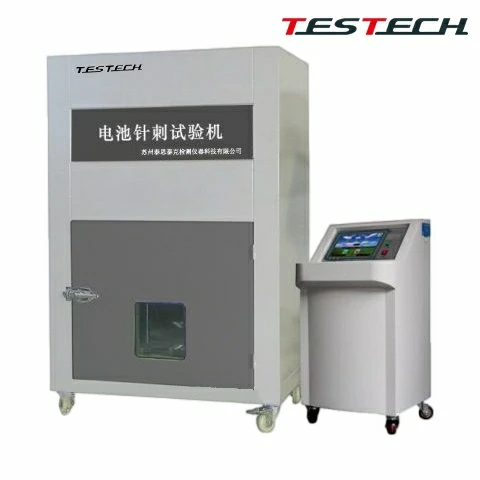
As a supplier of the Battery Pack Fire Jet Test Machine, I am often asked about how our machine handles the exhaust gas generated during testing. This is a crucial aspect of the testing process, as the exhaust gas can contain various harmful substances that need to be properly managed to ensure safety and environmental compliance. In this blog, I will delve into the details of how our Battery Pack Fire Jet Test Machine addresses this issue.
Understanding the Exhaust Gas from Battery Testing
Before we discuss the handling methods, it's essential to understand what the exhaust gas from battery testing typically contains. When a battery pack undergoes a fire jet test, the high - temperature and high - energy environment causes the battery materials to decompose and react. The exhaust gas may contain a complex mixture of substances, including combustible gases such as hydrogen, methane, and carbon monoxide; toxic gases like hydrogen fluoride, sulfur dioxide, and nitrogen oxides; and particulate matter.
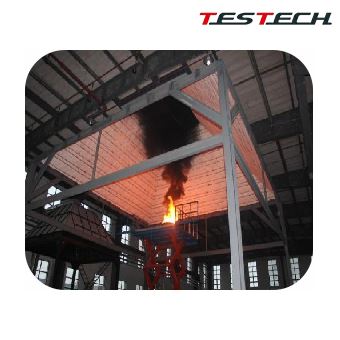
These substances pose significant risks. Combustible gases can create an explosion hazard if not properly ventilated. Toxic gases can cause harm to human health, ranging from irritation of the respiratory system to more severe long - term effects. Particulate matter can also be inhaled and cause damage to the lungs.
Exhaust Gas Handling Mechanisms in Our Battery Pack Fire Jet Test Machine
Ventilation System
The first line of defense in handling the exhaust gas is our well - designed ventilation system. Our Battery Pack Fire Jet Test Machine is equipped with a high - flow ventilation system that can quickly remove the exhaust gas from the testing chamber. The ventilation system has adjustable air intake and exhaust rates, allowing us to optimize the airflow according to the specific requirements of each test.
The air intake is designed to bring in fresh air from the outside, diluting the concentration of the exhaust gas inside the chamber. The exhaust outlet is connected to an external exhaust duct that leads the gas away from the testing area. This helps to prevent the accumulation of harmful gases in the working environment.
Filtering and Purification Process
After the exhaust gas is removed from the testing chamber, it goes through a series of filtering and purification processes. Our machine is integrated with high - efficiency particulate air (HEPA) filters that can capture fine particulate matter in the exhaust gas. These filters have a very high filtration efficiency, ensuring that most of the solid particles are removed before the gas is further processed.
In addition to particulate filtration, we also use a chemical adsorption system to remove toxic gases. Different types of adsorbents are used depending on the specific gases in the exhaust. For example, activated carbon can be very effective in adsorbing organic gases and some inorganic gases. Specialized adsorbents are also used for removing highly toxic gases like hydrogen fluoride.
Combustion Treatment for Combustible Gases
Combustible gases in the exhaust are treated through a controlled combustion process. Our machine is equipped with a combustion chamber where the combustible gases are mixed with air and ignited under controlled conditions. This process not only eliminates the explosion risk but also converts the combustible gases into less harmful substances such as carbon dioxide and water vapor.
The combustion process is carefully monitored and regulated to ensure complete combustion. Sensors are installed in the combustion chamber to measure parameters such as temperature, oxygen concentration, and gas flow rate. These sensors provide real - time feedback, allowing the control system to adjust the combustion process as needed.
Monitoring and Analysis of the Exhaust Gas
To ensure the effectiveness of the exhaust gas handling system, continuous monitoring and analysis of the exhaust gas are carried out. Our Gas Chromatography Analysis System is integrated with the Battery Pack Fire Jet Test Machine. This system can accurately identify and quantify the various components in the exhaust gas.
By analyzing the composition of the exhaust gas, we can determine whether the handling system is working properly. If the concentration of a certain harmful substance exceeds the safety limit, the system can trigger an alarm and adjust the exhaust gas handling process accordingly. For example, if the concentration of carbon monoxide is too high, the ventilation rate may be increased, or the combustion process may be optimized.
Advantages of Our Exhaust Gas Handling System
Our exhaust gas handling system offers several advantages. Firstly, it provides a high level of safety. By effectively removing and treating the exhaust gas, we minimize the risks of explosion and exposure to toxic substances for the operators and the surrounding environment.
Secondly, it ensures the accuracy of the test results. The proper handling of exhaust gas prevents the interference of the gas with the testing equipment and the test environment. This allows for more accurate measurements and a more reliable evaluation of the battery pack's performance.
Thirdly, our system is environmentally friendly. By purifying the exhaust gas before it is released into the atmosphere, we reduce the environmental impact of the battery testing process. This is in line with the growing global concern for environmental protection.
Related Test Systems and Their Compatibility
We also offer other related test systems, such as the 10MW Battery Thermal Release Test System, 5MW Battery Thermal Release Test System, and 3MW Battery Thermal Release Test System. These systems can work in tandem with the Battery Pack Fire Jet Test Machine.
The exhaust gas handling mechanisms in these systems are also designed to be highly efficient and reliable. They share some common features with the Battery Pack Fire Jet Test Machine, such as the ventilation, filtering, and combustion treatment systems. This compatibility allows customers to build a comprehensive battery testing platform that can handle different types of battery tests while ensuring proper exhaust gas management.
Conclusion and Call to Action
In conclusion, the handling of exhaust gas is a critical aspect of the battery testing process, and our Battery Pack Fire Jet Test Machine is designed to address this issue effectively. Through a combination of ventilation, filtering, purification, and combustion treatment, we ensure the safety of the testing environment, the accuracy of the test results, and the protection of the environment.
If you are in the market for a battery testing solution that can handle exhaust gas properly, our Battery Pack Fire Jet Test Machine and related systems are the ideal choices. We are committed to providing high - quality products and excellent customer service. Contact us for further details and to start the procurement and negotiation process. We look forward to working with you to meet your battery testing needs.
References
- "Battery Safety Testing: Principles and Practices", published by XYZ Press.
- "Exhaust Gas Management in Industrial Testing Processes", a research report from ABC Institute.