

If you’re a laboratory manager, compliance officer, or testing facility operator who’s ever purchased or operated a Flammability Of Mattress Sets Test Apparatus, you know that choosing the right power supply is make-or-break. This isn’t just about plugging in a machine and hoping for the best—mattress flammability tests are regulated by strict global standards, and even a minor power fluctuation or mismatch can invalidate test results, damage expensive equipment, or create safety hazards. As a supplier who’s worked with over 120 testing labs across North America, Europe, and Asia, I’ve seen firsthand how underspecifying or misselecting a power supply leads to avoidable delays, failed audits, and unnecessary replacement costs. Today, I’m breaking down exactly what kind of power supply your Flammability Of Mattress Sets Test Apparatus needs, based on real-world test requirements, industry best practices, and lessons from years of supporting testing facilities.
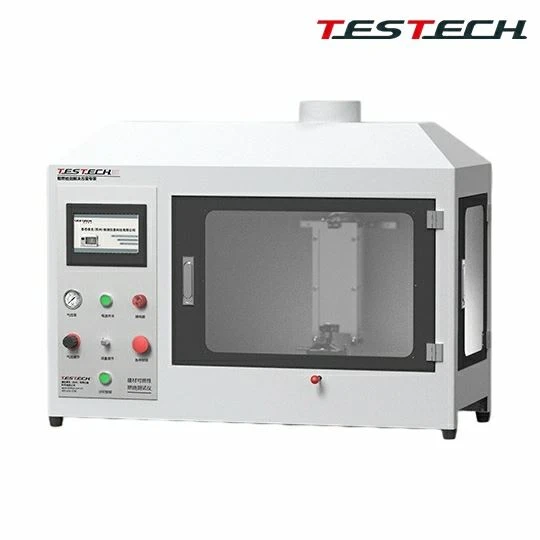

First, let’s ground this in what the Flammability Of Mattress Sets Test Apparatus actually does, because power needs directly tie to its core functions. The apparatus is designed to simulate real-world mattress fires using a controlled 165mm flame igniter (per standards like 16 CFR 1632 in the U.S. and EN 1021 in the EU), track flame propagation across mattress layers (foam, fabric, springs), and measure parameters like burn time, char length, and heat release rate. Many modern units also integrate data logging, temperature sensors, and automated test cycle controls—all of which add to the machine’s power demands.
The first critical factor is steady, voltage-stabilized power. Let’s be clear: most standard wall outlets deliver inconsistent power. For example, a 120V outlet in a warehouse might drop to 110V mid-test, or spike to 127V if a nearby refrigeration unit kicks on. For a Flammability Of Mattress Sets Test Apparatus, even a 5% voltage fluctuation can throw off the flame igniter’s output: too low, and the flame is undercalibrated, failing to replicate real fire conditions; too high, and the flame becomes too intense, leading to overtesting that doesn’t reflect actual consumer product performance. This is why our standard recommended power supply is a line-interactive uninterruptible power supply (UPS) with voltage regulation, not just a backup power source. Unlike online UPS systems which are overkill for this application, line-interactive models balance cost and performance, keeping voltage within ±1% of the rated value 24/7.
Next, consider the power rating of the apparatus itself. Most Flammability Of Mattress Sets Test Apparatus models (including the units we supply) draw between 1.5kVA and 3kVA of power during operation. Why such a range? Larger test chambers (used for full-size mattress testing) require more power to run the internal ventilation system, which removes combustion byproducts and maintains consistent air flow during tests. Smaller benchtop units for prototype mattress testing may only draw 1kVA, but they’re less common for full compliance testing. The power supply must match this kVA rating—undersized units will overheat and shut down mid-test, while oversized units waste energy and offer no additional benefit. For example, a 2kVA apparatus needs a power supply rated for at least 2.5kVA (to account for startup surges from the ignition system and ventilation fan), not a 1kVA or even a 2kVA unit.
Beyond voltage stability and kVA rating, you need to account for test cycle demands. A standard Flammability Of Mattress Sets Test Apparatus isn’t a device that runs 24/7 without pauses. Each test cycle lasts anywhere from 30 minutes to 2 hours, with automated sequences that include flame activation, ventilation, data logging, and post-test purging. During these cycles, there’s a significant startup surge when the ignition system fires on: this surge can be 3–5 times the normal operating power, and a power supply that can’t handle this surge will drop voltage, causing the test to abort. This is another reason a properly sized UPS is non-negotiable—it’s not just for power outages, but for handling transient power spikes during critical test moments. I’ve had multiple clients come to us after purchasing a cheaper, unregulated power supply that couldn’t handle ignition surges, resulting in 6+ hours of lost test time during compliance audits.
Wait, let’s pause to note that power supply needs aren’t unique to mattress testing—this is part of a broader ecosystem of flammability testing equipment that relies on consistent power to deliver accurate results. For example, flame-retardant material testing units like the Flame-Retardant Material Fire Propagation Tester (/building-materials-flammability-tester/flame-retardant-material-fire-propagation.html) also require stabilized power, as their small but precise flame calibrations are sensitive to voltage changes. Similarly, the Thermal Ignition Performance Tester (/building-materials-flammability-tester/thermal-ignition-performance-tester.html) measures very low-temperature ignition events, which are skewed by even minor power fluctuations to temperature sensors. Even larger systems, like the Fire-Retardant Coating Tester Large Panel Method (/building-materials-flammability-tester/fire-retardant-coating-tester-large-panel.html), rely on consistent power to maintain uniform oven temperatures for large panel burn tests. For context, the Building Material Flammability Apparatus (/building-materials-flammability-tester/building-material-flammability-apparatus.html) family—of which our mattress test unit is a key member—all share the requirement for voltage-stabilized power to meet ISO 17025 accreditation standards, which are mandatory for test reports to be accepted globally.
Now, let’s talk about power quality for data integrity. Modern Flammability Of Mattress Sets Test Apparatus comes with integrated data acquisition systems that log hundreds of data points per second: flame height, char length, gas temperature, heat release rate. These systems are sensitive to electrical noise from nearby equipment (like centrifuges, air compressors, or other testing machines). If your power supply doesn’t have a built-in noise filter, this electrical interference will corrupt data logs, making it impossible to prove compliance with standards like 16 CFR 1632 or CAL 117. This isn’t a hypothetical: in 2022, a mid-sized testing lab in Chicago had to re-test 42 mattresses because data logs from their unfiltered power supply showed inconsistent heat release rates, leading to a failed FDA audit. A power supply with a line noise filter eliminates this issue, ensuring data is clean and audit-ready from the first test.
What about backup power? This is a common point of confusion. Many operators assume a UPS is only for outages, but for Flammability Of Mattress Sets Test Apparatus, a UPS with a minimum 15-minute runtime is critical. Why? If there’s a power outage mid-test, a 15-minute buffer is enough to shut down the apparatus safely: it can turn off the flame igniter, run a ventilation purge to remove combustion gases, and log a final test record, rather than leaving a half-burned mattress inside a sealed chamber (which creates a fire hazard and destroys test samples). We’ve had clients try to skip this, using a basic surge protector instead of a UPS, and the results were disastrous: one lab in London had a power outage mid-test, leading to uncombusted gas buildup that required emergency services to respond, and they lost $12,000 worth of test samples. A surge protector isn’t a power supply—it only blocks spikes, it doesn’t regulate voltage or provide backup power, so it’s not suitable here.
Are there any exceptions? Let’s address a common question: if your lab already has a dedicated industrial power line, do you still need a UPS? For some small benchtop Flammability Of Mattress Sets Test Apparatus models, a dedicated line with ±0.5% voltage regulation may work, but I still recommend a UPS. Here’s why: industrial power lines can have transient spikes from nearby equipment that you don’t control—like a crane running in another part of the facility, or a HVAC system cycling. A UPS provides an extra layer of protection against these unpredictable events, reducing the risk of failed tests. For full-size, high-capacity mattress test units, the answer is a hard no: you need a UPS, period. The ignition system’s power draw is too high to rely on unregulated line power, and the cost of a single failed compliance test (which can cost $5,000+ in re-testing, audit delays, and product recall risks) far outweighs the cost of a quality power supply.
Now, let’s cover installation and maintenance tips, because even the best power supply won’t work if it’s installed wrong or ignored. First, never daisy-chain power supplies: plug your Flammability Of Mattress Sets Test Apparatus directly into the UPS, not into another device’s power supply. Daisy-chaining increases electrical noise and creates points of failure that can disrupt test power. Second, size the UPS correctly for your unit’s startup surge: as I mentioned earlier, the 2kVA apparatus needs a 2.5kVA UPS, not a 2kVA model that will dip during startup. Third, perform quarterly power quality tests: use a multimeter to check voltage during test cycles, and clean the UPS’s air filters every six months to prevent overheating. Fourth, keep a spare battery on hand: UPS batteries last 3–5 years, and a dead battery is useless in an outage.
Wait, let’s circle back to the broader testing ecosystem to put this in perspective. Flammability testing of all products relies on consistent power, and the same principles apply to related equipment. The Hard Foam Horizontal Burning Test Instrument (/building-materials-flammability-tester/hard-foam-horizontal-burning-test-instrument.html), which is often used in mattress production for testing core foam layers, also requires stabilized power to ensure consistent flame application. If the power supply for your horizontal burning unit is undersized, the flame won’t spread evenly across the foam, leading to incorrect burn rate measurements that can result in non-compliant foam being used in mattresses. This interconnectedness means that investing in high-quality power supplies for your entire testing fleet isn’t just about the mattress apparatus—it’s about ensuring every component works together to deliver accurate, reliable results.
As a supplier, my goal isn’t just to sell you a Flammability Of Mattress Sets Test Apparatus—it’s to make sure it works for you, long after delivery. That’s why we include a dedicated power supply guide with every unit we ship, plus a 2-year warranty on power supply components for the life of the apparatus. We also offer free power quality assessments for new clients: we’ll visit your lab, check your outlet power, recommend the exact UPS and power setup you need, and walk you through installation. I can’t tell you how many clients have told me that this support saved them from costly mistakes early on.
Let’s summarize the key requirements for your Flammability Of Mattress Sets Test Apparatus power supply, to make this easy to reference:
- Voltage Regulation: Must maintain output within ±1% of the rated voltage to avoid skewed flame calibrations and data corruption.
- kVA Rating: Minimum 25% over the apparatus’s rated kVA to handle startup surges (e.g., 2kVA apparatus needs 2.5kVA power supply).
- Power Conditioning: Built-in line noise filter to eliminate electrical interference from nearby equipment.
- Backup Runtime: Minimum 15-minute UPS runtime for safe, complete test shutdowns during outages.
- Line-Interactive Design: Balances cost and performance better than online UPS (overkill for this application) or basic surge protectors (insufficient).
Choosing the wrong power supply isn’t a small mistake—it’s one that can compromise test accuracy, delay compliance audits, create safety hazards, and lead to expensive re-testing or product recalls. As someone who’s worked in this industry for over a decade, I’ve seen too many labs cut corners on power supplies to save a few hundred dollars, only to pay thousands in the long run. If you’re in the market for a Flammability Of Mattress Sets Test Apparatus, or you’re looking to upgrade your current power setup, don’t guess—work with a supplier that understands the unique power needs of flammability testing equipment.
Ready to ensure your mattress testing apparatus runs safely, accurately, and in compliance with global standards? Reach out to our team to discuss your specific power requirements, get a customized setup recommendation, or learn more about our full line of flammability testing solutions, including the Flame-Retardant Material Fire Propagation Tester, Thermal Ignition Performance Tester, Fire-Retardant Coating Tester Large Panel Method, Building Material Flammability Apparatus, and Hard Foam Horizontal Burning Test Instrument. We’re here to support your testing needs every step of the way.
References
- ASTM International. (2021). Standard Test Method for Flammability of Mattress Sets (16 CFR 1632). ASTM International.
- International Organization for Standardization. (2020). EN 1021-1: Furniture – Assessment of the ignitability of upholstered furniture – Part 1: Ignition source smouldering cigarette. ISO.
- International Laboratory Accreditation Cooperation. (2022). ISO/IEC 17025 General Requirements for the Competence of Testing and Calibration Laboratories. ILAC.
- National Fire Protection Association. (2021). NFPA 70: National Electrical Code. NFPA.
- Consumer Product Safety Commission. (2022). Mattress Flammability Standards: Background and Compliance Requirements. CPSC.