

When I first started as a supplier of building materials testing equipment, I’ll admit I got the question: “Wait, a Room Corner Tester—isn’t that just for fire tests?” That’s the exact question I want to break down here today, specifically when it comes to ceramic structures and angle measurement. If you work in ceramic manufacturing, construction, or materials testing, you’ve probably wondered if the tool you already have can pull double duty for a task like angle verification. Spoiler: The answer isn’t a simple yes or no—it’s way more nuanced than that. Let’s walk through the science, the use cases, and the best practices that come with this.
First, let’s get clear on what a Room Corner Tester actually is, because there’s a lot of misinformation floating around about this piece of equipment. Most people know it as a critical tool for fire safety testing, right? It’s designed to simulate corner fires in rooms to assess how materials spread flame. You place test samples along the two perpendicular walls of a corner, light a burner at the base, and measure flame spread, heat release, and other fire-related metrics over time. But here’s where the confusion creeps in: the very design of the Room Corner Tester is built around precise perpendicular angles—90-degree angles, exactly. That’s not an accident. Building corners are inherently at 90 degrees, so the tester’s structural geometry is calibrated to replicate that.
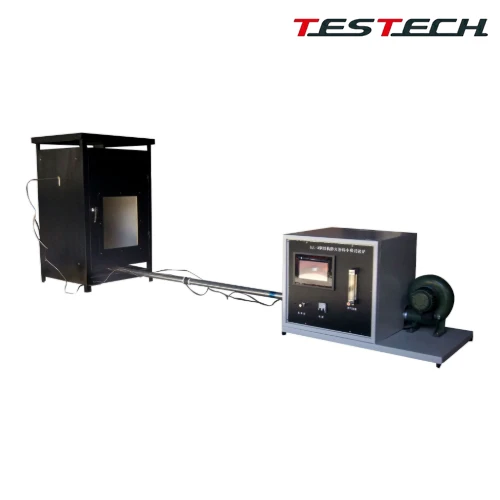

Now, ceramics—we’re talking about ceramic tiles, structural ceramic components, ceramic linings for buildings, right? These materials are everywhere in construction because they’re durable, heat-resistant, and aesthetic. One of the most important quality control checks for ceramic structures, especially when they’re used in high-stakes areas like industrial facilities or commercial buildings, is verifying that the angles between adjacent panels or components are correct. A misaligned ceramic corner can lead to gaps, uneven installation, or even structural issues over time, especially if the ceramic is part of a fire-resistant assembly. So is the Room Corner Tester up to this angle measurement task?
Let’s start with the technical specs of a typical Room Corner Tester’s angle alignment. Most units have fixed, machined wall sections that are precisely set to 90 degrees, with tolerances as tight as ±0.2 degrees in many commercial models. That’s a level of accuracy that rivals many specialized angle measurement tools used in construction. For small-scale ceramic samples—like 12x12 inch tile cuts or small structural ceramic pieces—you could actually place them directly into the Room Corner Tester’s wall sections, clamp them in place, and use the tester’s built-in sightlines or digital angle readout (some modern models have this) to check the angle between the two pieces. That’s a clever workaround for manufacturers who might not want to invest in a separate angle measurement tool.
But wait—before you grab your ceramic samples and head straight for your company’s tester, let’s talk about the limitations. The Room Corner Tester isn’t designed for this purpose, so there are a few big caveats. First, it’s sized for fire tests, so the wall sections are usually quite large—many are 2.5 meters tall. That means if you’re measuring angles on small ceramic components, most of the tester’s structure will be irrelevant; you’ll only be using a tiny section of it. That’s not a dealbreaker, but it’s something to consider for efficiency. Second, the tester’s primary purpose is fire testing, so its surface materials are non-combustible and treated to withstand high temperatures. If you’re measuring angles on delicate ceramics that scratch easily, the rigid metal walls of the tester could damage the sample. That’s a key point I always emphasize to my customers—we supply the Room Corner Tester for fire safety, so angle measurement is a secondary use, not its intended function.
Let’s also compare this to specialized angle measurement tools to put it in perspective. A digital protractor, for example, is small, portable, and designed specifically for angle measurements, with tolerances down to ±0.1 degrees. A coordinate measuring machine (CMM) can measure extremely precise angles on large structures, but it’s expensive and requires a controlled environment. The Room Corner Tester falls somewhere in the middle: it’s accurate enough for many commercial ceramic applications, but it’s not as precise as dedicated tools for strict, regulatory angle checks. For example, if you’re a ceramic tile manufacturer checking that the edges of your tiles are cut at 90 degrees for installation, a Room Corner Tester works perfectly. But if you’re a precision engineering firm making ceramic components for aerospace, you’ll need a dedicated protractor or CMM, not a fire testing tool.
Another angle to consider is the overlap in testing needs. Many of my customers are in the construction materials space, so they test for both fire resistance and structural quality in ceramics. That means they might already have a Room Corner Tester on hand for fire tests, so using it to check angles makes sense for streamlining their quality control process. For example, when testing ceramic panels for use in commercial building walls, you can run a fire test on the Room Corner Tester and also verify the angle of the panel edges at the same time, without setting up a separate test. That saves time and reduces the need for multiple tools in a busy lab.
But here’s the thing: you have to be careful not to mix the two test purposes. The Room Corner Tester’s calibration is set for fire safety testing, so if you’re using it for angle measurement, you need to make sure you’re not skewing the calibration of the tester itself. For example, if you clamp a ceramic sample too tightly into the tester’s wall section, you could slightly bend the wall, which would throw off both the fire test results and the angle measurement. That’s why I always recommend to my clients that if they plan to use their Room Corner Tester for angle measurements, they should keep a separate set of clamps or fixtures for that use—ones that don’t put stress on the tester’s structural walls.
Let’s also talk about real-world examples. Last year, I worked with a mid-sized ceramic tile manufacturer in Ohio that was struggling with consistent angle alignment on their large-format tiles. They were using a digital protractor, but they kept getting inconsistent readings because the tiles were so big that the protractor couldn’t span the full edge properly. They had a Room Corner Tester in their lab for fire testing of their tile coatings, so they decided to try placing two tiles in the tester’s walls and measuring the angle between them. The results were actually more consistent than the protractor—because the tester’s walls are rigid and stable, there was no flex in the setup, which gave them a more reliable reading. They ended up adopting this as part of their daily quality control process, which cut down on rejections from installation sites.
Another example: a construction materials testing lab in Texas that tests ceramic fire-resistant linings for industrial facilities. They needed to verify that the pre-fabricated ceramic lining panels were cut at exactly 90 degrees so they would fit together tightly in the facility’s corner structures. Instead of buying a new angle measurement tool, they used their existing Room Corner Tester. They adjusted the test setup to fit the smaller lining panels, and used the tester’s built-in angle indicators (which are meant to check the corner geometry for fire tests) to confirm the panel angles. This worked because the panels’ size matched the tester’s usable wall section, and the angle tolerance they needed for structural fit was within the Room Corner Tester’s accuracy range.
Of course, it’s important to note that there are cases where a Room Corner Tester isn’t suitable for angle measurement. If you’re working with very small ceramic components—like ceramic beads or tiny structural parts—the Room Corner Tester’s large size makes it impractical. If you need angle measurements with extremely high precision (less than ±0.1 degrees), a Room Corner Tester can’t deliver that, since its standard accuracy is around ±0.2 degrees. And if you’re measuring angles on curved or uneven ceramic surfaces, the rigid wall sections of the tester can’t conform to the surface, leading to inaccurate readings.
That said, if you’re already a user of Room Corner Testers and you need to measure angles in ceramic structures, there are some best practices to follow to get reliable results. First, make sure your tester is calibrated regularly for both the fire test purpose and for angle measurement. Calibration is key—most equipment suppliers recommend calibrating Room Corner Testers annually, but if you’re using it for angle measurements, you might want to do a quick check before each use with a reference protractor to confirm the wall angles are correct. Second, use fixtures that are designed for angle measurement, not just fire testing. This could be a small clamp that holds your ceramic sample without touching the tester’s walls, or a guide that helps you align the sample perfectly with the tester’s wall. Third, always document that you’re using the Room Corner Tester for angle measurement, not its intended purpose, so you don’t confuse results with fire test data.
To put this all together: A Room Corner Tester can be used for measuring angles in ceramic structures, but it’s not a replacement for specialized angle measurement tools in every scenario. It works best for medium to large ceramic components where the angle tolerance needed is around ±0.2 degrees or wider, and where you can leverage the tester’s existing structural geometry. It’s a great workaround for manufacturers or labs that already have a Room Corner Tester on hand and want to streamline their quality control, but it’s not ideal for small, high-precision, or delicate ceramic parts.
Now, if you’re in the market for a Room Corner Tester for its intended fire safety purposes—including testing flame spread and heat release for building materials like ceramics, you might also need related equipment for full fire safety testing workflows. For example, many of our customers pair Room Corner Testers with other building materials flammability testers to get comprehensive fire test data. If you’re testing fire resistance of coatings, you might use the Alcohol Burner Combustion Tester for small-scale flame tests, or the Steel Structure Fire Retardant Coating Samples Test Furnace for larger coating assemblies. For flame spread testing on flat materials, the Radiant Panel Flame Spread Tester is another common addition, and for fire resistance of horizontal building components, the Fire Resistance Horizontal Test Furnace delivers critical data. For doors and shutters, the Door and Shutter Fire Test Furnace is essential.
At the end of the day, whether you’re using a Room Corner Tester for fire tests, angle measurements in ceramics, or a combination of both, the key is understanding the tool’s capabilities and limitations. If you’re a ceramic manufacturer or testing lab looking to optimize your equipment usage, it’s worth exploring how your existing tools can pull double duty—just make sure you follow best practices to keep results accurate and equipment calibrated.
If you’re ready to learn more about how a Room Corner Tester can work for your ceramic testing needs, or if you’re looking to expand your testing equipment lineup, our team is here to help. We can walk you through use cases, compare tools, and find the right solutions for your specific testing requirements.
References
- American Society for Testing and Materials. (2020). Standard Test Method for Surface Flammability of Materials Using a Corner Test (ASTM E119). West Conshohocken, PA: ASTM International.
- Ceramic Industry Association. (2022). Quality Control Guidelines for Structural Ceramic Components. Cleveland, OH: Ceramic Industry Association.
- National Fire Protection Association. (2021). Standard for Fire Tests of Building Construction and Materials (NFPA 251). Quincy, MA: National Fire Protection Association.
- Building Materials Testing Association. (2023). Dual-Use Guidelines for Testing Equipment in Construction Materials Labs. Chicago, IL: Building Materials Testing Association.
- International Organization for Standardization. (2019). Ceramics – Test Methods for Dimensional and Geometrical Product Specifications (ISO 16892). Geneva, Switzerland: ISO.