

As a supplier of Released Gas Explosion Limit Testers, I've witnessed firsthand the importance of understanding the differences between different models. These testers play a crucial role in ensuring safety in various industries, especially those dealing with potentially explosive gases. In this blog, I'll delve into the key differences between different models of Released Gas Explosion Limit Testers, shedding light on their features, applications, and performance.
1. Testing Principle and Technology
One of the fundamental differences between models lies in their testing principles. Some testers use the classic method of spark ignition in a closed chamber to determine the explosion limits of released gases. This traditional approach has been refined over the years and is known for its reliability. It involves introducing a gas - air mixture into a chamber, igniting it with a spark, and observing whether an explosion occurs at different gas concentrations.
On the other hand, newer models may employ advanced optical or chemical sensor technologies. Optical sensors can detect changes in light absorption or emission caused by the presence of explosive gases. These sensors offer faster response times and can be more sensitive in some cases. Chemical sensors, such as semiconductor sensors, work by reacting with the target gases and altering their electrical properties. They are often more compact and cost - effective, but their accuracy may be affected by environmental factors like humidity and temperature.
2. Measurement Range
The measurement range of a Released Gas Explosion Limit Tester is another significant differentiator. Some models are designed for a narrow range of common explosive gases, such as methane, propane, or hydrogen. These testers are optimized for specific industries where these gases are predominantly used, like the natural gas or petrochemical industries.
In contrast, more versatile models have a wider measurement range, capable of testing a variety of explosive gases, including rare or newly emerging ones. This is particularly important in research and development settings or in industries that deal with a diverse range of chemical processes. For example, in the battery industry, where new battery chemistries are constantly being developed, a tester with a wide measurement range can accurately determine the explosion limits of the gases released during battery thermal runaway.
3. Accuracy and Precision
Accuracy and precision are critical factors when it comes to explosion limit testing. High - end models typically offer greater accuracy, with error margins as low as ±0.1% in some cases. These testers use high - quality sensors and sophisticated calibration techniques to ensure reliable results. They are often used in industries where safety regulations are strict, such as the aerospace or nuclear industries.
Mid - range models may have an accuracy of around ±0.5% to ±1%. While this is still suitable for many general industrial applications, they may not be as precise as the top - of - the - line models. However, they are more affordable, making them a popular choice for small and medium - sized enterprises.
Lower - cost models may have an accuracy of up to ±2% or more. These are usually suitable for applications where only a rough estimate of the explosion limit is required, such as in some basic laboratory experiments or for preliminary safety assessments.
4. Testing Capacity and Speed
Testing capacity refers to the volume of gas that can be tested in a single run. Some large - scale industrial testers can handle gas volumes of several liters, which is necessary for testing the gas released from large equipment or industrial processes. These models are often installed directly in production facilities for continuous monitoring.
Smaller, portable models may have a testing capacity of only a few milliliters. These are ideal for on - site inspections, field research, or for use in laboratories with limited space.
In terms of testing speed, advanced models can complete a test cycle in a matter of minutes. This is crucial for industries where quick decisions need to be made based on the test results, such as in emergency response situations. Slower models may take anywhere from 10 to 30 minutes to complete a single test, which may be acceptable for non - urgent applications like routine quality control.
5. Additional Features and Accessories
Different models come with a variety of additional features and accessories. Some testers are equipped with data logging capabilities, allowing users to record and analyze test results over time. This is useful for compliance reporting and for detecting trends in gas release patterns.
Other models may have built - in safety features, such as automatic shutdown in case of abnormal pressure or temperature changes during the test. This helps to prevent accidents and protect the operator.
Some testers can be integrated with other testing equipment, like Gas Chromatography Analysis System. This combination allows for a more comprehensive analysis of the released gases, including the identification of individual components and their concentrations.
6. Applications in Different Industries
The choice of a Released Gas Explosion Limit Tester also depends on the industry in which it will be used.
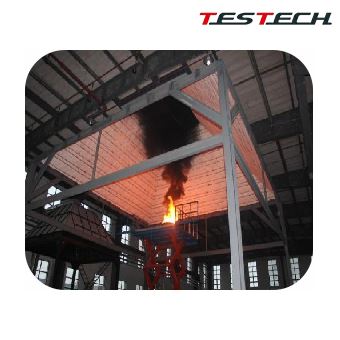
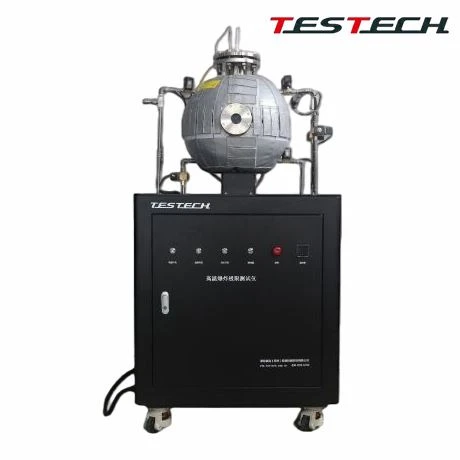
In the oil and gas industry, where flammable gases are commonly encountered during drilling, refining, and transportation processes, high - precision testers with a wide measurement range are essential. The ability to accurately test different types of hydrocarbons and their mixtures is crucial for ensuring the safety of workers and facilities. 3MW Battery Thermal Release Test System can be used in conjunction with explosion limit testers to study the gas release characteristics during battery abuse scenarios, which is relevant in the context of power storage systems in the oil and gas industry.
In the chemical industry, where a vast array of chemicals are produced and used, models with a broad range of testing capabilities are required. Testers that can handle reactive and corrosive gases are particularly important. Some chemical processes may involve the release of multiple gases simultaneously, and a tester that can accurately determine the explosion limits of these complex mixtures is highly valuable.
The battery industry is another area where Released Gas Explosion Limit Testers are in high demand. With the increasing popularity of portable electronics and electric vehicles, the safety of batteries has become a top priority. Released Gas Explosion Limit Tester can be used to study the gases released during battery thermal runaway, which is a critical safety concern. By accurately determining the explosion limits of these gases, battery manufacturers can design safer battery systems. Larger systems like 5MW Battery Thermal Release Test System can be used for more comprehensive testing of large - scale battery packs.
In the laboratory research field, models with high flexibility and the ability to be customized for specific research needs are preferred. Scientists may need to test exotic gases or gas mixtures under various conditions, and a tester that can be adjusted accordingly is essential. 82L Battery Thermal Runaway Gas Evolution Chamber can be used in combination with explosion limit testers to simulate battery thermal runaway scenarios and study the gas release behavior in a controlled environment.
Conclusion
In conclusion, the differences between different models of Released Gas Explosion Limit Testers are significant, covering various aspects such as testing principle, measurement range, accuracy, testing capacity, and additional features. When choosing a tester, it's essential to consider the specific requirements of your industry, the types of gases you need to test, and your budget.
As a supplier of high - quality Released Gas Explosion Limit Testers, we offer a wide range of models to meet the diverse needs of our customers. Whether you're in the oil and gas, chemical, battery, or research industry, we have the right tester for you. If you're interested in learning more about our products or have any questions about choosing the appropriate model, feel free to contact us for a procurement discussion. We're committed to helping you ensure the safety of your operations and providing you with the most reliable testing solutions.
References
- Smith, J. (2020). Fundamentals of Gas Explosion Limit Testing. Journal of Safety Science and Technology.
- Johnson, M. (2019). Advanced Technologies in Released Gas Explosion Limit Testers. Industrial Safety Review.
- Brown, R. (2018). Applications of Explosion Limit Testers in Different Industries. Chemical Engineering Journal.