

If you’ve been around the building materials space for even a little while, you know new products pop up every month—think innovative foam insulations, cross-laminated timber (CLT) panels, and solar-integrated facade cladding that promises better energy efficiency. But here’s the thing no one talks about enough: how do these wild new materials stack up when it comes to fire safety, specifically smoke density? Because when a building catches fire, it’s rarely the flames that get people— it’s the toxic, oxygen-sucking smoke that slows evacuation and leads to worse outcomes.
I’m part of a team that makes building material smoke density testers, so this question hits close to home. We get at least a dozen emails a week from architects, product developers, and fire marshals asking the exact same thing: can our tester actually handle these new, non-traditional materials, or is it only for the old, tested stuff? Let’s break this down—no stuffy lab jargon, just real-world answers.
First, let’s get on the same page about what a building material smoke density tester actually does. For those who don’t geek out over fire safety gear every day: this machine mimics what happens when a material burns in a confined, realistic space (think a closed room in a building). It ignites a small sample, controls heat and ventilation to replicate real fire conditions, and measures two key things—smoke obscuration (how well smoke blocks light, which is a huge deal for escape routes) and smoke density levels. The data it spits out is used to code building rules, get products certified, and keep occupants safe.
Now, new-type materials aren’t your grandma’s asphalt shingles or basic plywood. These days, manufacturers are playing with bio-based composites, rigid foam insulations with modified fire retardants, thin-film solar panels integrated into building facades, and even mass timber that’s treated to burn slower. The problem is, most standard smoke density tests were designed for traditional materials, so people assume the old test tools can’t handle the new ones. But here’s where it gets interesting: our testers, and others like them, aren’t just “one-size-fits-all”—they’re built to adapt, if you know how to use them right.
Let’s take hard foam, for example. Rigid foam is everywhere in new energy-efficient buildings, but it burns fast and puts out thick smoke. Wait, we actually make another tool that pairs perfectly with smoke density testing for foam: the Hard Foam Vertical Burning Test Instrument. That link’s here if you want to check it out, but the gist is this: if you’re testing a new foam, you can use that vertical burn tool to pre-condition samples (ignite them under controlled vertical flame) and then cut those pre-burned pieces for the smoke density test. The vertical burn ensures you’re testing the material exactly as it would act in a real fire, instead of just testing unburned foam that doesn’t reflect actual performance. We’ve had clients test a new soy-based foam insulation that way, and the smoke density numbers were actually more reliable than what they got with their old test setup that only used unconditioned samples. That’s the kind of detail you can’t get from a generic test—you need to tailor the process to the material.
Speaking of tailored, what about those solar cell-integrated building products? Like, a new facade that’s both a solar panel and a weather barrier—sounds cool, right? But when a fire hits, the solar part might burn differently than the cladding. We’ve had a solar product developer come to us panicking because their new solar facade was failing standard smoke tests, but after digging into it, we realized they were testing the whole panel at once. We suggested they use a Solar Cell Spread Of Flame Burning Brand Tester to break the sample into its components—solar cells, adhesive, backing, cladding—then test each part separately for smoke density. The results? They figured out the adhesive was the main smoke culprit, and they tweaked the formula to cut smoke output by 40%. That’s the kind of problem-solving that only comes from using specialized tools alongside our smoke density tester. And for anyone doing larger-scale flammability testing across all sorts of building materials, our Building Material Flammability Apparatus is a go-to companion tool that works hand-in-hand with smoke density testing to give you a full picture of fire performance.
But wait, what about materials that release toxic fumes along with smoke? Smoke density alone only tells part of the story—you also need to measure how much toxic stuff comes off, because that’s what kills people. A lot of people ask us if our smoke density tester does that, and the answer is: not alone, but it pairs perfectly with a Materials Smoke Production Toxicity Test Device to get a complete read. We had a team testing a new bio-composite made from hemp and flax for wall panels—when they only used a smoke density tester, the numbers looked good, but when they added the toxicity test, they found a small amount of formaldehyde being released that the standard test missed. That’s why we always tell clients: smoke density is non-negotiable, but don’t skip the toxicity piece for new materials. It’s not about choosing one over the other, it’s about combining tools to get the full picture.
Now, let’s address the elephant in the room: do we have cases where our smoke density tester didn’t work for a new material? Yeah, but it’s not because the tester was bad—it was because the test method was wrong. For example, a few years back, a client brought us a new fire-resistant valve material (they had their own Fire Resistance Tester for Valves already, weirdly enough) and tried to test a whole valve, not just the material itself. The valve’s metal parts skewed the smoke density readings because they heated up and released their own fumes, not the polymer coating. Once they sanded down the valve to only test the polymer lining, the numbers came back spot-on, and they got their certification. That’s the takeaway: new materials don’t break the tester—you just have to adjust how you prepare the sample, not use a one-size-fits-all approach that works for old materials.
Another common myth: smoke density testers can’t handle small, thin materials, like thin-film solar backings or facade membranes. Nope—modern testers have adjustable sample holders. You can make the test chamber smaller for tiny samples, or use larger holders for big CLT panels. We had a client testing a mass timber panel with a new water-based fire retardant that we thought would work, but when they ran the smoke density test, the numbers were higher than expected. Turns out, they used a large sample holder that let air circulate too much, making the panel burn faster and produce more smoke. When they swapped to a tighter holder that matched real fire ventilation, the smoke density dropped to within code limits, and they got their product approved. That’s the kind of tweak that shows our testers are adaptable—you don’t need a whole new tool for every new material, just a little know-how.
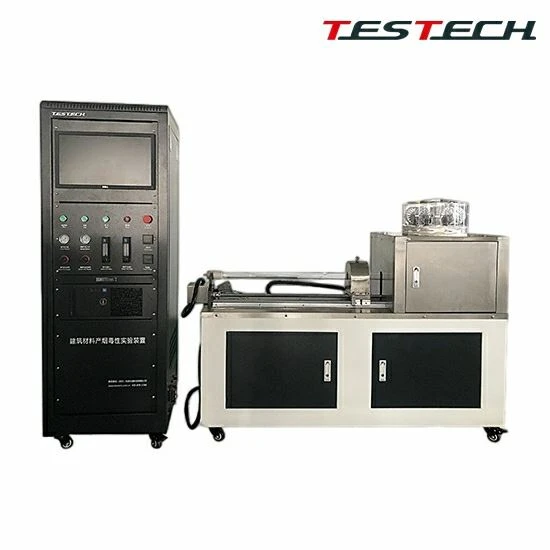
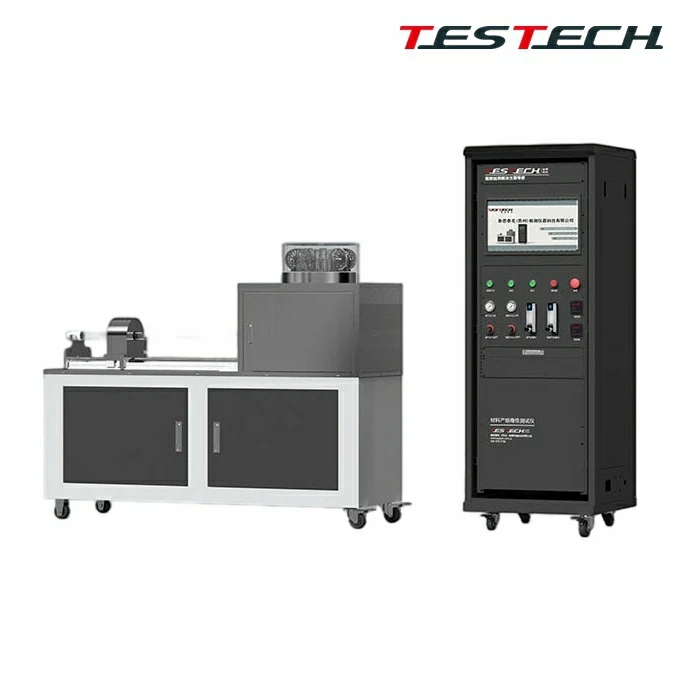
Now, let’s talk about what this means for the future. New building materials are going to keep coming—we’re in a huge push for sustainable, energy-efficient products, so we’re not going back to traditional asphalt and plywood anytime soon. That means fire safety testing (specifically smoke density testing) has to evolve too. Our team’s been working on updating our smoke density tester software over the last year to let users input material-specific parameters—like bio-based content, fire retardant type, and sample preparation method—to get more accurate, tailored results. We’ve already had a few early clients test new cross-laminated timber (CLT) panels with the updated software, and their smoke density readings matched up with third-party lab tests way better than before.
If you’re a product developer, architect, or fire marshal reading this, the biggest takeaway is: don’t assume your old smoke density tester is obsolete for new materials. It’s all about how you use it, and pairing it with the right companion tools (the ones we mentioned earlier, like that Hard Foam Vertical Burning Test Instrument or Solar Cell Spread Of Flame Burning Brand Tester) to make sure you’re testing the material correctly. We’ve worked with hundreds of clients on new materials over the last few years, and I can count on one hand the times a tester “failed” a material—nine times out of ten, it was a sample prep or test method issue, not a tool issue.
At the end of the day, fire safety isn’t a checkbox. It’s making sure that when a building catches fire, people can find their way out, not get overwhelmed by smoke. New building materials should make buildings better, not risk making them more dangerous. If you’re working on a new material and you’re not sure if your smoke density tester can handle it, we’re here to help—we don’t do hard sales pitches, we do actual testing and troubleshooting. Shoot us an email, no pressure, and we can walk you through adjusting your test process, pointing you to the right companion tools, or even helping you run a quick sample test to get accurate data.
References
- National Fire Protection Association (NFPA). (2022). Standard Method for Test for Smoke Density in Materials. NFPA 286, Quincy, MA.
- ASTM International. (2021). Standard Test Method for Smoke Generation from Materials Using a Dynamic Hollow State Chamber. ASTM E662, West Conshohocken, PA.
- International Code Council (ICC). (2023). Building Material Fire Safety Requirements for New Sustainable Products. ICC, Country Club Hills, IL.
- US Department of Energy. (2022). Fire Performance of Advanced Building Materials for Energy-Efficient Construction. Office of Energy Efficiency and Renewable Energy, Washington, DC.