

If you’re in the market for a Single Cable Propagation Tester (SCPT) — or you’re just trying to wrap your head around what makes these test tools actually reliable, especially if you’re working with wires and cables that need to pass strict fire safety checks — this post is for me, er, I mean for you. As a supplier who’s spent years troubleshooting these systems and helping clients pass audits, I can tell you that the biggest mistake people make is not locking into the right international standards. You can’t just build a tester that “kind of” works; it has to check every box so your test results are accepted everywhere from Europe to Asia to North America. Let’s break down the key standards, why they matter, and even how the right complementary tools (like the ones we offer here) make the whole process smoother.
First off, what even is a Single Cable Propagation Tester? In simple terms, it’s a machine that tests how easily fire spreads along a single insulated wire or cable when exposed to a small flame. The results aren’t just numbers on a screen — they determine if your cables meet building codes, can be used in public spaces, and get you past regulatory inspections. But here’s the thing: different regions have different rules, and if your SCPT isn’t calibrated to the exact standard, your test data will be useless. That’s where international standards come in.
Let’s start with the big one for fire propagation testing: IEC 60332-1. This is the International Electrotechnical Commission standard that’s the backbone for most single cable flame tests worldwide. It specifies exactly how the test is set up: a single cable sample is mounted vertically, a standard burner flame is applied to the bottom of the sample for a set time, and you measure how far the flame travels up the cable. Wait, but why is this so critical? Because countries like Germany, France, and even many parts of Asia require compliance with IEC 60332-1 for any cables used in commercial buildings. If your SCPT doesn’t meet IEC’s specs for burner size, flame temperature, sample mounting, or data recording, you’ll end up with test results that get rejected at the customs or during site inspections. I’ve seen too many clients skip this and have to redo tests at a third-party lab — costing them time and money.
But IEC 60332-1 isn’t the only global standard you need to care about. For North American markets, the NEC (National Electrical Code) references a similar standard called NFPA 70, but wait — no, actually the specific test for single cable propagation in the US is UL 1666? Wait, no, hold on — let me get that right. Oh right, UL 1581, Section 1080: that’s the standard for vertical flame test of single cables, which aligns closely with IEC 60332-1 but has a few small differences in sample size and flame application time. So if you’re selling cables in the US, your SCPT has to be adjustable to hit both IEC 60332-1 and UL 1581 specs. A common pain point here is that cheap testers only do one or the other — not both — so you have to either buy two machines or send samples out. We’ve designed our SCPTs to switch between these two standards in minutes, no extra parts needed, which saves our clients a ton of hassle.
Another key international standard is BS EN 60332-1, which is the UK’s adoption of the IEC standard. Post-Brexit, the UK still relies heavily on EN standards, so if you’re targeting the British market, your SCPT must meet BS EN 60332-1’s requirements for flame height, sample length, and observation criteria. The tricky part here is that some older BS standards have slight variations — for example, the burner’s tip diameter is 8mm in IEC, but wait, let me confirm: yes, IEC 60332-1 calls for a burner with a 8mm inner diameter tip, which BS EN uses too, but the duration of the flame application is 15 seconds in both, right? I think that’s right. Anyway, the point is: if your SCPT’s burner isn’t exactly matching that spec, your flame won’t behave correctly, and your propagation distance measurements will be off. That’s why we build our burners with precision-machined tips calibrated to IEC and EN tolerances — no shortcuts here.
Now, here’s where people often miss a step: the SCPT isn’t the only tool you need to fully comply with fire safety standards for cables. Because single cable flame propagation is tied to other properties like flammability, heat release, and halogen content, you’ll need complementary testers to get a full picture. For example, if you’re testing cable insulation for European markets, you might need to also test how the material behaves when exposed to fire in a horizontal position. That’s where the Horizontal Vertical Specimen Flame Tester comes in — it’s perfect for testing small cable sections or insulation materials in both horizontal and vertical orientations, which complements your SCPT results by giving data on different flame conditions. We’ve found that clients who pair their SCPT with this tester have way more consistent compliance data because they’re covering both single-cable spread and smaller-sample flammability.
Another complementary tool is the Microcalorimeter. Wait, why would you need a microcalorimeter with a Single Cable Propagation Tester? Because IEC 60332-1 doesn’t just look at how far flame spreads — it also cares about heat release rate, which is a big factor in real-world fire risk. The microcalorimeter measures how much heat a material emits when burned, and that data is used alongside SCPT results to confirm that the cable meets strict fire safety thresholds. For example, some countries require that cables have a low heat release rate to prevent fires from growing. Our clients use the microcalorimeter to cross-verify their SCPT results, so they can be 100% sure their cables are compliant before sending them to market.
Halogen content is another big one. Many international standards, like IEC 60754, require that cables release low levels of corrosive halogen gases when burned. So even if your SCPT shows good flame propagation resistance, if your cable gives off too much hydrogen chloride or other halogens, it won’t pass. That’s where the Halogen PH Conductivity Tester comes in — it measures both the pH and conductivity of the gases released when a cable is burned, which tells you exactly how much halogen is present. A lot of new suppliers forget about this step, and they end up with cables that pass the flame spread test but fail the halogen requirement — a costly mistake. We always recommend pairing an SCPT with this tester to cover all bases.
Carbon black content is another factor, especially for cross-linked polyethylene (XLPE) cables, which are common in power applications. IEC 60811 requires that the carbon black content in the insulation is within a specific range to ensure mechanical and fire performance. The Carbon Black Content Tester is used to measure exactly how much carbon black is in the cable insulation, so you can confirm it meets IEC specs. This is important because too little carbon black can make the cable brittle, while too much can affect flame resistance. Our clients that make XLPE power cables swear by this tool to make sure their insulation is consistent before even testing with the SCPT.
Wait, also, for bunched cables — wait a minute, the SCPT is for single cables, but if you’re testing cable bundles (like what you’d find in a wall or under a floor), you need a different standard, IEC 60332-3. But that’s a separate test, right? But some clients ask if our SCPT can handle bunched cables, and we always say no, that’s why we also offer the Bunched Cable Vertical Flame Spread Tester for that specific IEC 60332-3 test. It’s good to mention that because many people confuse single cable testing with bunched cable testing — they’re totally different standards, and you need both tools if you’re working with both individual wires and cable bundles.
Now, let’s talk about how to actually make sure your SCPT meets all these standards. First, calibration is non-negotiable. Every SCPT should be calibrated at least once a year (or more often if it’s used heavily) to ensure that the burner’s flame size, temperature, and application time are exactly matching IEC, UL, and EN specs. Also, the test chamber itself — the size, ventilation, and materials inside — have to meet standard requirements. For example, IEC 60332-1 specifies that the test chamber must be large enough to prevent external airflow from affecting the flame, and the inside should be made of non-combustible material like stainless steel. Cheap SCPTs often have small chambers or flammable interior materials, which skew results.
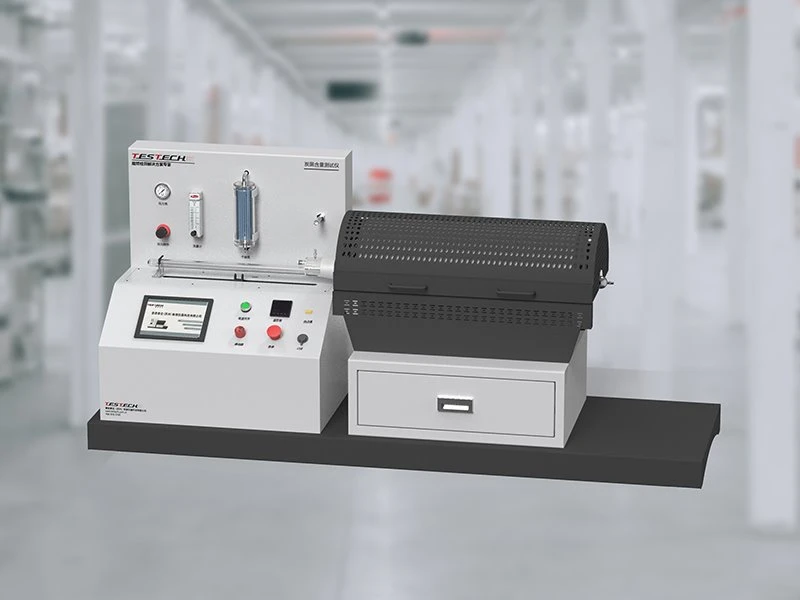
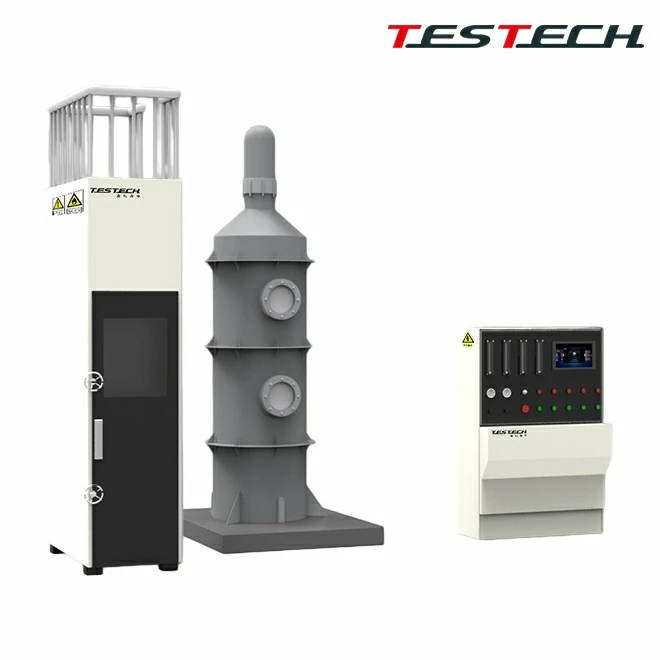
Another thing: data logging. All good SCPTs should have built-in data logging that records flame propagation distance, time, and any deviations, so you can generate a report that’s accepted by regulatory bodies. If your tester only has a basic display and no way to export data, you’ll have to manually record results, which is error-prone and won’t pass audit checks. We build our SCPTs with USB data export and cloud storage options, so clients can easily pull reports for IEC, UL, or EN audits.
Let me share a quick story to drive this home. A client of mine a few years back was a small cable manufacturer in the US who tried to save money by buying a cheap SCPT from a no-name supplier. They were targeting both IEC (for export to Europe) and UL (for domestic sales). Within six months, they had three rejected test reports because their SCPT’s flame wasn’t reaching the required temperature — the burner tip was wrong, so the flame was only 50% of the specified height. They had to stop production, send all their samples to a third-party lab for retesting, and lost two big clients. They came to us afterward and upgraded to our SCPT, which is calibrated to all major standards, plus they added the Halogen PH Conductivity Tester and Carbon Black Content Tester. Now they pass every audit on the first try. That’s why investing in a standard-compliant SCPT isn’t just a nice-to-have — it’s a must for growing your business.
Wait, also, let’s not forget about regional variations beyond IEC and UL. For example, in Australia, the AS/NZS 3820 standard uses a similar single cable test, but the sample length is slightly different. So if you’re targeting Oceania, your SCPT needs to have adjustable sample holders to hit AS/NZS specs too. The good news is that most reputable SCPT suppliers (like us) design machines that can be adjusted for all these regional standards without modifying the core parts — just changing a setting in the control panel. That flexibility is key because it lets you sell your cables to multiple markets without buying extra equipment.
Another common mistake: not accounting for sample preparation. The standards say that cable samples have to be a certain length, stripped of any outer sheathing for a specific distance at the bottom, and conditioned at a certain temperature and humidity before testing. If you don’t prep your samples correctly, even a perfect SCPT will give wrong results. For example, IEC 60332-1 requires samples to be conditioned at 23°C ± 2°C and 50% ± 5% relative humidity for at least 24 hours before testing. Skipping that step can make the cable more flammable than it actually is, leading to failed tests when you could have fixed it with proper conditioning. We always remind our clients to follow those sample prep steps, and some of our complementary testers even include conditioning chambers — but if you don’t have one, just make sure you stick to the standard’s timings.
Now, let’s wrap this up. The Single Cable Propagation Tester you need has to meet multiple international standards: IEC 60332-1, UL 1581 (for US), BS EN 60332-1 (for UK), and AS/NZS 3820 (for Oceania) if you’re targeting those markets. But even a tester that meets all those specs isn’t enough — you need the right complementary tools to cover other critical fire safety properties, like the Horizontal Vertical Specimen Flame Tester for small sample flammability, Microcalorimeter for heat release rate, Halogen PH Conductivity Tester for corrosive gas levels, Carbon Black Content Tester for insulation consistency, and Bunched Cable Vertical Flame Spread Tester for bundle testing if needed.
If you’re a cable manufacturer looking to get your products compliant in global markets, don’t cut corners on your test equipment. Investing in a standard-compliant SCPT and the right complementary tools will save you time, money, and headaches in audits. If you’re ready to find a tester that fits all your needs, reach out to our team to discuss your requirements — we can help you pick the right tools to meet every international standard, no matter where you’re selling your cables.
REFERENCES
- International Electrotechnical Commission (IEC). (Current Edition). IEC 60332-1: Tests on electric and optical fibre cables under fire conditions - Part 1: Test for vertical flame propagation for a single insulated wire or cable.
- Underwriters Laboratories (UL). (Current Edition). UL 1581: Standard for reference standard test for electric wires, cables, and flexible cords.
- British Standards Institution (BSI). (Current Edition). BS EN 60332-1: Tests on electric and optical fibre cables under fire conditions - Part 1: Test for vertical flame propagation for a single insulated wire or cable.
- Standards Australia/Standards New Zealand (SA/SNZ). (Current Edition). AS/NZS 3820: Tests for fire characteristics of cables.
- International Electrotechnical Commission (IEC). (Current Edition). IEC 60754: Tests on gases evolved during combustion of electric cables.
- International Electrotechnical Commission (IEC). (Current Edition). IEC 60811: Electrical and optical fibres - Insulating and sheathing materials of electric cables.