

If you’re a battery researcher, EV manufacturer, or energy storage system (ESS) developer, you’ve probably faced a critical question when evaluating cell safety: how do you accurately measure the volume, composition, and flammability of gas released during a battery’s thermal runaway? That’s where the right test equipment becomes non-negotiable—and for many labs and production facilities, the 82L Battery Thermal Runaway Gas Evolution Chamber is the core tool for this work. But if you’re new to battery safety testing, you might be wondering: Where can I buy the 82L Battery Thermal Runaway Gas Evolution Chamber that’s designed to meet global industry standards, reliable for repeatable results, and built to streamline your testing workflow?
This guide cuts through the noise, drawing on years of experience as a supplier of battery flammability and thermal runaway testing equipment, to explain why the 82L chamber is a industry staple, what to look for in a vendor, and how to ensure you’re investing in a solution that aligns with your testing needs.
First, let’s clarify what the 82L Battery Thermal Runaway Gas Evolution Chamber does, because not all chambers are created equal. Battery thermal runaway is a chain reaction where heat builds inside a cell, leading to venting of toxic, flammable gases (like hydrogen, methane, or carbon monoxide) that can ignite or explode if not contained or characterized. The 82L size is a sweet spot for most mid-sized test cells—common in consumer EVs, power tools, and small ESS modules—because it balances two key needs: enough internal volume to capture all released gases without overpressure (which could alter gas composition and skew results), and a compact footprint that fits in standard lab or production test facilities, unlike bulkier 100+L chambers that require dedicated space and ventilation upgrades. A quality 82L chamber doesn’t just trap gas; it maintains a controlled, inert atmosphere (usually nitrogen) to prevent pre-test gas oxidation, has precision temperature monitoring (to track heat propagation during runaway), and connects seamlessly to complementary testing tools to turn raw gas data into actionable insights.
That’s why pairing your 82L chamber with the right supporting equipment is essential for a complete safety test suite. For example, once your chamber captures released gases, you’ll need a tool to measure how quickly and easily those gases ignite—and that’s where the Released Gas Burning Rate Tester comes in. This device directly tests the flammability of the gas your 82L chamber collects, providing data that’s required for regulatory compliance in regions like the EU (UN ECE R100) and the U.S. (FMVSS 20 for EVs). Without this paired testing, your gas volume measurements only tell half the story: a cell that releases 10L of flammable gas at a slow rate is far less dangerous than one that releases the same volume in 10 seconds.
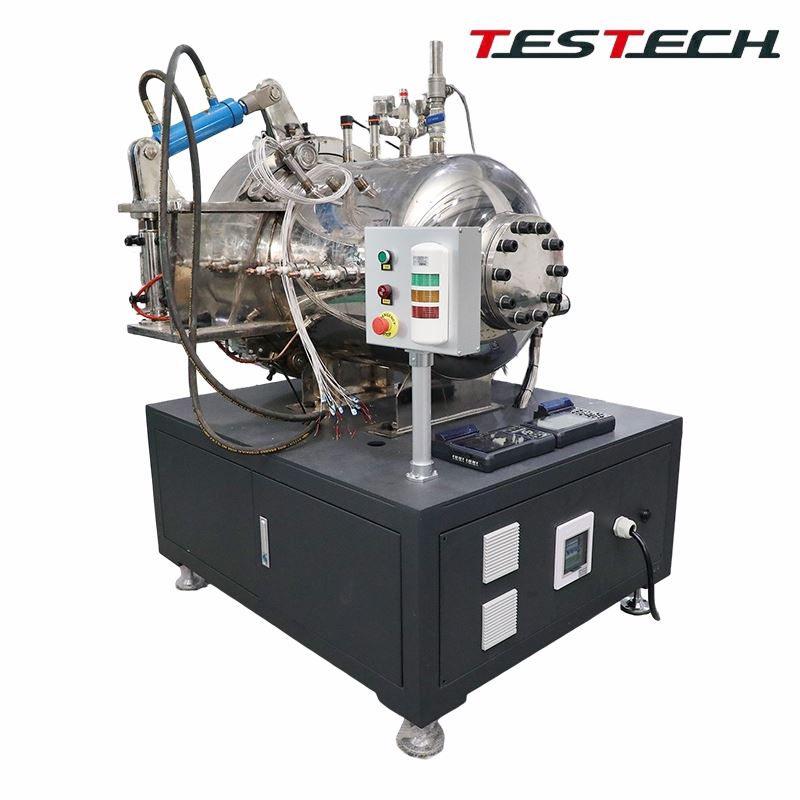
Now, when shopping for an 82L Battery Thermal Runaway Gas Evolution Chamber, avoid vendors that offer generic “lab chambers” with no battery-specific design. The best 82L chambers are built with battery safety in mind: they have heat-resistant, chemically compatible materials (to handle corrosive electrolytes that leak during runaway), pressure relief valves calibrated to prevent unsafe overbuilds, and data logging that integrates with your lab’s existing battery testing software. As a supplier of specialized battery testing equipment, we’ve seen too many labs buy off-the-shelf chambers only to find they can’t withstand repeated thermal runaway tests, or their gas sampling ports leak, leading to lost data and wasted testing time.
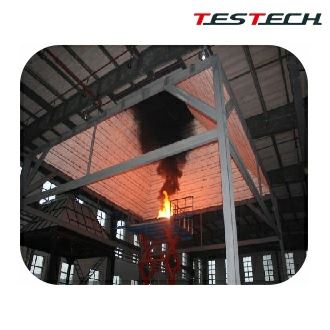
Another factor to consider is scalability. If your testing needs grow—say, you move from testing small 18650 cells to large-format prismatic modules that need high-power thermal runaway testing—your original vendor should offer compatible, high-capacity systems that work with your existing tools. For example, if you start with the 82L chamber, you can later upgrade to larger thermal release test systems, including the 5MW Battery Thermal Release Test System for large ESS modules, or the 1MW Battery Thermal Release Test System for mid-sized EV packs, or even the 10MW Battery Thermal Release Test System for utility-scale energy storage projects. This modularity saves you money in the long run, instead of forcing you to replace your entire test suite as your business evolves.
So, where can you buy a properly designed, reliable 82L Battery Thermal Runaway Gas Evolution Chamber? The key is to partner with a supplier that specializes in battery safety testing, not general lab equipment. Reputable suppliers will provide clear documentation on how their chambers meet global standards (including IEC 62660 for secondary lithium-ion cells, and UN 38.3 for transportation safety), offer calibration and after-sales support, and have a track record of working with both academic labs and manufacturing facilities. When evaluating a vendor, ask for case studies of their 82L chamber in use—for example, how a battery manufacturer used it to reduce safety testing time, or how a research lab used the gas data to optimize cell chemistry to reduce flammable emissions.
A common mistake buyers make is choosing a vendor based solely on price. A cheap 82L chamber might seem like a good deal initially, but it often lacks critical features: no inert atmosphere control (leading to pre-test gas oxidation), inaccurate temperature sensors (skewing heat propagation data), or no way to integrate with gas analyzers (making you manually handle gas samples, which introduces safety risks and human error). High-quality chambers, by contrast, have built-in ports for gas sampling, automatic pressure regulation, and cloud-based data storage that makes it easy to share results with regulatory bodies or cross-functional teams in your company.
If you’re ready to purchase, ensure the vendor you choose offers pre-sales support to walk you through your specific testing needs. For example, if you’re testing solid-state batteries (which release different gas compositions than traditional lithium-ion cells), a good supplier will help you adjust your chamber’s settings to accommodate those unique gases, and advise on which complementary tools (like the Released Gas Burning Rate Tester) work best for your cell type. This personalized support can save you months of trial and error in your testing process.
Once you’ve narrowed down your options, don’t hesitate to ask about lead times and installation. Battery safety chambers require proper installation (including dedicated ventilation for any potential gas leaks, and electrical connections for high-temperature heating during thermal runaway testing) so the best vendors will offer on-site installation and training for your team, rather than shipping the unit and leaving you to figure it out on your own.
For anyone focused on battery safety, the 82L Battery Thermal Runaway Gas Evolution Chamber is not just a piece of equipment—it’s an investment in the quality and safety of your products. Whether you’re testing small consumer cells or large ESS modules, pairing it with complementary tools like the Released Gas Burning Rate Tester ensures you get the full picture of thermal risk, while scalable systems let you grow your testing capacity as your business expands.
If you’re ready to explore how the right 82L Battery Thermal Runaway Gas Evolution Chamber can fit your testing needs, reach out to a specialized supplier of battery flammability and thermal runaway testing equipment. They can provide detailed product specifications, answer any questions about standards compliance, and guide you through the procurement process to ensure you get a solution that meets your exact requirements.
References
- International Electrotechnical Commission (IEC). (2018). IEC 62660: Secondary lithium-ion cells for the propulsion of electric road vehicles.
- United Nations Economic Commission for Europe (UN ECE). (2020). UN ECE R100: Uniform provisions concerning the approval of motor vehicles with regard to their electric power train.
- Federal Motor Vehicle Safety Standards (FMVSS). (2021). FMVSS No. 20: Passenger protection in frontal impacts and battery thermal safety requirements.
- Society of Automotive Engineers (SAE International). (2019). SAE J2980: Safety requirements for energy storage systems for light-duty and medium-duty electric vehicles.
- National Fire Protection Association (NFPA). (2022). NFPA 855: Standard for the Installation of Stationary Energy Storage Systems.