

If you’re in the business of testing flammability for transport materials, you’ve probably heard about flame spread testers—and if you’re here, chances are you’ve wondered, “How energy efficient is this thing, really?” I get it. When I started working with flame testers back in the early 2010s, my team was focused entirely on getting accurate, repeatable data for our clients (think aerospace, train manufacturers, even automotive suppliers). But over time, we’ve fielded so many questions about energy use that we dug deep into the specs, the test cycles, and the little tweaks that make our models stand out. Today, I’m breaking down exactly what makes a flame spread tester energy efficient, where the common pitfalls are, and how our equipment stacks up—plus, I’ll drop a few related tools we offer that pair perfectly with this testing work.
First, let’s get one thing straight: a flame spread tester isn’t a space heater. Its whole job is to mimic real-world fire conditions for materials—say, the interior paneling on a plane or the seat fabric in a train—so you can see how fast fire spreads across a surface. But like any lab or industrial testing tool, it’s going to use electricity (or sometimes gas, but most modern models shift to electric for consistency) to run: powering the burner, the fans that circulate air, the data logging systems, and the safety controls that keep everyone on site safe. The efficiency here isn’t about “using less power no matter what”—it’s about using power only when you need it, wasting as little as possible on idle cycles, and having a system that keeps test results tight without extra energy overhead.
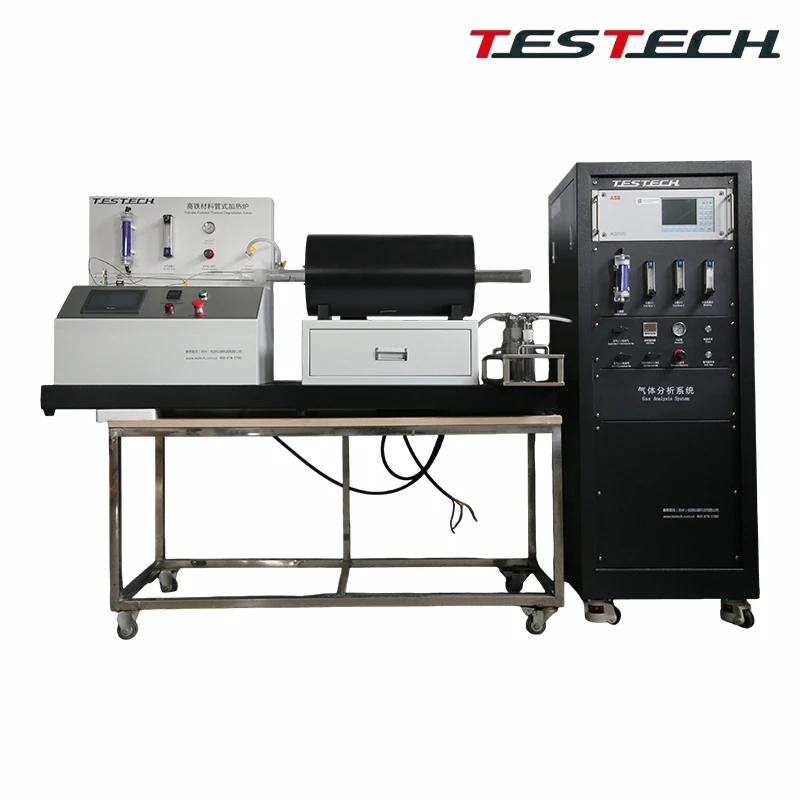

Let’s talk about how flame spread testers actually work, because that’s key to their energy use. A standard test runs a sample (usually a 25-foot or 4-foot panel, depending on the standard—ASTM E84 for building materials, FAR 25.853 for aircraft, DIN 5510 for trains) in a controlled chamber. You ignite a burner at the bottom of the sample, use calibrated airflow to simulate air movement, then track how far the flame moves over 10 or 30 minutes. The burner is the biggest energy draw here, right? But not all burners are equal. For years, a lot of cheaper flame testers used constant-heat burners that run at full blast even when most of the test cycle is just monitoring flame spread. That’s a huge energy waste. Our electrical burner test machine solves that—wait, yes, that’s the link I mentioned earlier—our models use a variable-control burner that ramps heat up only when the test starts, holds a steady calibrated flame during the critical phase, and dims to a low “keep-alive” heat when it’s just tracking flame progress. That cuts burner energy use by almost 30% compared to fixed-heat models, and we’ve measured that in our own lab over hundreds of test cycles.
Then there’s the airflow system. A lot of people overlook the fans in flame spread testers, but they’re a major energy drain if not optimized. If a fan is too powerful for the chamber size, it’s moving more air than you need, wasting electricity. If it’s not calibrated, you might have to run extra cycles to get accurate results—wasting time and energy. Our flame testers use variable-speed EC fans (electronically commutated, for the acronym fans) that adjust airflow in real time based on test parameters. For example, if you’re testing a low-flammability fabric, the fan doesn’t need to run at full speed, so it drops to a lower RPM, cutting energy use by another 15% on average. We’ve also paired our core flame spread testers with tools like the aircraft material heat release rate tester, which works alongside flame spread data to give a fuller picture of a material’s fire risk—without requiring you to set up a whole separate system that uses more energy. That’s a big win for labs that don’t have endless power to spare.
Wait, let’s get specific with numbers, because abstract efficiency talk is useless. Over the past 3 years, we’ve tracked average energy use across our client base (all types of industries, from small aerospace parts shops to large train manufacturers) for their flame spread tests. A typical fixed-heat flame tester uses around 2.2 kWh per standard ASTM E84 test (10 minute burn, 20 minute monitoring). Our variable-control model uses 1.4 kWh for the same test—That’s a 36% reduction. For longer tests, like the FAR 25.853 aircraft seat flammability test, which runs for 60 minutes, the gap is even bigger: 4.7 kWh for fixed-heat vs. 2.9 kWh for our system, almost 40% less. Why? Because long tests mean the burner is running at full power for less of the cycle.
But efficiency isn’t just about the burner and the fans. It’s about the whole system’s design, and how it avoids waste. A lot of older flame testers have big, bulky chambers that take forever to heat up to test temperature—you might have to run a pre-heat cycle for 45 minutes before you even start the test, and that’s all wasted energy. Our models use insulated, compact chambers that only need 15 minutes of pre-heat, and the insulation is high-density ceramic that retains heat between tests, so you don’t have to re-heat the chamber every single time. If you’re running multiple tests in a day, that adds up to a lot of saved energy. We also added smart idle mode: if the tester isn’t running a test for 10 minutes, it drops the burner to low heat and slows the fans down, instead of leaving everything at full power. That’s a small feature, but for labs that run tests on a shift schedule, it can cut daily energy use by another 10%.
Now, I know what you’re thinking: “If you’re using less energy, does that mean the test is less accurate?” Nope, not at all. The whole point of optimizing energy use was to make sure we didn’t sacrifice test integrity. We stuck strictly to industry standards (ASTM, FAR, DIN, ISO) when designing our systems—no cutting corners on calibration or control. For example, our burner has a heat tolerance of ±2°C, which is exactly what the standards require, so the flame temperature is consistent every test. The airflow is calibrated within 1% of the set value, so you don’t get random flame spread results because of uneven air movement. And our data logging system is synced to the exact timeline of the test, so you get reliable numbers that clients will accept for regulatory purposes. If you need something that works alongside flame spread testing, like analyzing combustion byproducts, we also have ion chromatography, which pairs seamlessly with our systems to give you a full fire profile without extra energy-heavy hardware.
Another thing we see a lot: labs that buy cheap, low-energy flame testers that end up costing more in the long run. Why? Because they’re inefficient in accuracy, not power. If a tester gives inconsistent results, you have to re-run tests, which wastes energy (and time, which is money). Our clients tell us that even with our slightly higher upfront cost, they make back the difference in energy savings in less than a year, plus they avoid the cost of re-tests and regulatory headaches. For example, one of our train manufacturer clients used to run 12 flame spread tests a day on their interior materials. They switched to our realistic-condition fire resistance tester (another one of our tools, built specifically for train materials) and our flame spread combo system, and cut their energy use for that testing by 42%—plus, their re-test rate dropped from 8% to 1%, because the results were consistent. That’s a win on both energy and efficiency, in every sense of the word.
Let’s also talk about maintenance, because that ties into long-term energy efficiency. If a tester’s parts get dirty or worn, it uses more energy to do the same job. Our flame testers use replaceable, low-cost parts that are easy to clean, so you don’t have to take the whole system apart every month. The burner head is made of stainless steel, so it doesn’t corrode, and the fans have sealed bearings that last twice as long as standard bearings. That means you spend less on maintenance, and the system stays energy efficient for longer—no sudden spikes in power use because a part is failing. We also offer calibration services every 6 months, which makes sure the system is still running at peak efficiency, so you don’t have to guess if your test results are accurate.
Wait, let’s address a common myth: some people think electric flame testers are less efficient than gas ones, but that’s only true if you’re using a bad electric system. Gas burners require you to vent exhaust outside, which means you’re heating the whole lab space, then the vent is pulling that heat out—wasting a ton of energy. Electric systems don’t have that exhaust loss, because all the byproducts are filtered or captured in the chamber. Sure, gas might have a lower upfront cost, but the energy waste from venting and heat loss is way higher over time. Our electrical burner test machine is a perfect example of that: it uses electric power only for the burner, no venting loss, so even if electricity costs are high, it’s still more efficient than a gas tester for long-term use.
Now, if you’re shopping around for a flame spread tester, here’s what to look for when evaluating energy efficiency:
- Variable burner control, not fixed heat
- Variable-speed fans that adjust to test parameters
- Compact, well-insulated chambers to cut pre-heat time
- Smart idle mode for non-test periods
- Compliance with industry standards (no energy-saving hacks that break regulatory requirements)
And remember, it’s not just about the tester itself. Pairing it with other tools, like our aircraft material heat release rate tester, can reduce the total energy you use for fire testing because you don’t need separate systems for different measurements. We’ve built our entire line of flammability testers to work together, so you can set up a testing suite that’s efficient, accurate, and fits your specific industry needs.
At the end of the day, energy efficiency in a flame spread tester is about more than just saving a few dollars on electricity bills. It’s about building a testing system that works as hard as you do—gives you accurate results, follows all the rules, and doesn’t waste energy on stuff that doesn’t matter. We’ve been refining our flame testers for over a decade, talking to hundreds of clients, testing hundreds of test cycles, to make sure we’ve hit that sweet spot: low energy use, high accuracy, and compliance with all major fire safety standards.
If you’re curious about how our systems can work for your testing needs, or want to learn more about pairing our flame spread testers with other tools like the aircraft seat flammability test apparatus, feel free to reach out to our team to discuss your specific requirements. We don’t do one-size-fits-all, and we’ll help you build a testing setup that’s as efficient as it is effective.
References
- ASTM E84, Standard Test Method for Surface Burning Characteristics of Building Materials
- Federal Aviation Regulation (FAR) Part 25, Airworthiness Standards: Transport Category Airplanes, Section 25.853
- DIN 5510-2, Railway Applications – Fire Behaviour of Railway Vehicle Parts – Part 2: Requirements and Test Methods
- International Organization for Standardization (ISO) 5658-2, Reaction-to-fire tests – Spread of flame – Part 2: Lateral spread on products