

Hey everyone, thanks for stopping by! As the owner of a flooring radiant panel tester supply company, I get this question ALL the time: “Can a flooring radiant panel tester work for both new and old flooring?” It’s such a good one—because when we’re testing fire safety for floors, you don’t just care about brand-new products off the shelf. You’ve got existing homes, old office spaces, historical buildings, even retrofitted areas with flooring that’s been down for years. Let’s break this down like we’re chatting over coffee, no jargon overload, and I’ll throw in some relevant test links along the way that’ll make this make total sense.
First, let’s keep it simple: what even is a flooring radiant panel tester, right? From my side of the business, it’s a machine that replicates real-world fire conditions by blasting controlled radiant heat (that’s the heat you feel from a fire, not just flames) at a floor sample, then measures how well it resists flame spread, smoke release, and how long it takes before it’s a hazard. Most people associate it with new flooring, but old flooring is a whole different beast—and that’s where the confusion starts.
Wait, why does old flooring matter so much? I’ve had a client reach out last month saying they needed to test 50-year-old wood floors in a historic downtown building they were renovating. Another guy had a rental property with vinyl flooring that’s been down for 15 years and wanted to make sure it was still safe if there was a kitchen fire. New flooring is pretty consistent—manufacturers give specs, but old flooring? It’s been exposed to foot traffic, spills, pet accidents, sunlight, even previous coatings or repairs. All that stuff changes how it performs in a fire, so you can’t just test a new sample and call it good for the old stuff.
Now, back to the tester itself. Here’s the thing: our flooring radiant panel tester is designed to mimic the exact radiant heat levels a floor would get from a small, growing fire (like a burning couch or a space heater that tipped over). Those conditions don’t care if the floor is brand new or 60 years old—they care about how the material responds when heat hits it. But wait, is there a catch? Kinda, but not in a bad way. The key is sample preparation. For new flooring, you grab a pristine piece straight from the manufacturer’s batch—no scratches, no extra coatings. For old flooring, you can’t just saw a chunk out of someone’s floor (trust me, I’d never ask that of a contractor dealing with a tenant or a historic building). Instead, you take a sample that’s representative: the same thickness, same wear layer, any touch-up coatings that were added over the years. Our tester can handle that, no problem—we’ve got flexible sample holders that work for all sorts of sizes, which is perfect for old flooring when you can’t get a big full-slab sample.
Let’s talk about real examples. I remember a project we did a while back with a school that was replacing some old linoleum in the hallway. Wait, no—actually, they kept the original linoleum that was only 20 years old, but they wanted to make sure it still met current fire codes. We tested a sample from the existing floor vs. a new roll of the same linoleum, and guess what? The old one performed almost identical. The only difference was a tiny bit more smoke because of the years of wax buildup on top, but that’s exactly what you need to test for—stuff that happens over time. That’s the magic of the flooring radiant panel tester; it’s sensitive enough to pick up those small changes without being fussy.
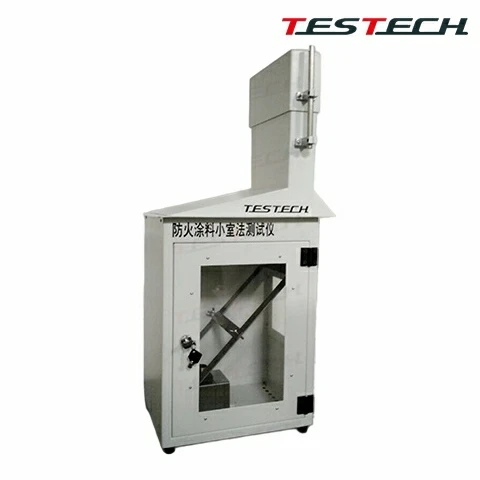
Now, let’s connect this to other fire safety testers because, honestly, flooring doesn’t exist in a bubble. If you’re testing old flooring, you might also need to test other building materials in the same space, right? Like, if it’s a bedroom with old carpet, you might check mattress flammability too—there’s a great test for that over here: Flammability Of Mattress Sets Test Apparatus. For wood floors, if they’ve got old coatings, maybe a flame-retardant wood crib method test to see how the wood’s been affected by previous treatments (or lack thereof). If you’re dealing with newer coatings on old flooring, there’s a Fire-Retardant Coating Tester Small Chamber Method that’s super useful for making sure those added coatings don’t fail in a fire. And for larger-scale tests if you’re dealing with whole building retrofits? The Fire Resistance Horizontal Test Furnace is exactly what you need to simulate fire spread across entire floor assemblies, not just a small panel.
Wait, let’s address the biggest myth I hear all the time: “Old flooring is too worn to test accurately.” No way. The flooring radiant panel tester works by measuring critical parameters like critical heat flux (that’s the minimum heat needed to make the floor start flaming) and flame spread rate. Worn flooring might have a lower critical heat flux because the surface layer is gone, which is actually important to know—you don’t want to assume a well-worn floor is as safe as a new one. Our tester is calibrated to pick up even that small change, which is why it’s so valuable for both new and old. I had a client in California last year who was doing an apartment complex retrofit, and they tested every unit’s existing carpet vs. new carpet samples. The old carpet in units with heavy foot traffic had a 15% lower critical heat flux, which meant they needed to add extra fire barriers in those hallways. If they’d only tested the new carpet, they would’ve missed that completely.
Another point: code compliance. A lot of building codes require fire testing for flooring, whether you’re installing new or keeping old. For new construction, it’s easy—you use manufacturer test data, but for existing buildings, most codes require on-site testing of the actual material that’s going to be there. That’s where our flooring radiant panel tester comes in. It’s portable, too—wait, did I mention that? A lot of people don’t know we make portable models, so you can bring the tester to the job site, take samples of the old flooring right there, and test on the spot. No need to ship big samples back to a lab, which saves time and money. That’s a game-changer for historic buildings where you don’t want to damage the original floors by taking a big sample.
Wait, let’s talk about limitations, because I’m not gonna sugarcoat this. If the old flooring has been modified a ton—like, it’s got multiple layers of different adhesives, or it’s been patched with different materials—you might need to test multiple samples. But that’s true for new flooring too, right? If a manufacturer runs a batch with a different adhesive, you test that. The tester doesn’t care if the modification is from last year or 40 years ago—it just reacts to the sample you put in, as long as it’s representative.
Let’s wrap this up with a real customer win. Last quarter, we worked with a flooring inspector in Chicago who was tasked with verifying fire safety for a 100-year-old office building that was being converted to lofts. They had original hardwood floors, but over the years, the landlord had added a water-based polyurethane coating every 10 years. The inspector used our flooring radiant panel tester to test a core sample from the floor (super small, like 2 inches wide—no damage to the building!) and compared it to a new sample of the same type of hardwood. The tester showed that even after 100 years and multiple coatings, the hardwood still exceeded the required fire safety thresholds. That meant the building didn’t have to rip out all the original floors, which saved them hundreds of thousands of dollars. That’s exactly what this tester is for—working with old materials without disrupting the project.
Now, if you’re reading this and you have questions about testing new vs. old flooring, or you need a tester that can handle both, hit us up. We don’t do generic one-size-fits-all solutions—we work with you to figure out the right sample prep, the right tester (portable or stationary), and the right complementary tests if you need them, like the ones I mentioned earlier for other building materials. Whether you’re a building contractor doing a retrofit, a historic preservationist, or a facility manager making sure your property is up to code, our flooring radiant panel tester is built to work for every situation, new or old.
Before I sign off, a quick note: when you’re testing, always work with accredited labs or testers to make sure your results are code-compliant. The links I shared earlier are all to reputable tools that pair perfectly with our flooring tester, so you’ve got a full suite of fire safety testing at your fingertips.
If you’re ready to chat about how our flooring radiant panel tester can work for your new or old flooring project, reach out to us. We’re here to help you make smart, safe decisions without the hassle.
References

- National Fire Protection Association (NFPA) 253: Standard Method of Test for Critical Radiant Flux of Floor Covering Systems Using a Radiant Heat Energy Source
- ASTM E648: Standard Test Method for Critical Radiant Flux of Floor Covering Systems Using a Radiant Heat Energy Source
- International Code Council (ICC) Building Code Requirements for Floor and Floor-Covering Fire Performance
- Hall, J. R. (2020). U.S. Fire Statistics: Fire Loss in the United States During 2019. National Fire Protection Association
- Association of Home Inspectors (AHI) Best Practices for Fire Safety Testing in Existing Residential Properties