

If you’ve ever spent hours tweaking parameters for ion chromatography (IC) runs, you know that small changes make a huge difference. One of the most often overlooked yet critical variables is temperature. A lot of people think “room temperature works fine” and call it a day, but that’s not always the case. As an IC supplier, I’ve heard this misconception a hundred times from new lab techs and even some seasoned analysts. So let’s break down what the suitable temperature range for IC analysis actually is, why it matters, and how getting it right can save you time, money, and headaches.
First off, let’s remember what ion chromatography does. IC separates and quantifies ions in liquid samples—think water contaminants, food additives, or even environmental runoff. The process relies on the interactions between analyte ions, the stationary phase (resin) in the column, and the mobile phase (eluent) flowing through the system. Temperature affects every part of that: the eluent’s viscosity, how fast ions move, and even the stability of the column itself.
So what’s the sweet spot? From our experience and the scientific data we’ve compiled with lab partners, most standard IC methods work best between 25°C and 35°C. Wait, that’s a narrow range—why not just 20 to 40? Let’s dive into the why.
If you go below 25°C, two main problems pop up. First, eluent viscosity goes up. Thicker eluent means it moves slower through the column, leading to longer run times and broader, less sharp peaks. Broad peaks are a pain because they’re harder to integrate accurately—you might miss low-concentration ions or mix up peaks that should be separate. Second, lower temperatures can slow down ion exchange kinetics on the column. The ions don’t bind and elute as quickly, so your separation efficiency drops. For trace analysis, that can mean the difference between detecting a contaminant at the regulatory limit and missing it entirely. We’ve had customers run a standard anion test at 22°C and report chloride and nitrate peaks with tailing factors of 1.8, vs. 1.0 at 30°C—big difference for quantitation.
Now, if you push above 35°C, that’s where things get tricky too. Columns (especially the polymer-based ones common in IC) have a temperature limit. Going too high can degrade the resin’s functional groups over time. We’ve seen customers run a cation method at 45°C for months, and the column selectivity started to shift—so they couldn’t separate sodium and ammonium ions anymore, which threw all their data off. Also, higher temperatures can cause eluent outgassing, especially if you’re using carbonate or bicarbonate eluents. Bubbles in the system mean unstable baselines and, in severe cases, pump damage. Don’t get me wrong, there are specialty applications that run hotter—like some ion-exclusion separations that use 40°C—but those are rare and require method-specific columns designed for elevated temps.
Wait, I know what some of you are thinking: “My old lab bench runs at 21°C, and I’ve been doing IC for years with no issues.” Fair point—some methods are robust enough, but that doesn’t mean it’s ideal. Temperature fluctuations in a non-temperature-controlled lab can cause run-to-run variation. One day your peak areas are on target, the next they’re off 10% just because the AC kicked on. That’s the kind of inconsistency that makes regulators question your data, which is a big deal for compliance testing.
Let’s talk about how to actually control temperature. Most modern IC systems come with column ovens, right? But you have to use them correctly. Don’t just set it and forget it—calibrate the oven annually. We’ve had customers who thought their oven was accurate, but it was off by 5°C, which was enough to mess up their gradient elution for phosphate ions. For labs that don’t have a dedicated column oven, a recirculating water bath around the column is a budget option, but make sure it’s set to a consistent temp. Avoid placing your IC system near windows, doors, or other equipment that generates heat—like 45° Flammability Tester units, wait no, hold on—wait, those flammability testers are for materials, not lab temps, but the point is: heat sources near your IC can cause temp swings. Oh, and if you’re using online eluent degassing, check that the degasser isn’t heating the eluent too much before it hits the column.
Another thing: temperature affects selectivity, which is how well you can separate two ions. For example, at 30°C, you might get good resolution between bromide and nitrate, but at 25°C, they might co-elute. That’s not something you can fix with method tweaks alone—you have to adjust the temp. We recently worked with a food testing lab that was struggling to separate nitrite and nitrate in cured meats at 22°C. They bumped the column temp to 28°C, and boom—peaks resolved perfectly, no method changes needed. That saved them a week of re-validating their method for compliance.
What about when you need to deviate from the standard range? Let’s say you’re analyzing thermally unstable analytes, like some organic ions in biological samples. Too much heat can break those down, so you might need to run at 20°C. In that case, you’ll have to adjust other parameters—like eluent concentration or flow rate—to compensate for the slower kinetics. Or if you’re doing a fast screening test, you might crank the temp up to 38°C to shorten run times, but you’ll have to make sure your column is rated for that. Never go above the column’s maximum temp listed in the manual—ignoring that is a surefire way to kill a column prematurely (and columns aren’t cheap).
I want to clarify something too: this range is for the column temperature specifically, not the ambient lab temp. Even if your lab is at 25°C, the column might be slightly warmer from the mobile phase flowing through it, or from the pump. That’s why the column oven is non-negotiable for consistent results. We see so many labs skip the oven to save money, but in the long run, the time wasted on bad runs and re-calibrations costs way more than the oven itself.
Let’s also address common mistakes. Some people confuse column temp with eluent temp. If your eluent is cold, injecting it into a warm column can cause volume expansion, which creates bubbles and distorts peaks. Always let your eluent come to room temp (or your set temp) before running. And don’t change temp mid-run—gradient runs rely on consistent conditions, so even a 1°C shift can make peaks shift retention times. We had a customer once who forgot to close the lab door during a run, the temp dropped 3°C, and all their retention times were off by 2 minutes. They had to re-run the entire set, which cost them an extra day of work.
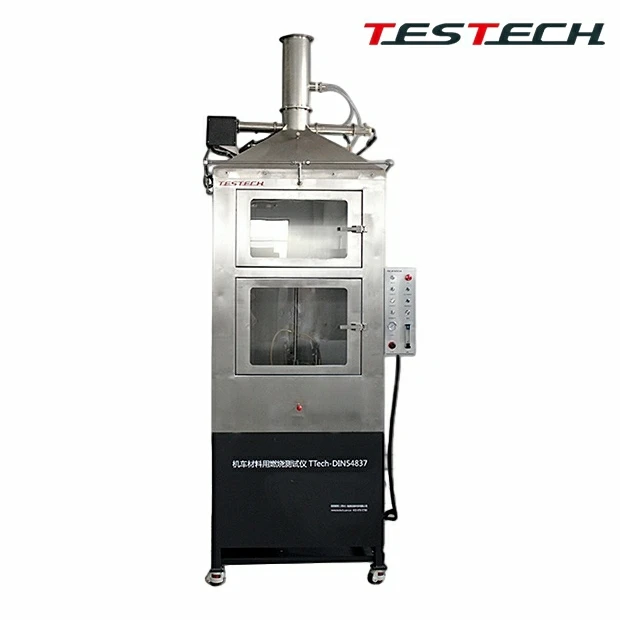
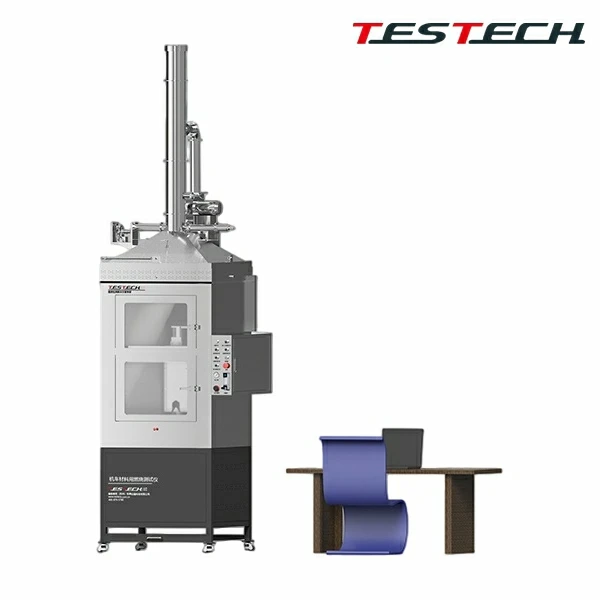
Now, here’s where we come in as your IC supplier. We don’t just sell columns and systems—we help you get the best results, which means giving you the right temp guidance for your specific application. Whether you’re doing environmental water testing, pharmaceutical purity analysis, or industrial process monitoring, we can help you tailor the temp to your needs. We also carry columns rated for different temp ranges, so if you need to run at 40°C, we’ve got you covered. And for labs testing materials that involve flammability—like if you’re validating the safety of parts for trains—we can even suggest complementary testing tools, like the Horizontal Burning Rate Tester, Electrical Burner Test Machine, Locomotive Material Combustion Tester, or Flame Spread Tester, if you’re doing material safety alongside IC for component analysis. Wait, that’s a natural tie-in—many manufacturers test both the chemical composition (via IC) and the flammability of their materials, so having both tools makes sense.
At the end of the day, the suitable temperature range for IC analysis isn’t a random number—it’s a balance between separation efficiency, peak resolution, column stability, and run time. Sticking to 25°C to 35°C gives you the best of all those things for most routine applications. But always remember: every method is unique, and you should test temp changes to see what works for your samples. If you’re struggling with consistent peaks, co-elution, or long run times, don’t guess—reach out. We’re here to help you optimize your IC setup, no matter your lab’s size or application. We don’t do hard sells—just straight talk about what works, because your results matter as much as ours.
If you’re looking to upgrade your IC system, get a new column, or just want to chat about optimizing your temp parameters, connect with our team. We can walk through your current setup, share tips from other labs, and help you find the right tools to get accurate, reliable data every time.
References
- Weiss, J. (2004). Ion Chromatography. Wiley-VCH.
- US Environmental Protection Agency (EPA). (2019). Method 300.1: Determination of Inorganic Anions in Drinking Water by Ion Chromatography.
- Small, H., Stevens, T. S., & Bauman, W. C. (1975). Novel Ion Exchange Chromatographic Method Using Conductimetric Detection. Analytical Chemistry, 47(11), 1801–1809.
- Dionex Corporation. (2021). Ion Column Temperature Guidelines for Routine Analysis. Application Note 103.